(fyiteam)

Who remembers the 2015 refugee crisis?

Add your Headline Text Here
@fyinews team

30/09/2025

Copy link
fyi:
  • Back to 2015
  • Further back to 2010
  • The “Greece” crossing
  • A journey without a destination
  • With or without the law
  • Reaching the islands
  • The road to Europe
  • What is the Balkan route?
  • The closing of borders
  • The EU–Turkey deal

Back to 2015

(fyiteam)

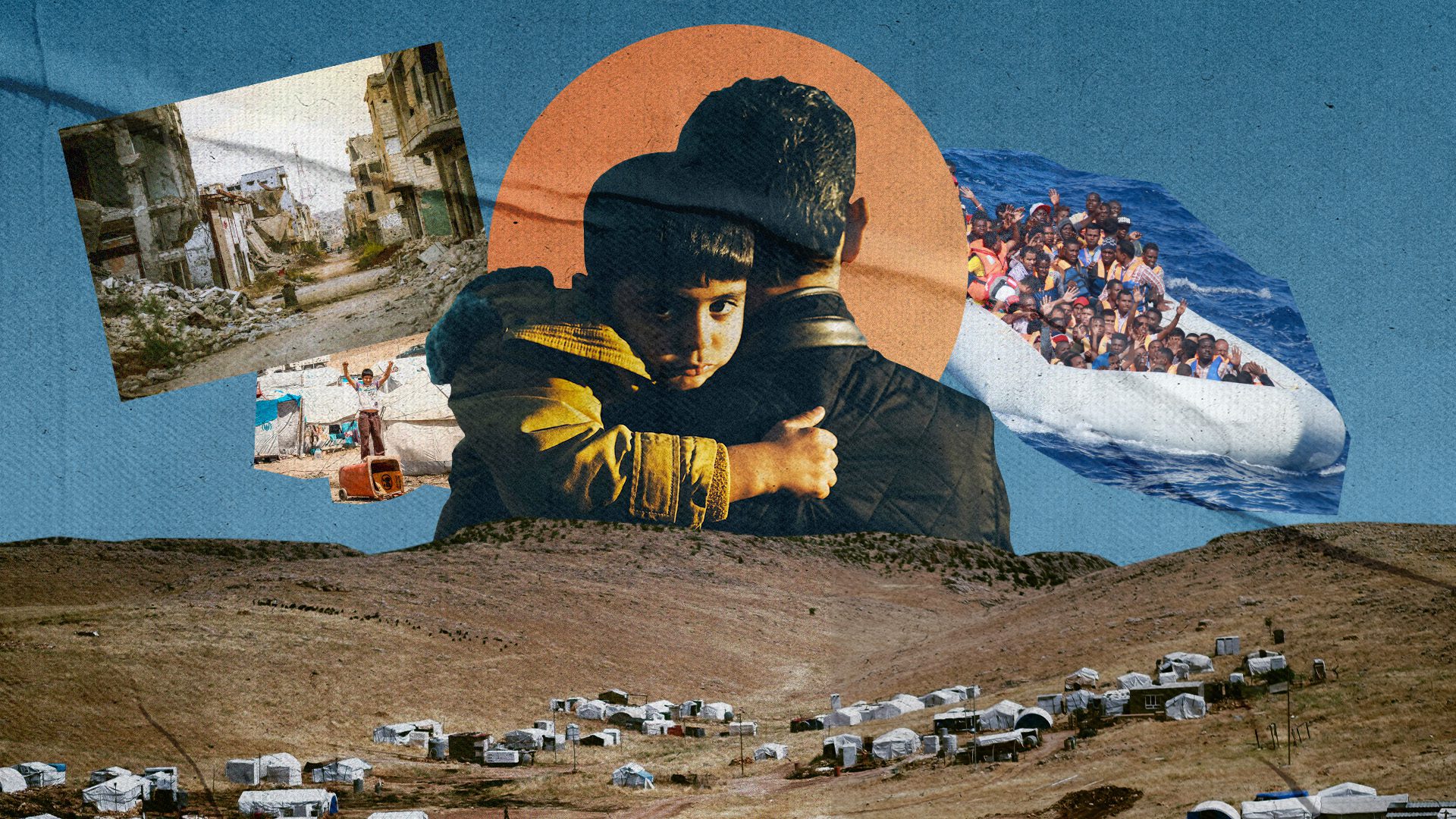
The European refugee (or migration) crisis began in 2015, when an unusually large number of refugees and migrants started crossing into the EU—mainly via the Mediterranean and the Aegean—with the aim of seeking asylum in countries in Western and Northern Europe.

They came mainly from the Middle East, Asia, and Africa, while the top three nationalities crossing via the Mediterranean were:

  1. Syrians (49%)
  2. Afghans (21%)
  3. Iraqis (8%)


In 2015 and 2016, at the peak of the crisis, more than 2.3 million crossings into the EU were recorded.

Further back to 2010

(fyiteam)

Increased flows towards Europe had already begun to be recorded as early as 2010, due to the wars in Syria, Iraq, and Afghanistan, as well as violence and terrorism in Pakistan, Nigeria, and North/West Africa.

Initially, many millions of refugees sought shelter in nearby countries (e.g., Turkey, Jordan, and Lebanon), but living conditions there were very poor.

In Lebanon, Jordan, and Egypt, hopes for peace were fading, and they therefore stopped accepting asylum seekers (in 2014), who then turned to the EU.

The “Greece” crossing

(fyiteam)

In 2015, more than 1 million asylum seekers arrived in Europe. Most passed through Lesvos, whose northern coast lies just 10 km from Turkey.

For many, Greece served as a transit country, and only 5% ultimately remained there.

Many of them were granted international protection; hundreds of thousands became European citizens; others were rejected and remained stuck in migrant facilities, while others were either deported or returned to their home countries.

A journey without a destination

Most of the people who arrived in Greece were refugees fleeing war zones, the UN says.

The journey from Turkey to the Greek islands* was dangerous, as fatal incidents were recorded daily, since the crossing took place under harsh conditions, in inflatable boats.

Of the 3,700 deaths recorded in the Mediterranean in 2015 over a nine-month period, more than 700 were in the Aegean.

*In 2015, 800,000+ people arrived, mainly on Lesvos (more than half of them), Kos, Chios, Samos, and Leros.

With or without the law

(fyiteam)

To apply for asylum in the EU, a person had to do so in person in the host country; however, “legal routes” to get there were almost non-existent.

The EU regulation requiring a visa to enter the Schengen Area effectively ruled out travel via “legal routes,” such as by ferry, train, or plane.

As a result, refugees were forced to turn to smugglers, who charged enormous sums (e.g., $1,500 per person for the 25-minute Bodrum–Kos trip) to transport them via an “irregular route.”

Reaching the islands

(fyiteam)

After their arrival, they were forced to walk huge distances to the registration centers, as bus or taxi drivers refused to take them for fear of being accused of illegal trafficking.

Until the registration process was completed (which could take up to weeks), they were compelled to stay on roads and beaches.

Overcrowding had created unbearable living and hygiene conditions and, combined with the poor reception conditions, often led to clashes.

The road to Europe

After months of delay, the Greek government decided to transfer them to Piraeus, with the aim of easing congestion on the islands.

From there, they boarded trains and buses and continued to northern Greece, then onward—via the land borders—towards the north, turning the Balkan route into the main route* to Western Europe.

*In the past, the main route was the sea crossing from Greece to Italy.

What is the Balkan route?

(fyiteam)

They continued on to North Macedonia and Serbia (countries outside the Schengen Area) in order to enter Hungary (an EU member state) and have it counted as their first country of entry, so that, if they were arrested, they would be deported there rather than to Greece.

This continued until mid-March 2016, when the authorities of North Macedonia closed the border at Idomeni (Kilkis), resulting in up to 15,000 people becoming stranded in Greece and creating the largest refugee camp* in Europe.

*It was evacuated in May and the refugees were relocated elsewhere.

The closing of borders

(fyiteam)

As early as September 2015, countries in Central and Western Europe were closing their borders to refugees.

At the time, Germany’s chancellor, A. Merkel, opened Germany’s borders to a total of 1.1 million asylum seekers, with the slogan “wir schaffen das” (“we can do it”).

The phrase became a symbol of the country’s migration policy which, after initial international admiration, became the target of harsh criticism—mainly from the far right, which used it to boost its share of the vote.

The EU–Turkey deal

(fyiteam)

In March 2016, the EU and Turkey reached an agreement to address migration flows from Turkey.

Under this agreement, Turkey is obliged to take back migrants who arrive on the Greek islands via Turkey, while for every “irregular” migrant returned, another person who has been granted asylum will be resettled in one of the EU’s 28 (at the time) member states.

In addition, the EU granted Turkey €6 billion in aid to support the country’s large refugee population (3.5+ million).

Sources

AD(1024x768)