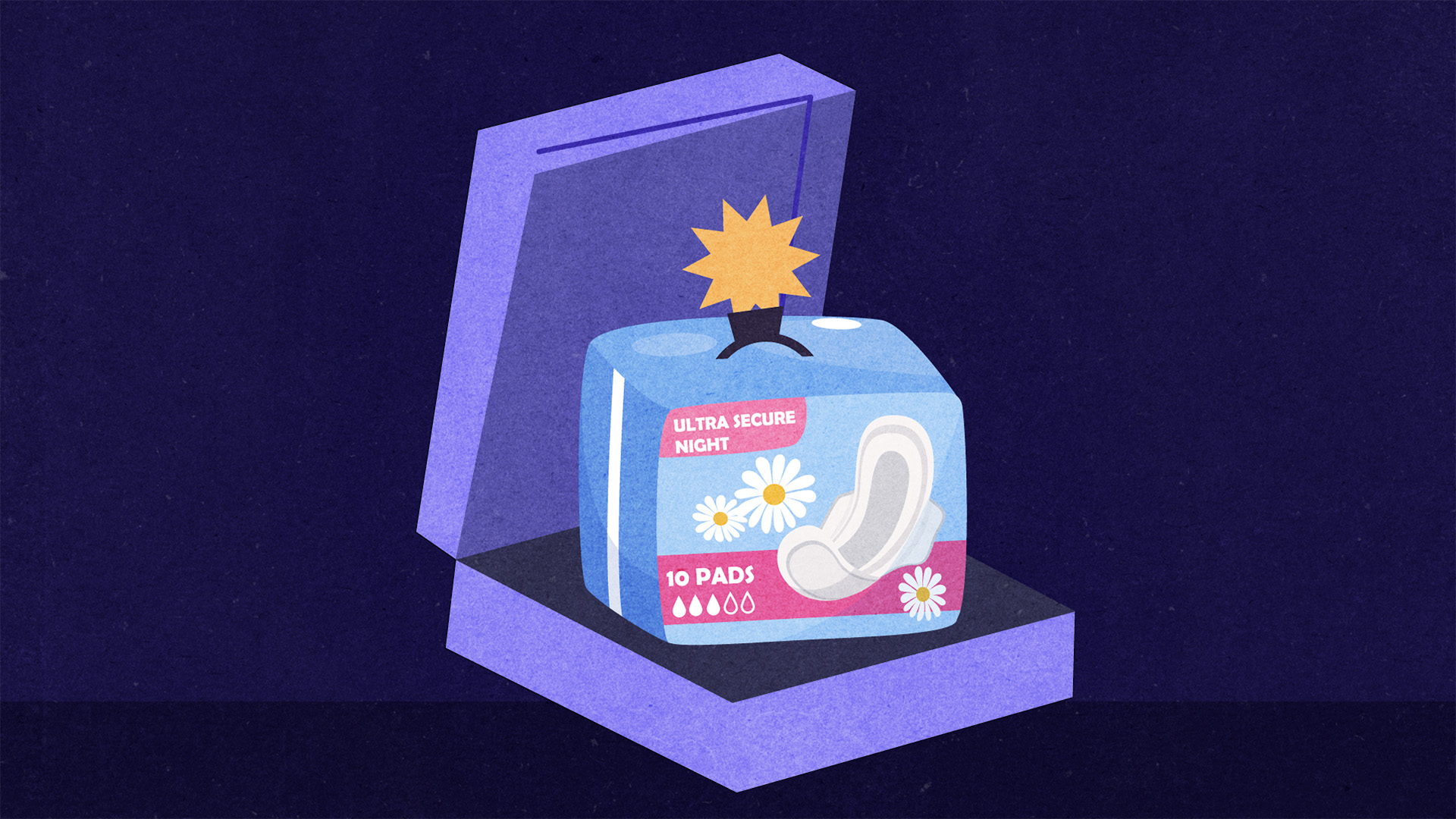
What is period poverty?
Period poverty is the inability to access menstrual products (tampons, pads, menstrual cups, etc.) due to cost, as well as limited access to adequate hygiene facilities and information about menstrual health management.
A study by WHEN, Deon Policy Institute and It’s Just Period, conducted by MRB Hellas in December 2025 among 2,000 people, documents this reality for the first time using a nationally representative sample in Greece.
What menstrual products do we use?
According to the study, 96.6% use pads, 29.6% tampons, 3.1% reusable cloth pads and 2.8% menstrual cups.*
75% estimate that their household spends €5–€20 per month on menstrual products: 29.5% spend €5–€10, 28.7% spend €10–€15 and 16.8% spend €15–€20.**
The percentages add up to more than 100% because respondents may use more than one type of product per cycle.
These amounts exceed the cost of a single pack of pads (approximately €3 for 12), as each cycle requires 20–25 products and a household may need to provide for more than one person.
In practice
12.5% of women reported being unable to afford menstrual products for at least one month in the past year.
10.2% said they had to use improvised alternatives (e.g. paper or cloth) because they could not afford menstrual products.
16.3% admitted delaying changing menstrual products to make them last longer due to cost.
16.6% said they had to forgo essential goods or other necessities at least once in the past year to afford menstrual products.
Impact on daily life
9.3% of women reported missing at least one day of school or university due to a lack of menstrual products.
10.6% reported missing at least one day of work, while 6.0% missed four or more days.
16.9% reported some degree of restriction in their participation in social activities.
Note: Financial vulnerability amplifies these effects. In Greece, women experiencing severe financial hardship report rates nearly twice the average across all indicators.
What do women want?
55% of women would be satisfied with a price reduction of €0.50–€2 per pack of pads. 57.4% rank reducing or abolishing VAT among the three best solutions, while 49.2% support a 0% VAT rate.
In resolution 2020/C 411/06 (15 January 2019), the European Parliament called on all EU member states to reduce or abolish taxes on menstrual products. Since then, 14 member states have reduced them.
Note: In Greece, menstrual products are currently subject to 24% VAT, the highest rate, applied to goods not classified as essential.
What else is needed?
The figures show that abolishing VAT alone would not be enough. Eliminating VAT entirely (from 24% to 0%) would reduce the price of a €3 pack by approximately €0.58, but 55% of women say they need a reduction of at least €1.
Respondents identified free menstrual products in workplaces (18.6%) and in schools and universities (14.4%) as the next best solutions.
Does stigma still exist?
The study also examined how taboos surrounding menstruation affect women.
39.1% of women reported feeling shame or stigma around menstruation, although the picture varies depending on the situation.
While 73.5% feel completely comfortable buying menstrual products, that figure falls to 51.1% when changing products in public toilets and 51.2% when exchanging products with a friend or acquaintance.
The impact of period pain
Almost one in two women (49.8%) reported that period pain had affected their ability to function at work, school or in social activities at least once in the past year.
Nearly one in ten (8.2%) said this happens eight or more times a year.
Programmes in Greece
According to the study, efforts to address period poverty in Greece are still at an early stage.
Menstrual products have been included in two retail price-control programmes: the Household Basket (2022) and the price cap introduced in response to the US–Iran war (2026).
Two programmes have also been launched to provide free menstrual products in schools and promote menstrual health education and awareness: “Period Poverty” (2024) and “ΡΙΣΠΕΚΤ στο σώμα σου” (2026).
Comparison with international practices
Internationally, five main policy approaches are used to address period poverty:
- Reducing or abolishing VAT on menstrual products (e.g. Kenya, the first country to abolish it in 2004).
- Providing free menstrual products (e.g. New Zealand, which distributes them free in schools).
- Education and awareness (e.g. educational programmes in India and Nepal).
- Introducing menstrual leave (e.g. Spain, which provides leave for severe menstrual symptoms).
- Promoting reusable products, such as menstrual cups (e.g. Catalonia, which launched a free distribution programme for 2.5 million eligible people).
The study’s recommendations
The report proposes five measures for Greece:
- Make menstrual health education programmes permanent and extend them to universities.
- Reduce VAT on menstrual products to 13% (annual fiscal cost of €10.6 million) or 6% (€22.3 million).
- Introduce an annual €130 menstrual product voucher for financially vulnerable people who menstruate.
- Introduce paid menstrual leave based on Spain’s model (up to three days per month with medical certification).
- In the long term, ensure universal free access to menstrual products.
Source
WHEN – Period Poverty in Greece


 What is fyi.news?