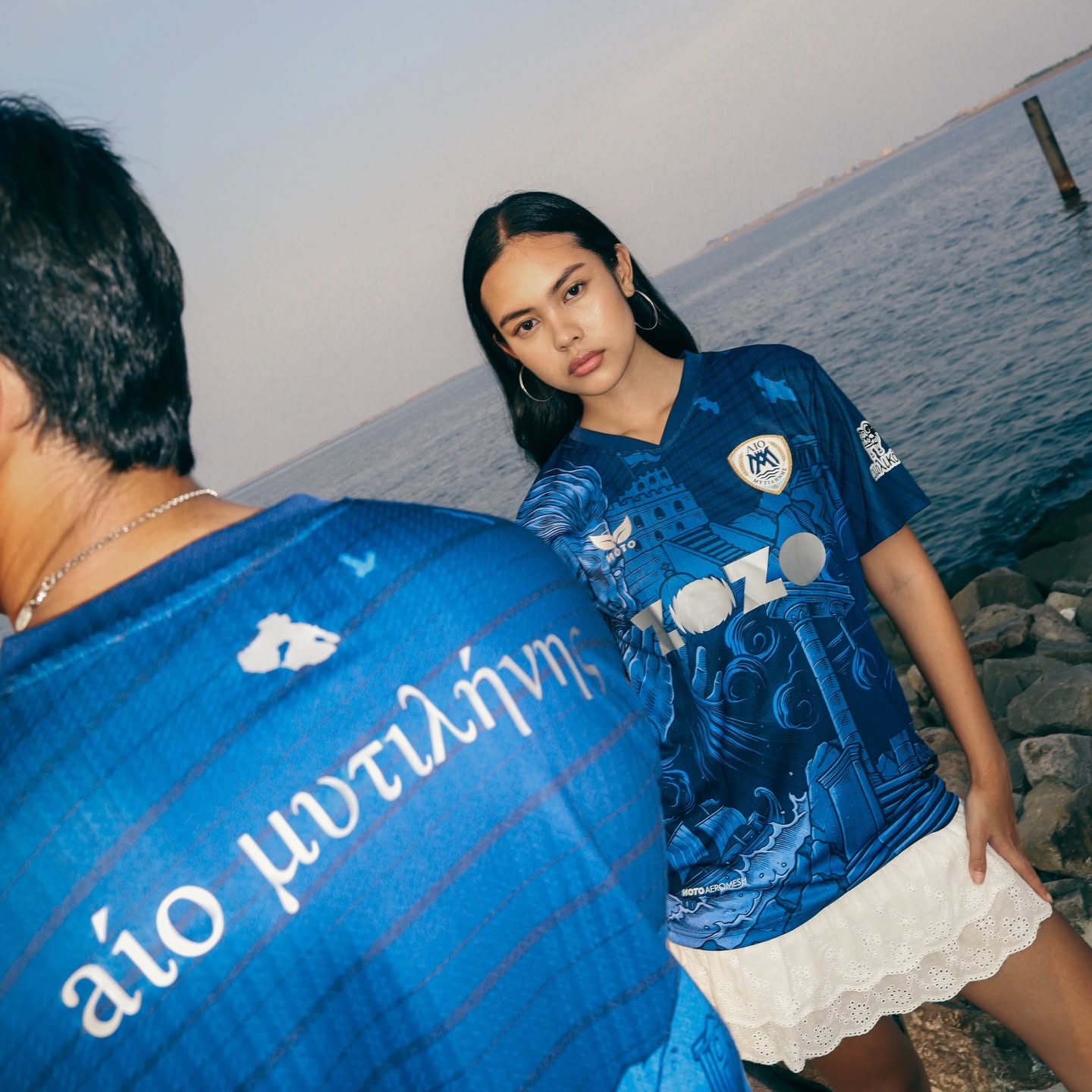
(Alexis Yiotis for Fanela Club)

Why is everyone wearing football shirts these days?

Add your Headline Text Here
@fyinews team

24/07/2026

Copy link
fyi:
  1. When the idea came up for a feature on football shirts as fashion items, it caused quite a stir. Everyone in the office had anywhere from one to thirty-one favourite shirts to suggest, most of them little gems.
  2. We spoke to people working in the resale market for football jerseys, as well as to an amateur women’s football team that stood out for its kit, to understand how football shirts made the leap from the pitch into fashion, why demand for them has soared and what now gives them stylistic, collectible and cultural value.

by Anastasis Koutsogiannis and Rania Zokou

When the idea came up for a feature on football shirts as fashion objects, it caused a minor frenzy. Everyone in the office had anywhere from one to thirty-one favourite shirts to suggest, most of them little gems.

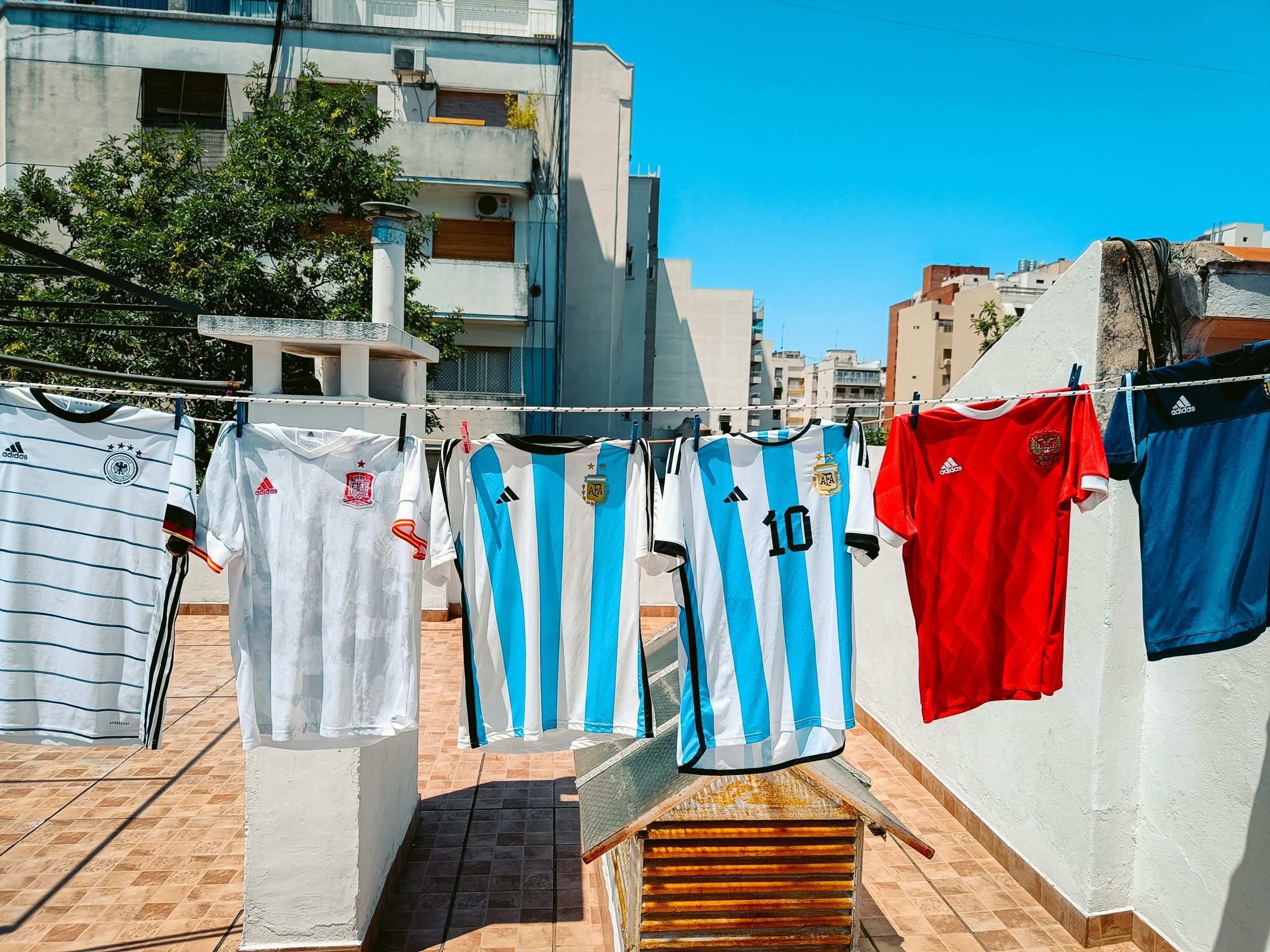
There were Italy’s shirts from the successive World Cups of 1998, 2002 and 2006; Brazil’s 1998 shirt; Argentina’s 1994 shirt; and the 2024 anniversary edition, released by the country’s football association to celebrate 50 years of partnership with Adidas.

There was Barcelona’s 2005–06 kit, the club’s last without a sponsor, Arsenal’s 2002–03 shirt, as well as the now-cult Croatia kit from the 1998 World Cup, Cameroon’s sleeveless 2002 World Cup shirt and almost every goalkeeper kit from the 1980s and 1990s.

The true connoisseurs mentioned Paris Saint-Germain’s magnificent 2000–01 shirt, made famous around the world by footballing legend Éric Rabésandratana — a year later, a young player named Ronaldinho wore a variation of it — as well as Hull City’s 1992–93 kit and that of little-known Spanish club CD Palencia from the 2016–17 season. Sokratis Antonopoulos insists that the latter is “THE BEST SHIRT EVER”, a claim that can, at the very least, be regarded as somewhat exaggerated.

Real Madrid’s 2017–18 shirt also came up, along with Juventus’s extraordinary third kit for 2024–25, which looks more like a polo shirt worn by a regular at an upscale café in Athens’ northern or southern suburbs than a football kit.

And so that nobody says, “Yes, but you haven’t mentioned anything from Greece,” we singled out AEK’s 1995–96 home shirt, Panionios’s 2008–09 kit — perhaps we were influenced by the fact that the great Álvaro Recoba wore it — and, most beautiful of all, the shirt from the legendary Wembley campaign of 1970–71, in which Panathinaikos reached the European Cup final.

Nor can we overlook the fact that Olympiacos’s and PAOK’s centenary shirts, marking 100 years of their respective histories, are among the most beautiful we have ever seen.

From the pitch to merchandise, and from there to a fashion object

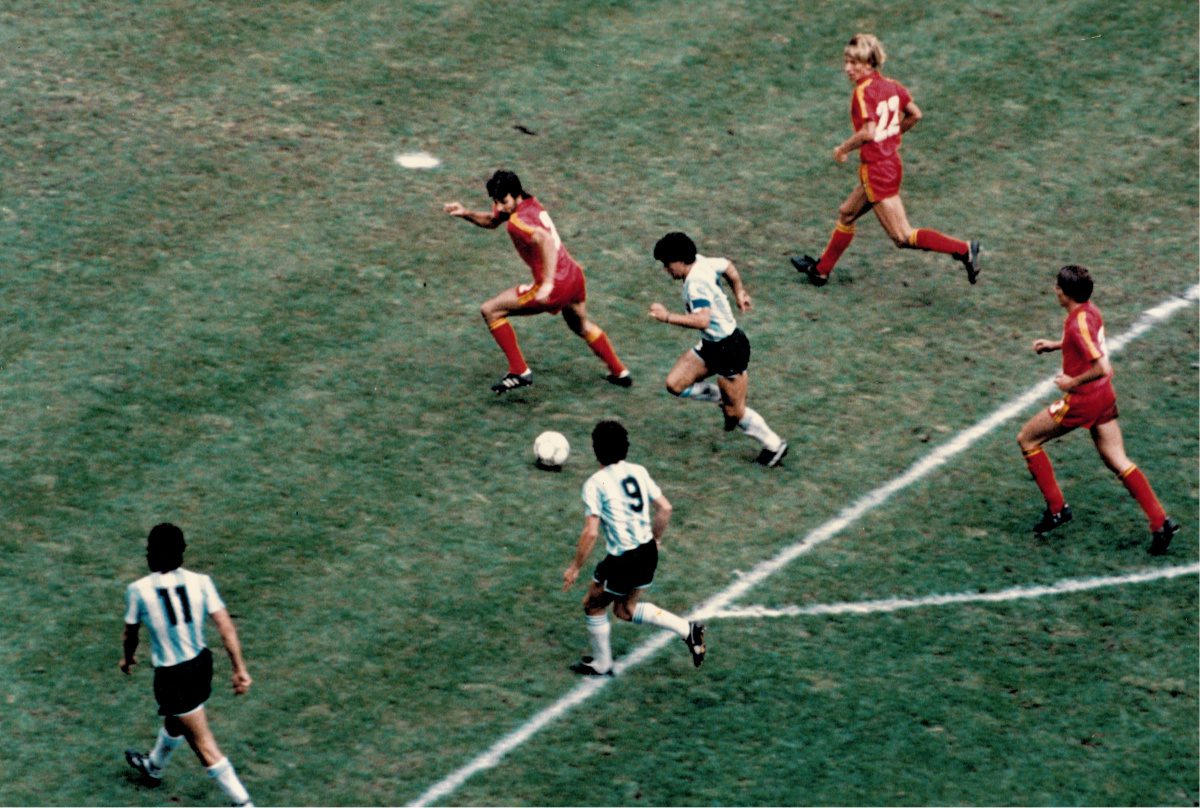
(Nationaal Archief)

In the late 19th century, when football bore little resemblance to the game we know today, shirts were plain or two-tone and served simply to distinguish one set of players from another. They were usually made of wool and resembled workwear. A notable example is the woollen shirt worn in the first official international match, Scotland v England, in 1872.

Gradually, they acquired additional practical features: a different colour for the goalkeeper and, from the 1930s onwards, numbers to identify the players and the positions they played.

It was in 1970s England that football shirts first began to acquire commercial value, when Admiral partnered with Leeds United to produce the first “replica shirt”, which was sold to supporters at a premium price.

What was innovative, however, was that Admiral paid the club to wear it.

(Public Domain)

In the 1980s, football shirts, which had already been sold mainly as sportswear for children since the 1970s, also began to be worn by adults in the stands. At the same time, the widespread adoption of colour television encouraged greater creativity in their design and colour schemes.

It was not until the 1990s that football shirts began to be mass-produced and sold through merchandising, becoming established as part of everyday life, fashion and pop culture. This was driven largely by football’s mass appeal, celebrity players and fan culture.

“Today, the football shirt has gone a step further, evolving from merchandise into a fashion object. Younger consumers are looking for more unique and authentic pieces, while the vintage jersey combines nostalgia, identity and collectable value,” explains Nefeli Mandilari, CEO of Vinokilo, one of Europe’s largest vintage fashion platforms.

The rise in sales and their transformation into fashion objects

(Katherine Bandin/ UNSPLASH)

“The growth in sales has been remarkable. Five years ago, football shirts were simply another thrift item. Today, they are a premium product, often harder to find than pieces from well-known vintage brands,” Nefeli says.

Vinokilo handles around 250 tonnes of clothing each year, of which 20 to 30 tonnes are football kits, accounting for roughly 8–12% of its total volume. Based on the average weight of a shirt, this translates into approximately 80,000 to 120,000 football shirts annually.

“The biggest change, however, has come over the past two years,” Nefeli stresses.

“Football shirts have moved beyond sports fans and collectors and into the mainstream fashion market. At the same time, supply has failed to keep pace, making them much harder to source and significantly increasing the prices charged by our suppliers,” she continues.

The connection between football aesthetics and fashion was also accelerated by major fashion houses and designers.

One notable example was Demna’s 2020 collection for Balenciaga, in which football shirts were presented as fashion items rather than sportswear.

“I believe football shirts are so widely worn because they have acquired a distinctly stylistic value through marketing and through football’s integration into contemporary culture,” says costume designer Nicole Panayiotou.

“They have become a fashion statement that expresses personal style and contemporary ways of dressing, without necessarily being linked to certain values or support for a particular team,” she adds.

Sales in Greece and across Europe

(Nelson Ndongala/ UNSPLASH)

At Vinokilo events in Greece, football shirts were usually the first items to sell out.

“Demand was so high that, in several cases, we had to limit purchases to one shirt per person, as many customers were buying in bulk for resale or collecting purposes. For the same reason, we also applied a different pricing strategy from the one used for other vintage products, since their perceived value was significantly higher,” Nefeli points out.

“At a typical event, we would offer around 100–200 kilograms of football shirts, which were almost always among the fastest-selling products,” she adds.

In reality, however, demand is global. According to recent Vinokilo data, football shirts were consistently among the strongest categories across all markets, while Italy, Germany and Switzerland recorded the highest sales.

“Italy clearly stands out as the most mature market for both vintage and football culture,” she notes.

A trend that now appeals to everyone

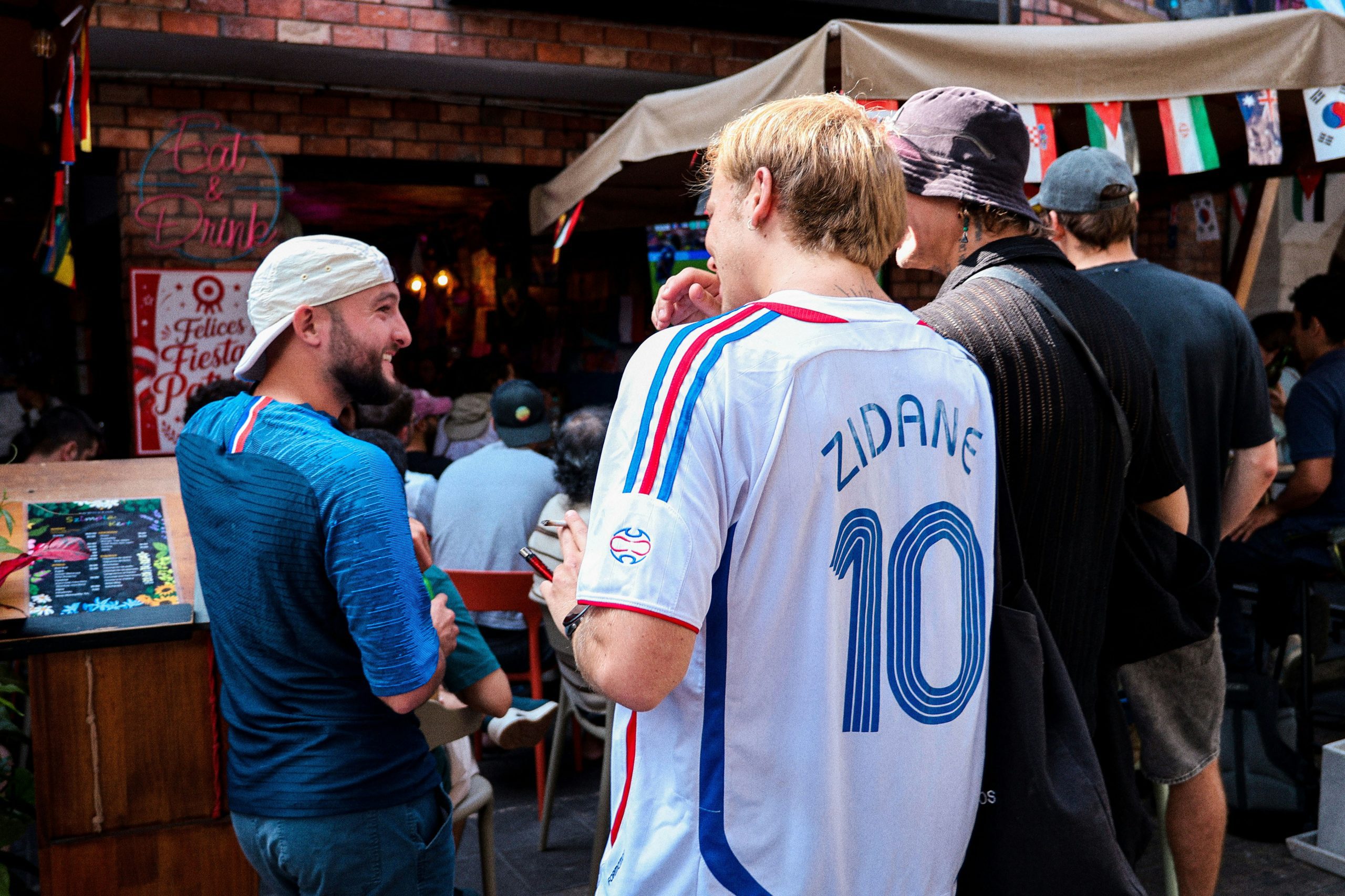
(Lilena Marinou)

“The trend of wearing football shirts as streetwear emerged because football itself opened up to a much broader audience,” explains Ektor Sakaloglou, director of Greece’s largest online football shirt retailer.

“The sport is no longer aimed exclusively at people who go to the stadium every Sunday. Today, it attracts people of different ages, genders and interests,” he continues.

“Traditionally, football shirts were aimed mainly at men and collectors. Over the past two years, that has changed dramatically,” Nefeli adds.

“Today, the core audience is between 16 and 35, while the increase in demand from women is perhaps the biggest change we have observed. Football shirts are now worn oversized, paired with denim, tailoring or skirts, and treated as a fashion statement rather than as sportswear,” she continues.

At the same time, the growing global visibility of women’s football has fuelled demand for women’s shirts.

Several women’s teams at Euro 2025 had their own specially designed shirts, which differed from those worn by the men’s teams. Whereas women were once largely limited to wearing men’s shirts, they can now buy shirts designed specifically for them.

Many countries now have their own specially designed women’s kits, while the recent success of the England national team has caused demand for the women’s team’s shirts to “soar”, the BBC recently reported.

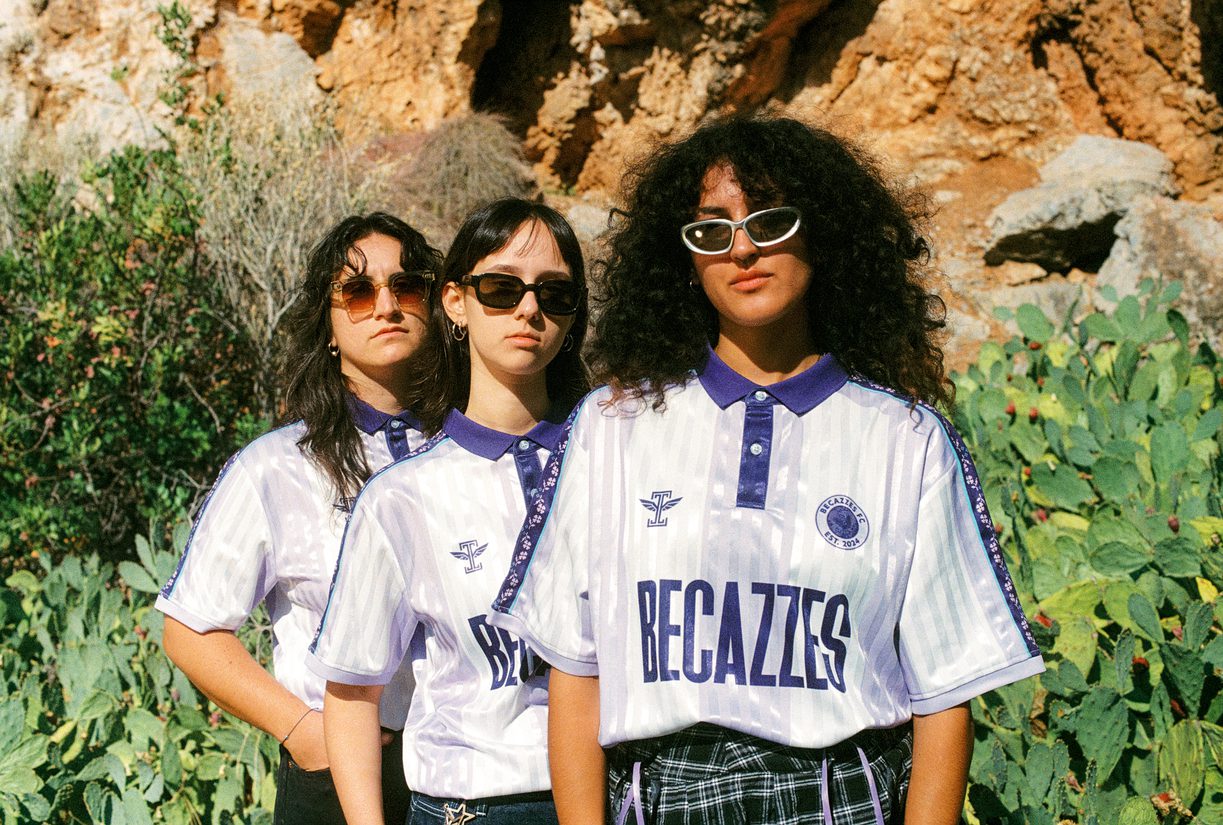
This is also the case with the players of Becazzes FC, an amateur women’s football team in Athens founded in 2024, which designed its kit through Icarus Football, a US company specialising in the design and production of custom football shirts.

“It was designed with intention and love, which is why it received such wide recognition, as it was voted Icarus Football’s Kit of the Year for 2025,” says Anastasia Bourousi, a Becazzes FC player.

“We wanted something that would represent us as a group — and it does — and that could also be worn off the pitch — and it is. We wanted to incorporate the feel of a classic, iconic kit, with stripes, slightly heavier fabric and a boxier cut, as well as our colours, purple, and something that would draw on Greek tradition while paying tribute to female solidarity, since we are a women’s football team. That is why we chose embroidery as a detail.”

Why is all this happening?

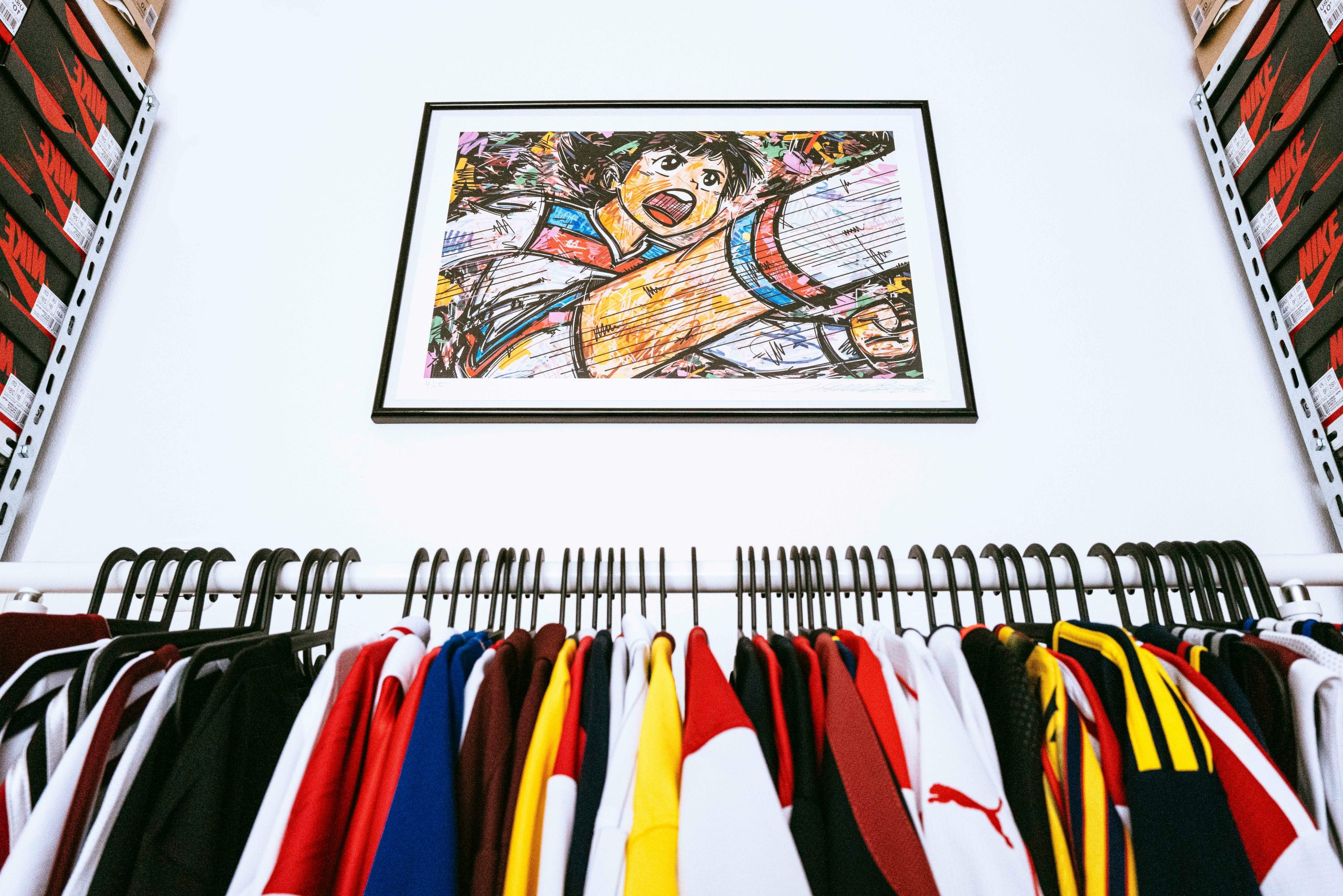
(Cristian Τarzi/ UNSPLASH)

“The prices of new football shirts have risen significantly, consumers are looking for unique pieces, the influence of fashion and streetwear is stronger than ever, and the rise of football-core and the blokecore aesthetic has turned the football shirt into a staple of contemporary fashion,” Nefeli says.

“Consumers no longer buy a football shirt because they support a particular team, but because they are looking for a unique piece with history, character and stylistic value,” she points out.

For his part, Ektor believes that football shirts are not simply attractive designs; they carry culture, identity and specific moments in history.

“The vintage aesthetic has made a strong comeback, and many people now choose an authentic football shirt as part of their everyday wardrobe, regardless of whether they support the team in question,” he says.

“Today, wearing a rare football shirt, or the kit of a club with a strong local, social or even political identity, often serves as a subtle statement. Those who recognise it immediately understand what it symbolises and the message it conveys.”

“They are not worn only because they look good, but because they tell a story. And today, perhaps more than ever, people want to wear clothes with meaning and character, rather than just a logo,” he stresses.

Nicole, however, sees it as nothing more than another fashion trend: “As has happened so many times in the past, trends come and go. To put it more simply: it is fashion, and it will pass.”

AD(1024x768)