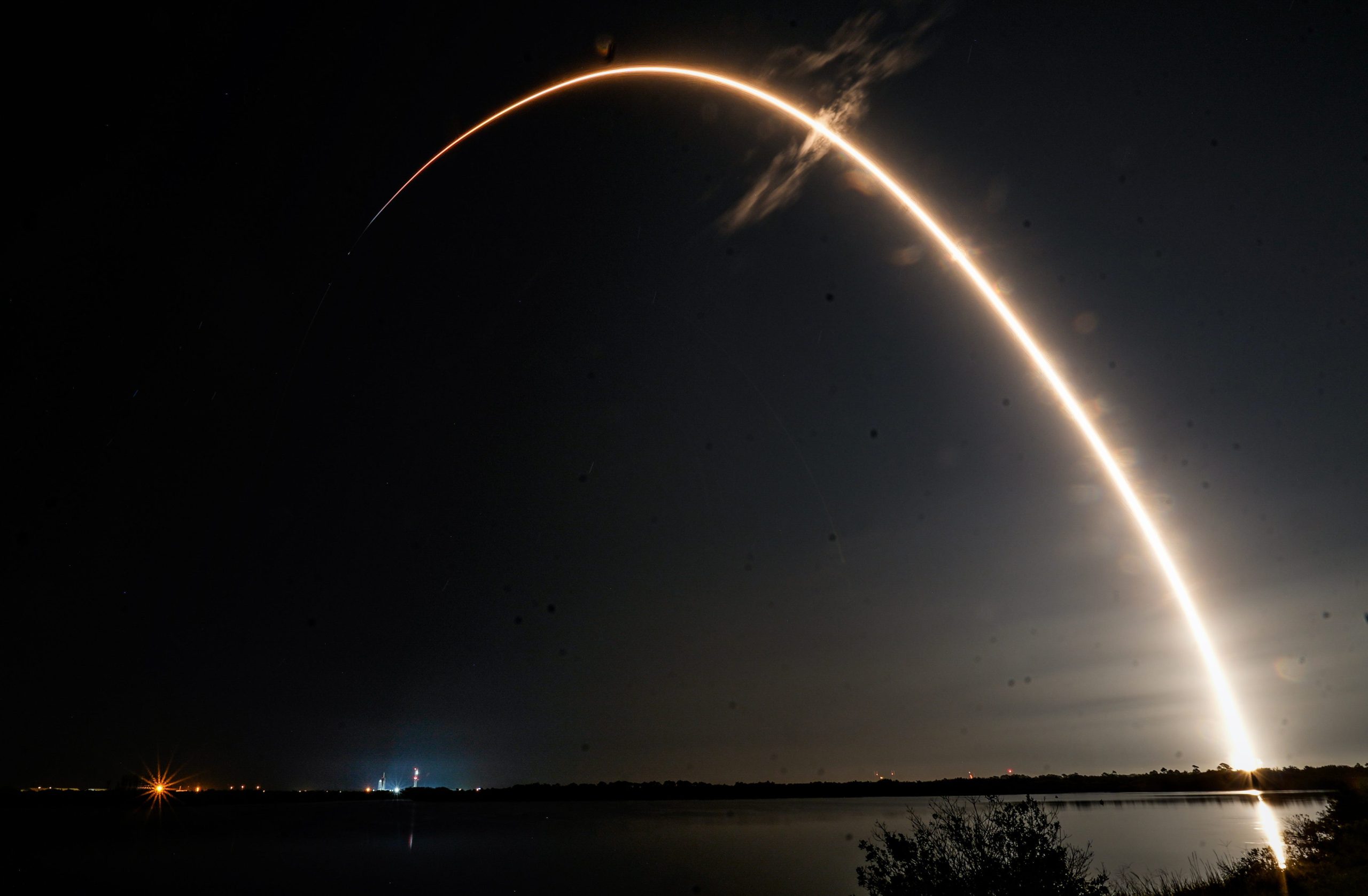
A Falcon 9 rocket stage from SpaceX, weighing about four tonnes and roughly the size of a small building, is believed to have crashed into the western side of the Moon on Wednesday morning at a speed of about 8,690 km/h (about 5,400 mph).
The impact was expected at 08:35 Greek time but was not immediately confirmed by professional or amateur astronomers. The suspected impact site is near the edge of the Moon’s near side, making it difficult to observe from Earth, even with powerful telescopes.
The rocket stage was used in January 2025 to launch a lunar lander for Firefly Aerospace. Because the mission required more thrust than a typical launch into Earth orbit, the stage did not re-enter Earth’s atmosphere to burn up or fall into the ocean.
Since 2019, at least four spacecraft or rocket stages have accidentally crashed into the Moon.
Instead, it remained in space after venting its remaining fuel. According to SpaceX, solar activity and gravitational forces gradually altered its trajectory, sending it toward the Moon.
NASA estimates the impact will create a crater about 18 metres (59 feet) wide and 4 metres (13 feet) deep, ejecting large amounts of dust and rock. The agency plans to compare images taken before and after the impact to study the crater and improve methods for tracking space objects.
The incident poses no risk to Earth but highlights the challenge of managing space debris. Since 2019, at least four spacecraft or rocket stages have accidentally crashed into the Moon. In 2009, NASA deliberately crashed a rocket stage into the Moon to study lunar dust.
Source: Guardian


 What is fyi.news?