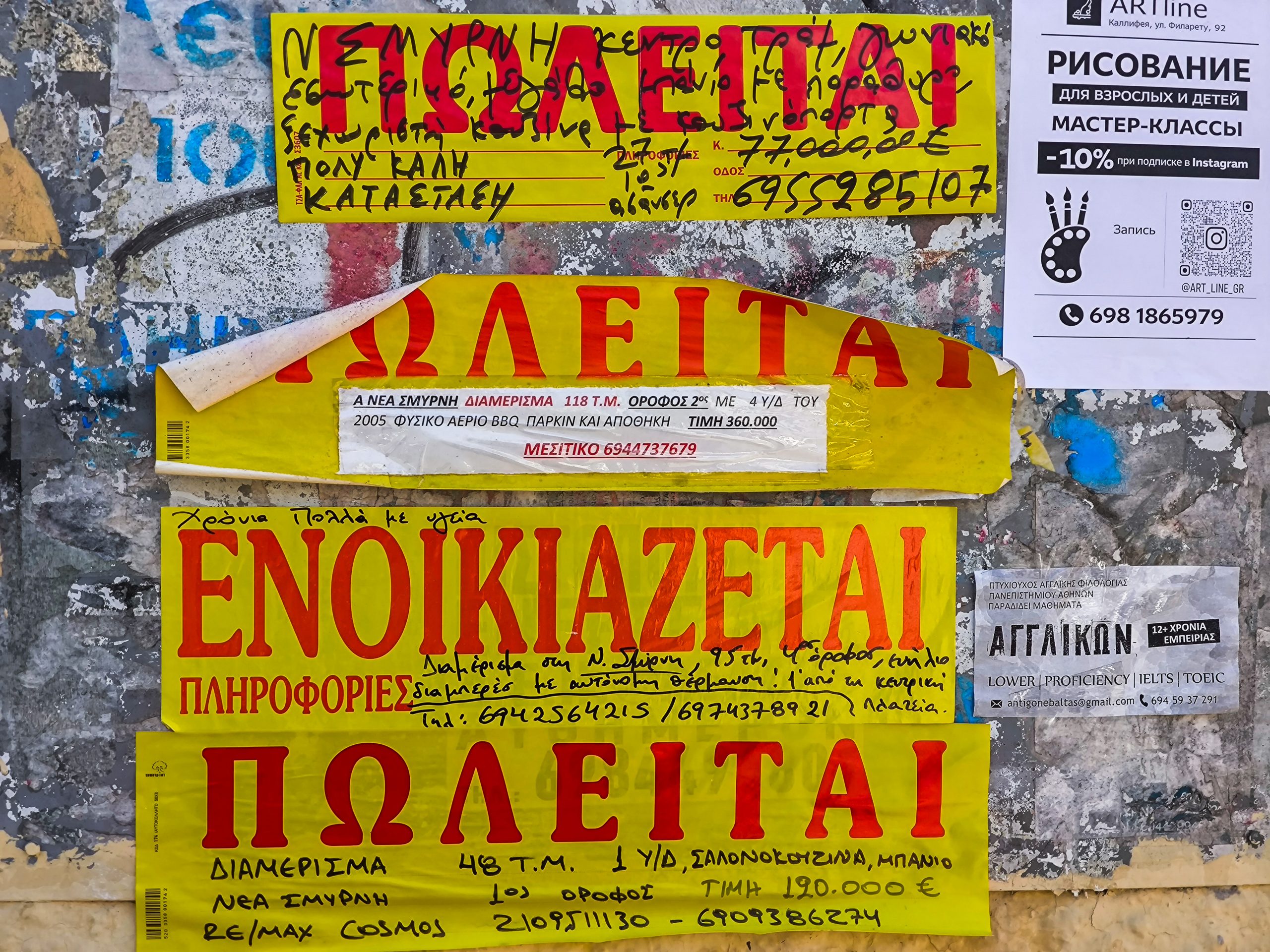
Approximately €1,050—or 70.2% of the average gross income (€1,500)—is required for someone who wants to rent a one-bedroom apartment (50–60 sq.m., one bedroom) in Attica. For a two-bedroom apartment (75–95 sq.m.), the cost rises to 93.6%, or about €1,400, according to an analysis of Eurostat (2024) data by the Center for Liberal Studies (KEFiM).
Eurostat’s rent data are weighted and derived from a combination of different types of housing, both new and old, as well as areas with lower and higher prices.
The burden on renters in Greece is higher than the EU average (31%–34% of income for a one-bedroom, 46% for a two-bedroom), and even higher compared to conditions during the Greek financial crisis—for example, in 2015 (41.6%).
KEFiM attributes the increase in rents to factors such as vacant homes and the rise in short-term rentals.
KEFiM attributes the rise in rents to several factors, including a large number of vacant homes and limited new housing supply, as well as the increase in short-term rentals and foreign investment through the “golden visa” program.
At the same time, a “paradox” is observed. Despite the increase, rents in real terms remain 8.7% lower compared to pre-crisis levels. This contradiction—rents not having reached historic highs, yet being highly burdensome for citizens—is explained by the fact that incomes, unlike rents, have not recovered at the same pace after the crisis, making housing disproportionately expensive compared to the 2000s.
Prices show no signs of slowing down, as Greece recorded the second-highest annual rent increase in the EU last year (+10.1%). Croatia ranked first (+17.6%), while the EU average was below 4%.
Source: Κathimerini


 What is fyi.news?