For the first time this year, I watched Eurovision with full sign language interpretation. I don’t “speak” Sign Language. All I have is a proficiency diploma in English, and even that one I passed with a B. Still, I can say that this way, I understood it better
Eurovision’s timing, to make itself accessible to everyone, is a bit unfortunate. The event is slowly dying, so you’re a bit late in making it easy for everyone to watch, when in reality, it should be watched by no one. Most songs were hard to both watch and listen to, even for the ones amongst us whose senses work. But, anyway, I’m not here to tell you about the music.
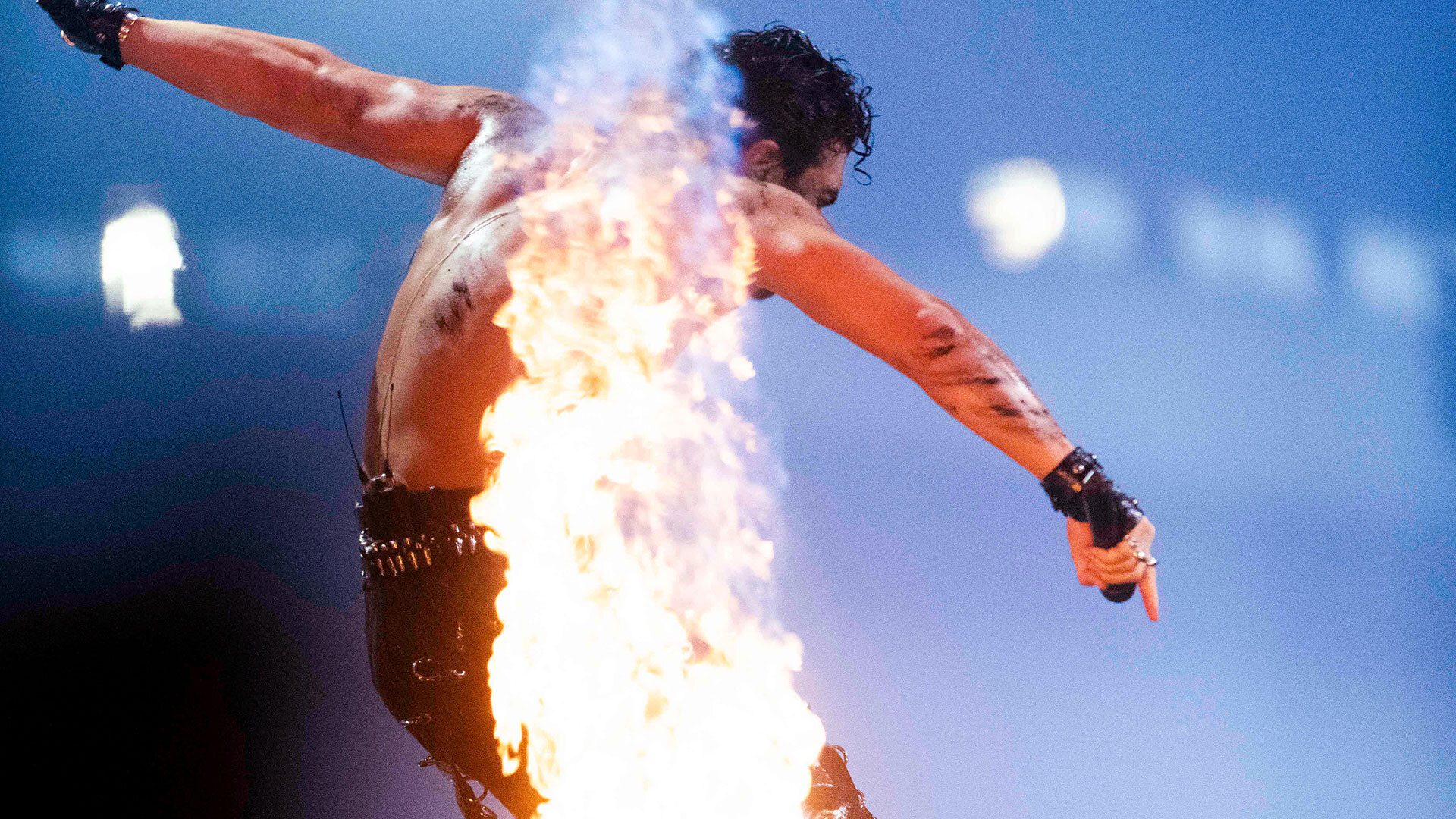
At the end of the day, I didn’t watch the Eurovision; I felt it, because I never even glanced at the actual show.
I was captivated by the interpreters. How expressive, sincere, and raw they were. “Who are these divas?” I kept saying over and over about them.
I’ve watched news broadcasts in sign language many times, but until now, I had never been so profoundly moved by the essence of this Language. How much could the interpretation of the name “Ádōnis Geōrgiádis” in sign language really affect me? I hadn’t felt such goosebumps from interpretation since 2023, with the interpreter at the Half Time Show during the Super Bowl, when Rihanna was performing. The interpreter managed to steal the spotlight from Rihanna herself, and to think, we’re talking about Rihanna, and a pregnant Rihanna at that.
I was captivated by the interpreters. How expressive, sincere, and raw they were. “Who are these divas?” I kept saying over and over about them.
Inevitably, I thought about how indifferent our way of communicating is, how expressionless we are when we speak, and how little we express outwardly. I concluded that I find us terribly boring.
Even the terrible songs didn’t bother me. I had a great time with the lady in the left window, who I could tell was as bored as I was. And yes, in sign language, she couldn’t hide it.
I want to learn sign language, NOW! Does Duolingo offer that option, or does it only have Mandarin and Congolese lessons? Let’s start with the basics.
Subtitling, besides helping those who genuinely need it to follow better, also helped me, a typical viewer, be exposed to words that described what I was seeing but had never really thought about. For example, at the beginning, when the familiar sound cue of the event played, the phrase “grand orchestral music” appeared below, and suddenly I thought, “Yeah, you’re right, it is grand.”
Aside from the song lyrics, which were displayed translated into Greek so you could understand the meaning (or lack thereof) of the song, there were also corresponding descriptions of sound and imagery: “uplifting rhythm,” “dimly lit stage,” “soprano scream,” although some more honest descriptions were missing, like “tacky wardrobe choice,” “chance to go to the bathroom,” or even a “heckle of disapproval” for Israel’s entry.
Not only did I feel that Eurovision became accessible, for example, to deaf gay people, but it also opened the door for everyone out there.
Suddenly, I started noticing things I used to overlook. To my surprise, I realized how limited my vocabulary is when it comes to describing sounds and images, which is a problem, because how can we process and think about something in our minds if we don’t have the words for it?
Accessibility is not just something that’s “nice to have.” It reflects the character of a society that wants to be called a society. This move by ERT felt like it benefited everyone, not just the “others” who needed it.
Not only did I feel that Eurovision became accessible, for example, to deaf gay people, but it also opened the door for everyone out there. Because sign language, even if you don’t understand it, still touches you. It’s rhythm, movement, expression, and performance all together. It’s the way a person communicates their inner world when words are insufficient, unknown, or don’t even exist. Sign language isn’t just for those who need it to communicate, but for all of us who want to understand how our conversation partner truly feels or want to express ourselves beyond words.
Making such a major Song Contest more inclusive isn’t a technical issue. It’s a decision. And finally, ERT made it.
Better late than never…


 Server Update