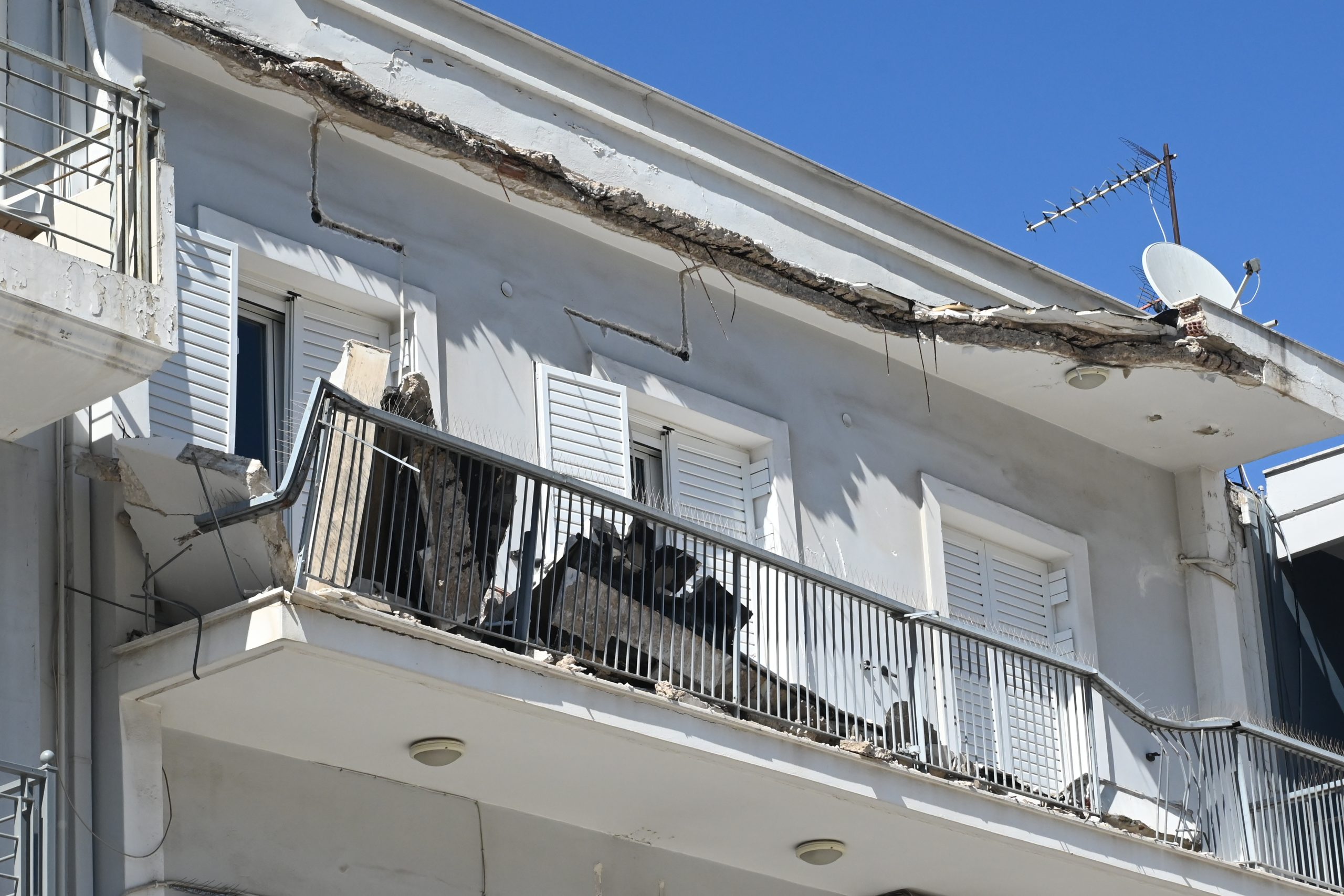
Recent balcony collapses in Athens highlight the need for inspections of thousands of buildings due to their age, to determine if they are structurally sound, according to a report by Lifo.
One key issue is that balconies are bearing loads not accounted for by engineers during construction in the 1950s, 60s, and 70s. These loads include thermal facades, heavy glass panels, and window frames.
Buildings from 1980-1987 present the most significant problems, as the materials used in construction were of lower quality compared to those from the 1950s or 60s.
In Greece, there is no requirement for re-inspecting the structural integrity of buildings constructed decades ago.
The state, with all these building renovation programs during the boom of short-term rentals, does not adequately account for the factors that impact the structural integrity of buildings.
According to Aris Chatzidakis, vice president of the Earthquake Protection Organization (OASP), who spoke to Lifo, energy upgrading a building without considering its structural safety is dangerous, particularly in areas with seismic risk.
“The first seismic event could be fatal for the energy-upgraded but structurally unsafe building,” he says.
Additionally, humidity is a factor affecting the structural integrity of balconies, as the water they hold causes the metal parts to oxidize, leading to falling plaster.


 What is fyi.news?