(Photo by fyi.news/Victoras Antonopoulos)

Greece: Some people still live on cash

Add your Headline Text Here
@fyinews team

24/12/2025

Copy link
fyi:
  1. Street vendors, street performers, homeless people, unemployed people, and people on low pensions, who rely on itinerant trade to survive, are finding life increasingly difficult, as fewer and fewer people carry cash.
  2. Fyi.news went downtown Athens and spoke with people who still rely on cash to live, documenting in what ways the spread of digital means of payments is shrinking their already meager income.
  3. Text: Anastasis Koutsogiannis and Victoras Antonopoulos Photographs: Victoras Antonopoulos

Street vendors, street performers, homeless people, unemployed people, and people on low pensions, who rely on itinerant trade to supplement their meager income are finding life increasingly difficult, as fewer and fewer people carry cash.

Digital payment methods (e.g. IRIS, e-banking) and cards may make life easier for many consumers, but their growing use directly affects people who rely on cash to live.

Recent data from the European Central Bank and DIAS INTERBANKING SYSTEMS S.A. show that almost 1 out of  euros spent by consumers in Greece is now paid via card or apps, rather than cash.

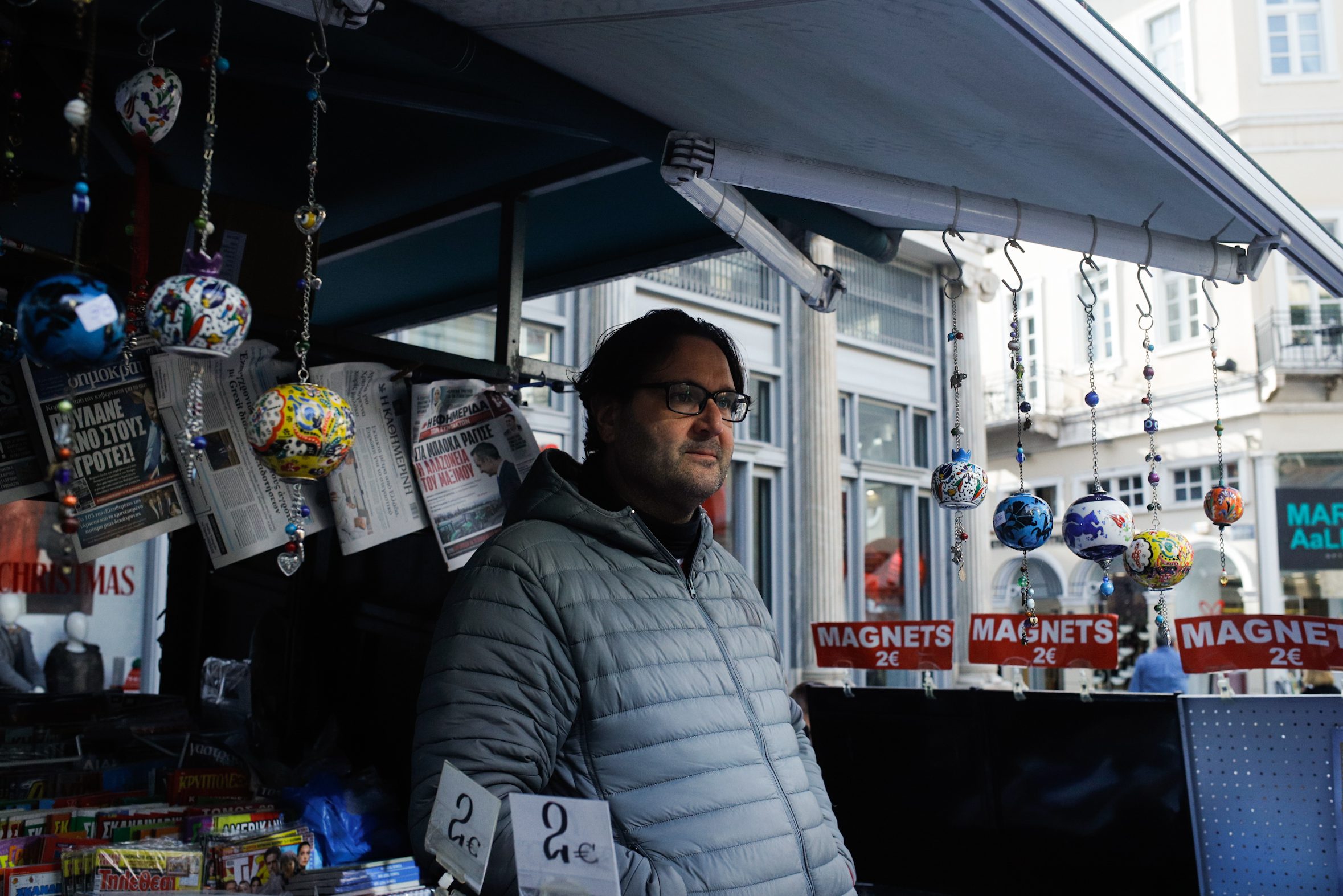
Mr. Giorgos behind his stall in Kapnikarea Square (Photo by fyi.news/Victoras Antonopoulos)

Mr. Giorgos runs a stall with books, magazines, and other small items in Kapnikarea Square. ‘Kids in primary school never carry cash. Soon they’ll be asking, just like you may not have lived through the drachma, new generations will be saying, Who remembers the banknotes’, says Mr. Giorgos.

Although primary school children are still familiar with cash, as school canteens are among the few businesses exempt from the mandatory use of POS terminals, Mr. Giorgos’ claim doesn’t seem too far-fetched.

New York and London are gradually moving toward cash-free shops and open-air markets.

Do you accept cards? Can I pay by card, Mr. organ grinder?

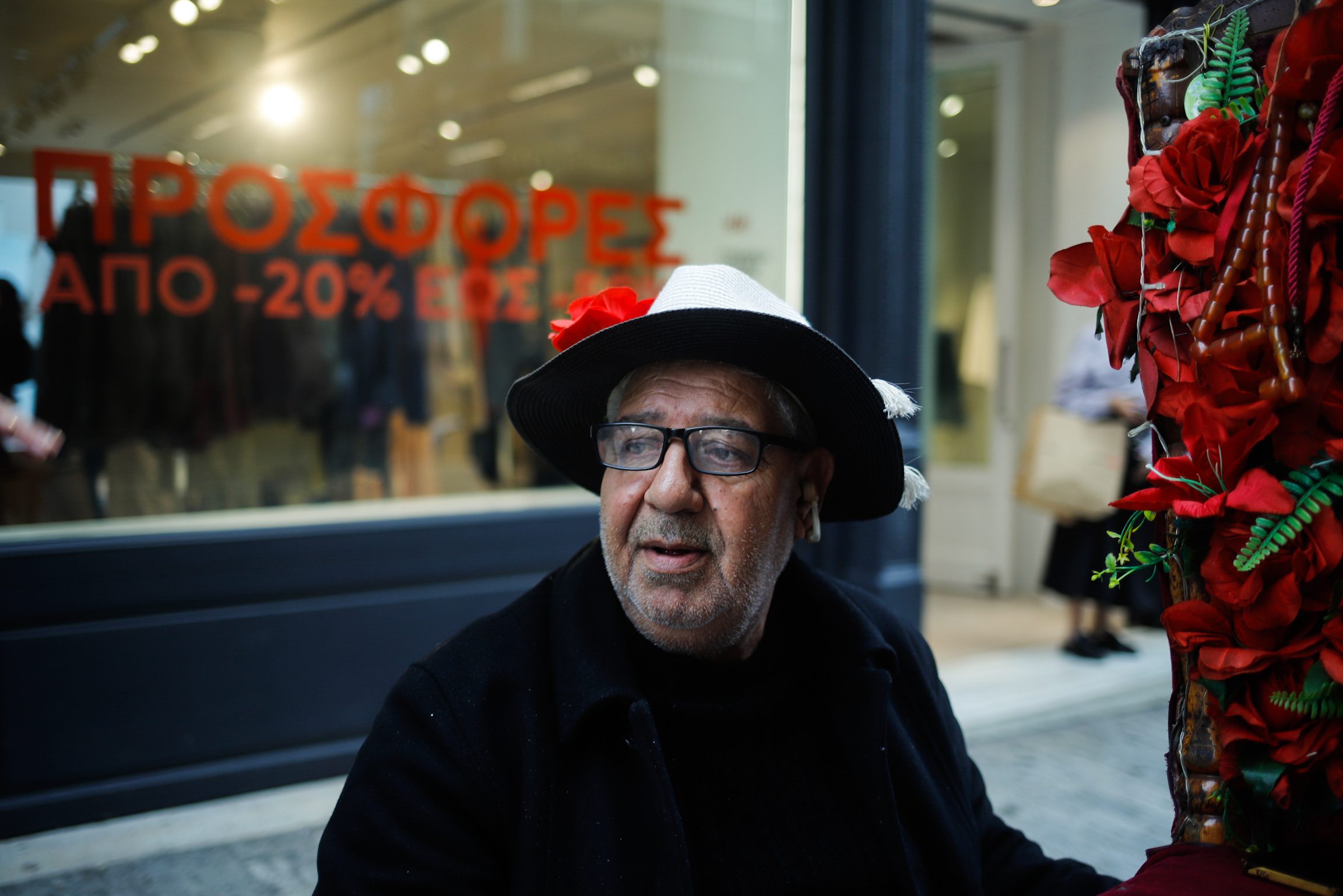
Mr. Spyros, organ grinder on Ermou Street. (Photo by fyi.news/Victoras Antonopoulos)

Mr. Spyros has been making a living for 27 years playing the barrel organ on Ermou Street in Athens. ‘Over the years, people have been carrying much less cash. Most people, maybe 80%, walk around with cards, ’he tells us.

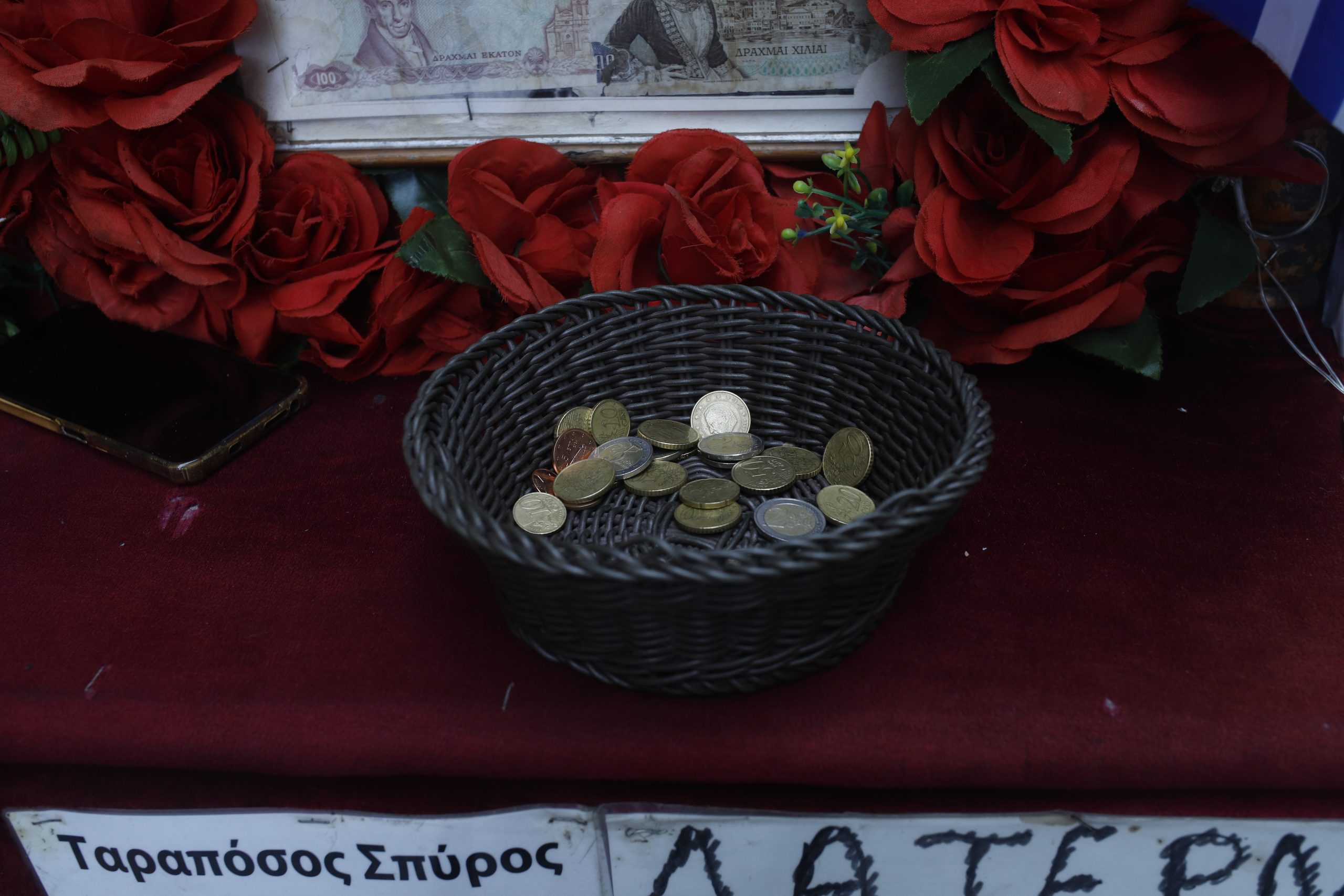
That also affects how much money people give him. ‘The difference is huge compared to the past,’ he says, adding that ‘whoever carries change and wants to give, they’ll will give.

There are also people who want to give something, but they have only card. Some have even asked me if I have a POS terminal’ What kind of POS are we supposed to have? We play music on the Street,’ he says, laughing

Between 2019 and 2024, card payments in Greece rose by 158%, while IRIS instant payments surged by more than 2,500%.

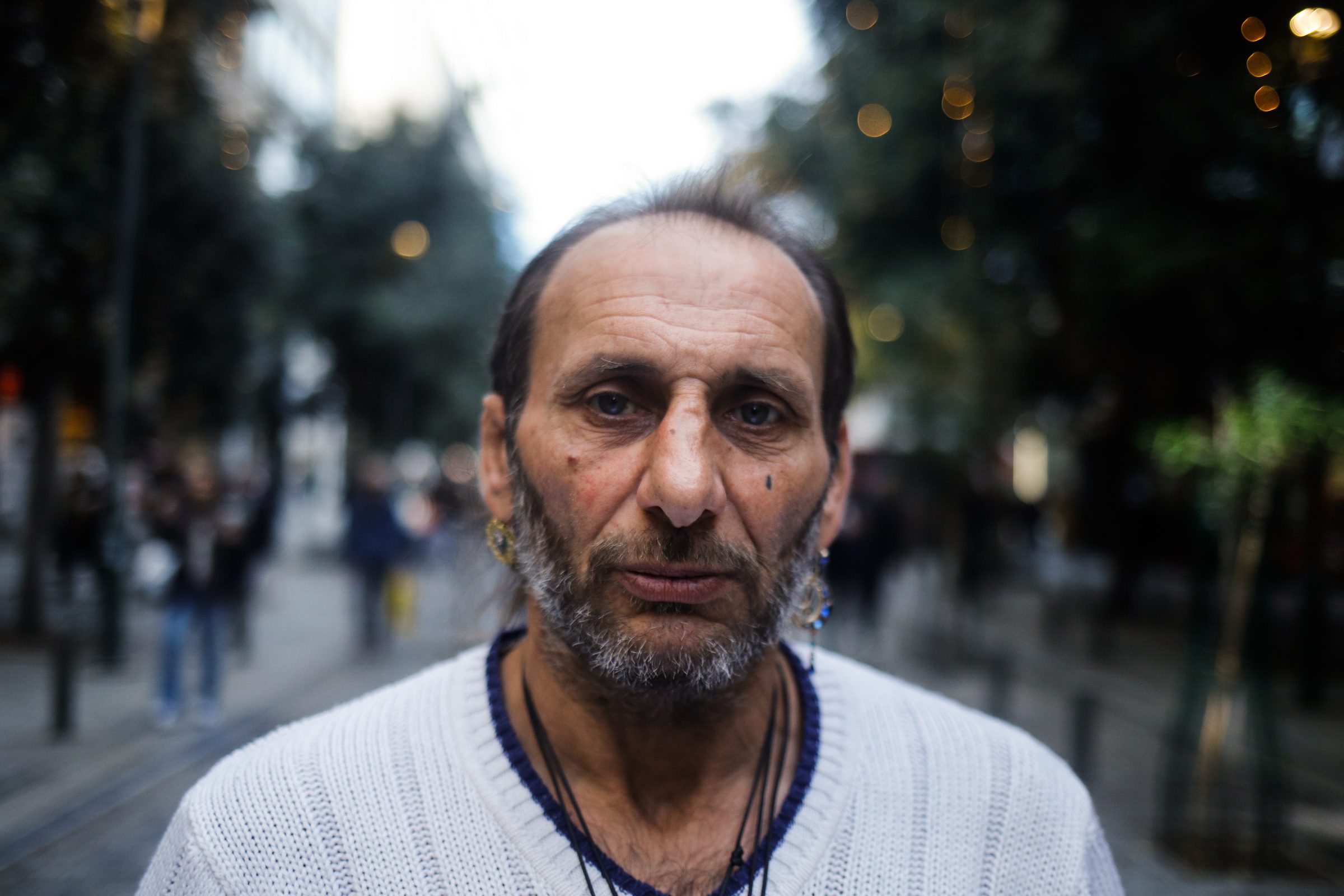
Konstantinos, on Ermou Street. (Photo by fyi.news/Victoras Antonopoulos)

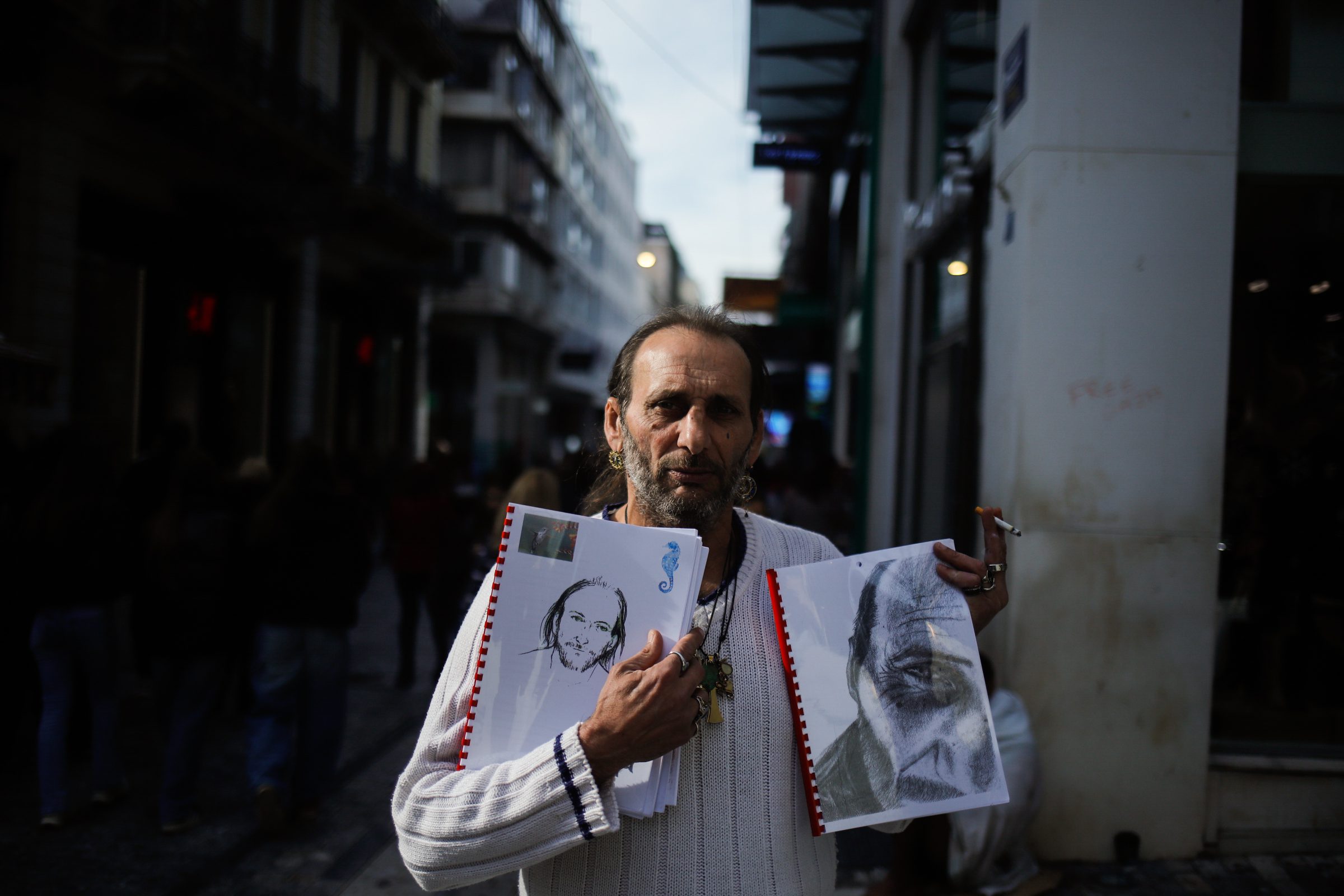
Konstantinos has been selling his own poems and short stories on Ermou Street for the past two years. ‘People don’t leave cash anymore, so I set up IRIS. I had to adapt,’ he says.

For 20 years, he has made a living selling various forms of printed material. Being a former drug user, homeless and ex-prisoner, he doesn’t have a stable income. Lately, even those limited earnings from books have started to decline.

Konstantinos managed to open a bank account to receive payments. However, for many people who rely on cash, that process is impossible because they are not even in a position to gather the main supporting documents.

A Japanese musician on a European tour

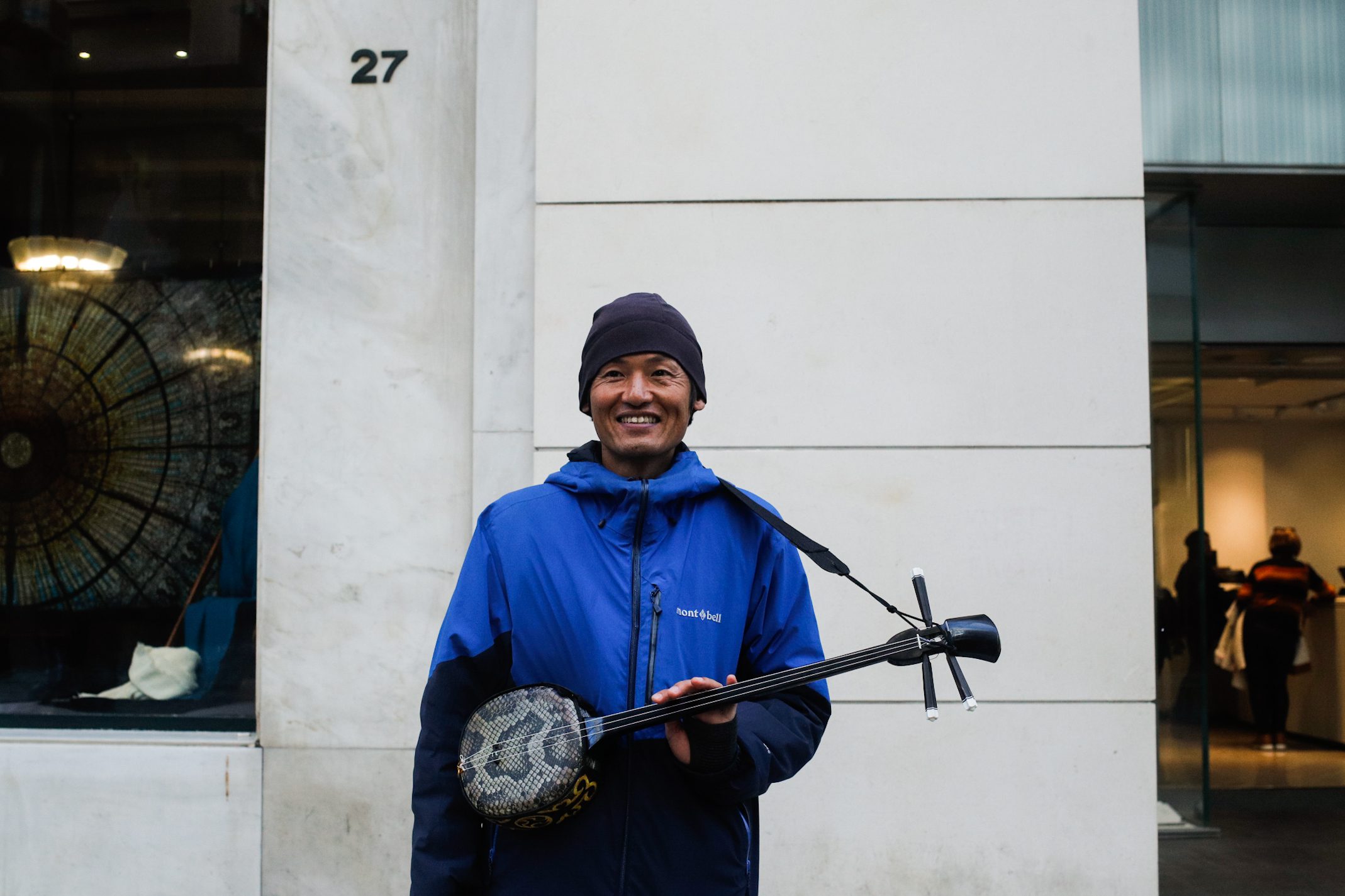
Takashi, a street musician from Japan (Photo by fyi.news/Victoras Antonopoulos)

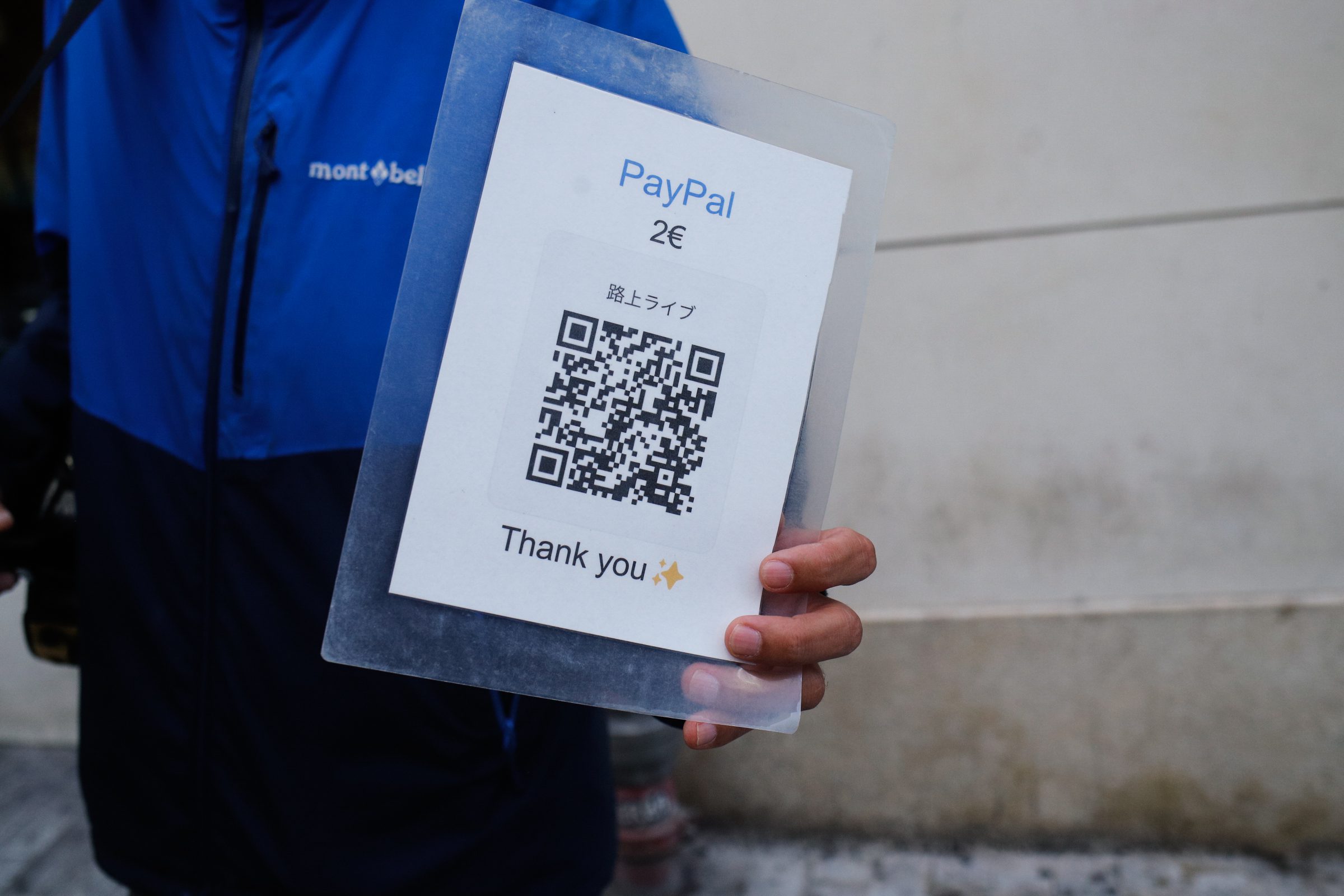
Takashi, a 46-year-old Japanese Street musician, sees things a bit different. ‘Before I came to Greece, I was in Scandinavia. There, people really don’t use cash, only cards, so I had to set up a PayPal account’.

This is also confirmed by data from the central bank of Sweden, according to which only 10% of consumers used cash for a purchase in 2023 – a drop of 30 percentage points compared with 2010. The corresponding figures in Denmark and Norway are 12.5% and 2%, respectively.

Takashi with the photocopy of his PayPal QR code. (Photo by fyi.news/Victoras Antonopoulos)

He couldn’t use cash for accommodation or transportation. ‘In Greece, Spain and Portugal, it’s still okay,’ says Takashi.

Indeed, in southern and eastern Europe, cash use is far more common than in the north. For example, in 2024, 61% of payments in Italy were made in cash, 57% in Spain, and 54% in both Portugal and Greece.

The beginning of the end

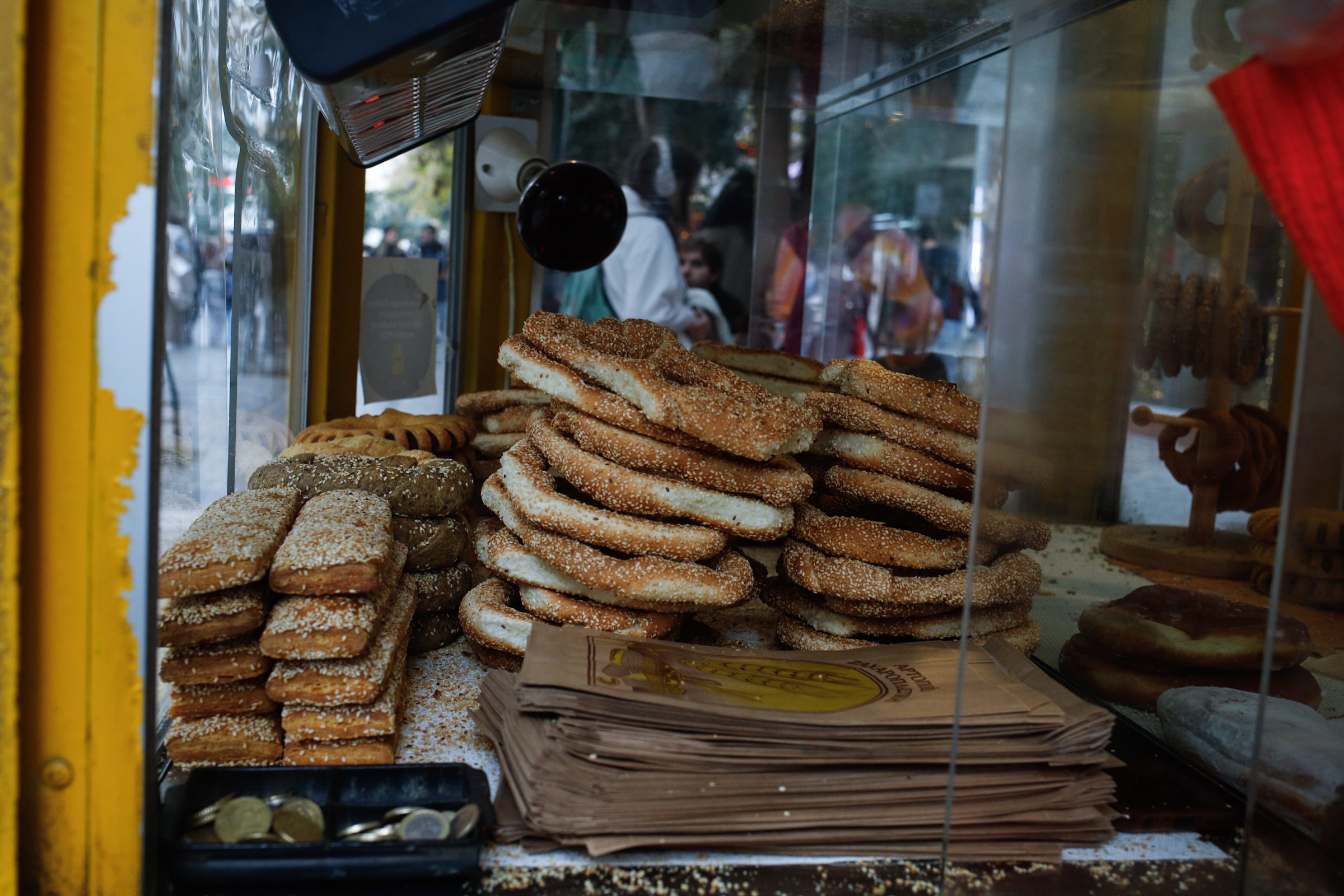
Koulouria and small change ‘coexist’ on a stall in Athens centrum. (Photo by fyi.news/Victoras Antonopoulos)

Almost all businesses in Greece (self-employed professionals and companies) that sell goods or services to consumers are required to have a POS terminal. Koulouri sellers, too (koulouri: sesame bread ring).

For Mr. Kostas, who has been selling koulouria for many years at the start of Akadimias Street, mandatory POS terminals were for him ‘the beginning of the end.’

‘If someone doesn’t carry 50 cents to buy a koulouri, it’ no use for me. They want to pay by card for one or two little koulouria. If I add the bank’s fee to my total costs, there’s nothing left for me. I’d rather give them for free,’ he says.

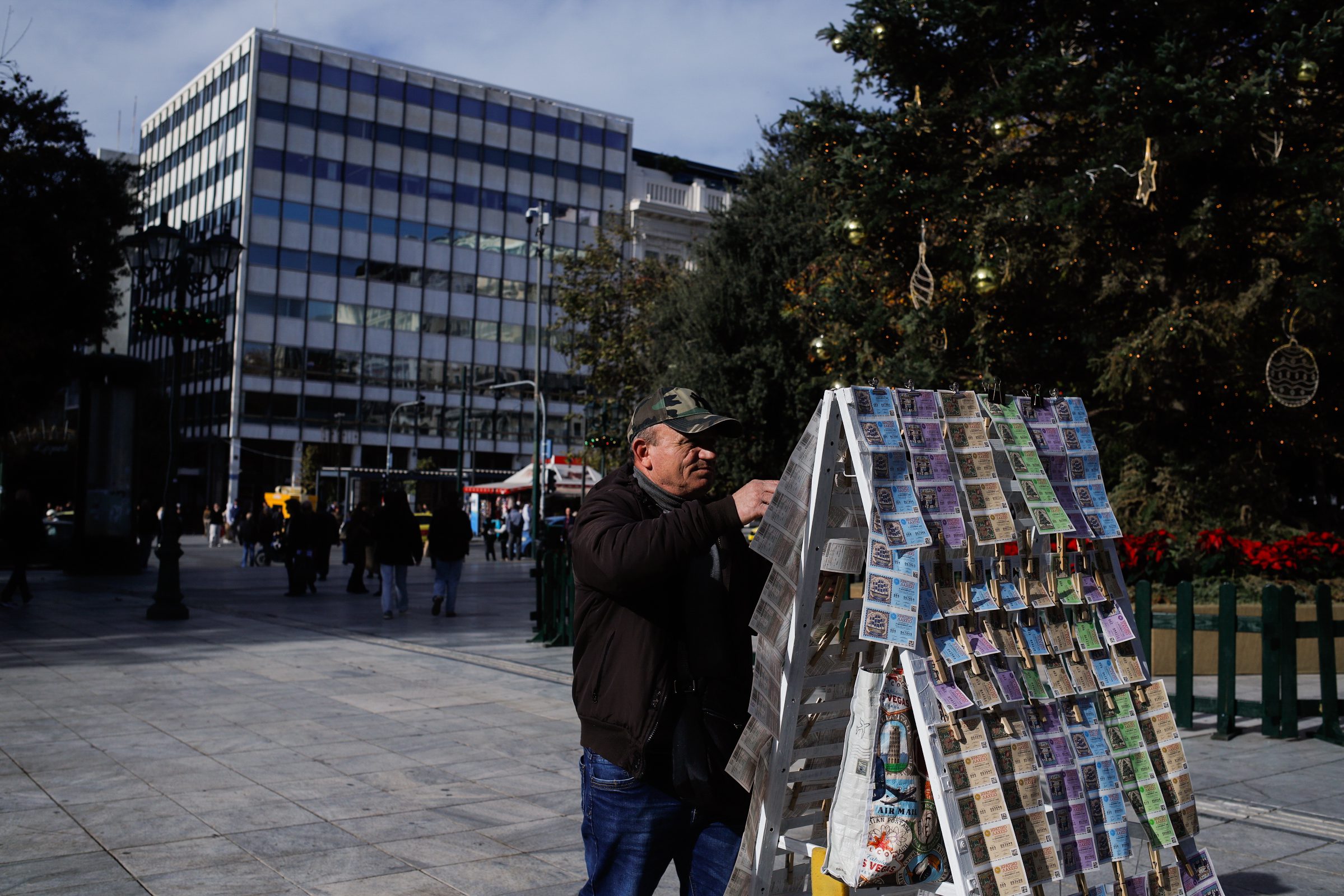
Mr. Petros lining up his lottery tickets in Syntagma Square. (Photo by fyi.news/Victoras Antonopoulos)

Mr. Petros, has been selling lottery tickets in Syntagma Square for 15 years. ‘Money isn’t coming in like it used to, ’he says. ‘Things are difficult. All our income goes to the state,’ he says, even though he is exempt from the POS requirement.

‘Even if it weren’t mandatory, I’ll be forced to get a POS terminal, because people now walk around only with cards. Tourists take it for granted that they’ll pay by card,’ says Mr. Giorgos.

His income has also shrunk in recent years, even though his sales are more or less the same. ‘There is a drop in income, definitely because of taxation, but also because of the card fees.’

‘Luckily, the older generations still pay by cash and they keep the market alive,’ he explains.

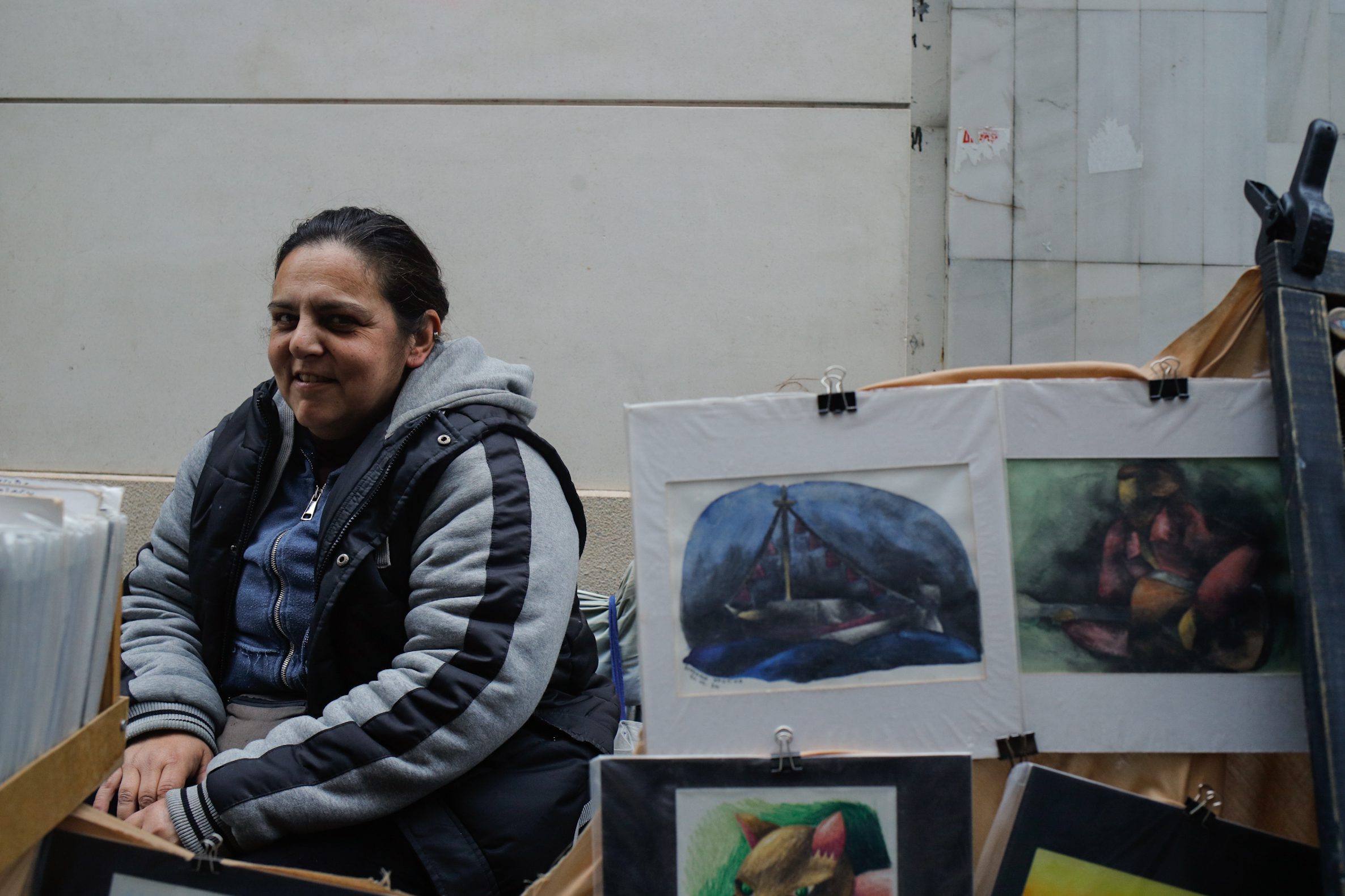
Ms. Christina behind her stall on Ermou Street. (Photo by fyi.news/Victoras Antonopoulos)

Ms. Christina has been selling handicrafts and paintings on Ermou Street for the past 12 years. ‘People are getting used to only carrying cards,’ she says. ‘My daily earnings are down 30% to 40%, and cards are one of the main reasons.’

POS transaction fees usually range from 0.5% to 1.5%, depending on turnover and the type of card (Mastercard, Visa, etc.), adding to the existing burdens of itinerant vendors. In cases of non-compliance, the fine runs into several thousand euros.

Tissues, clarinets, and tourists

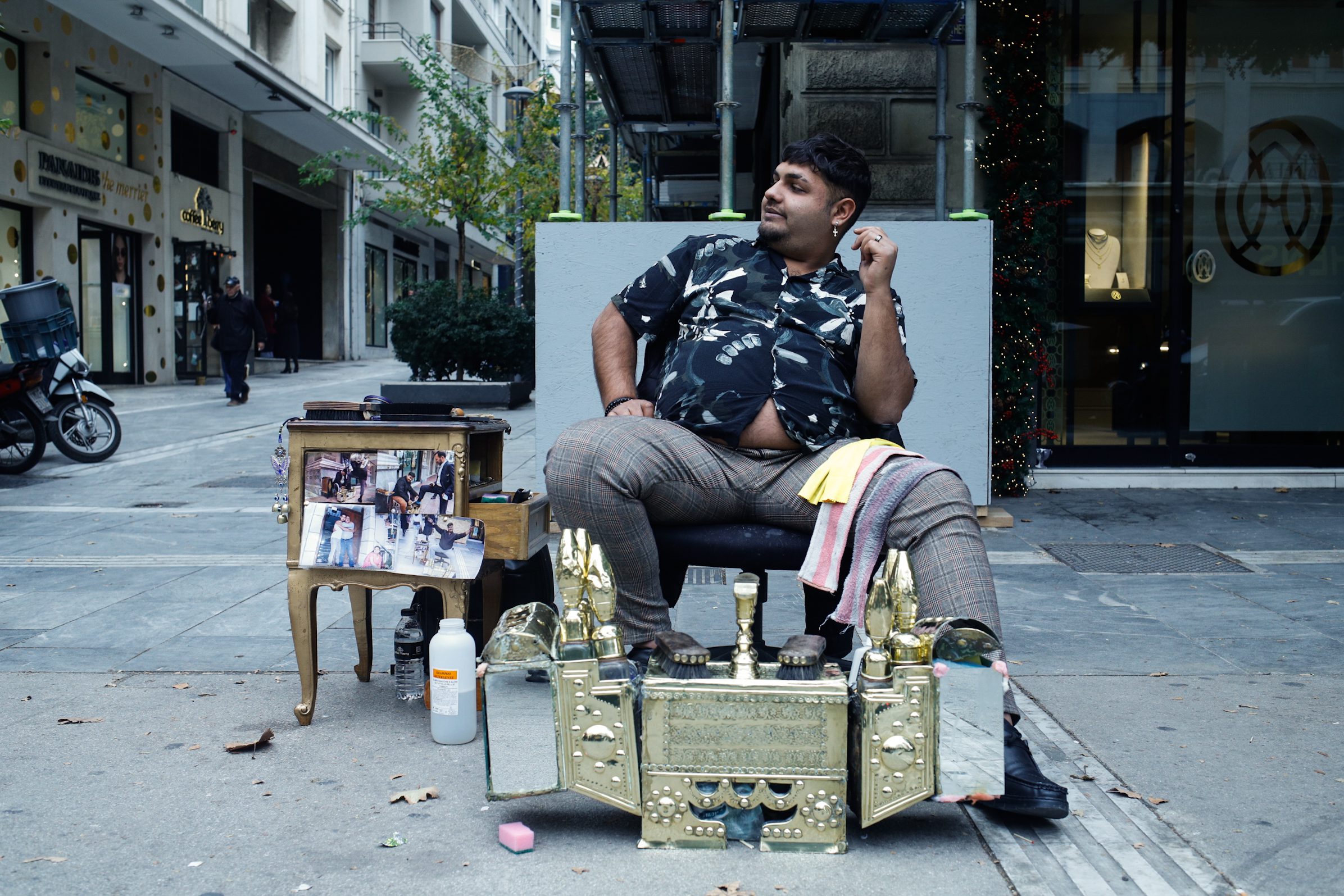
Christos with his shoeshine stand at the corner of Voukourestiou and Panepistimiou Streets. (Photo by fyi.news/Victoras Antonopoulos)

Christos is one of the last two shoe shiners in the city center. Since 2021, he sets up his shoeshine box at the corner of Voukourestiou and Panepistimiou and shines the shoes of passers-by. ‘Now I barely earn 30 to 40 euros a day,’ he says. When he first started, a day’s earnings could reach up to 80 euros, and on days like Christmas Eve, around 100 euros.

‘People are struggling financially, that’s obvious. But those of us who depend entirely on cash, we’re are in trouble,’ he says.

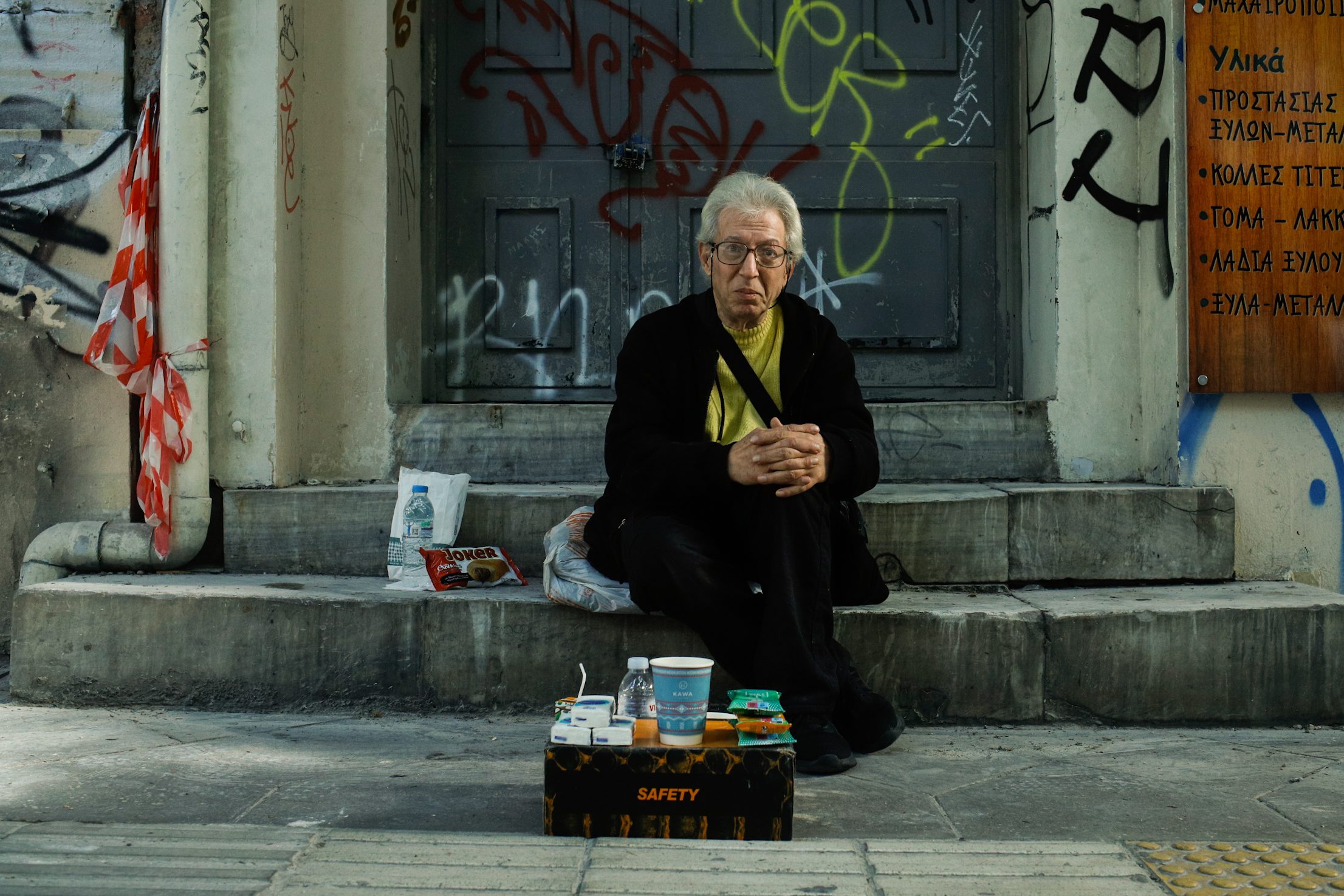
Mr. Thanasis, sitting at the entrance of a building on Athinas Street. (Photo by fyi.news/Victoras Antonopoulos)

On Athinas Street, Mr. Thanasis has been laying out his tissues on a cardboard box every day, since 2015. Thousands of people pass by every day, but these days but these days hardly anyone gives him anything.

He gets only €216 a month from his state pension and depends largely on what passersby give him to get by. ‘People give less and less cash because of cards. I’ve been selling tissues for 10 years to supplement my income. But now it’s no longer enough to live on. What am I supposed to do?’

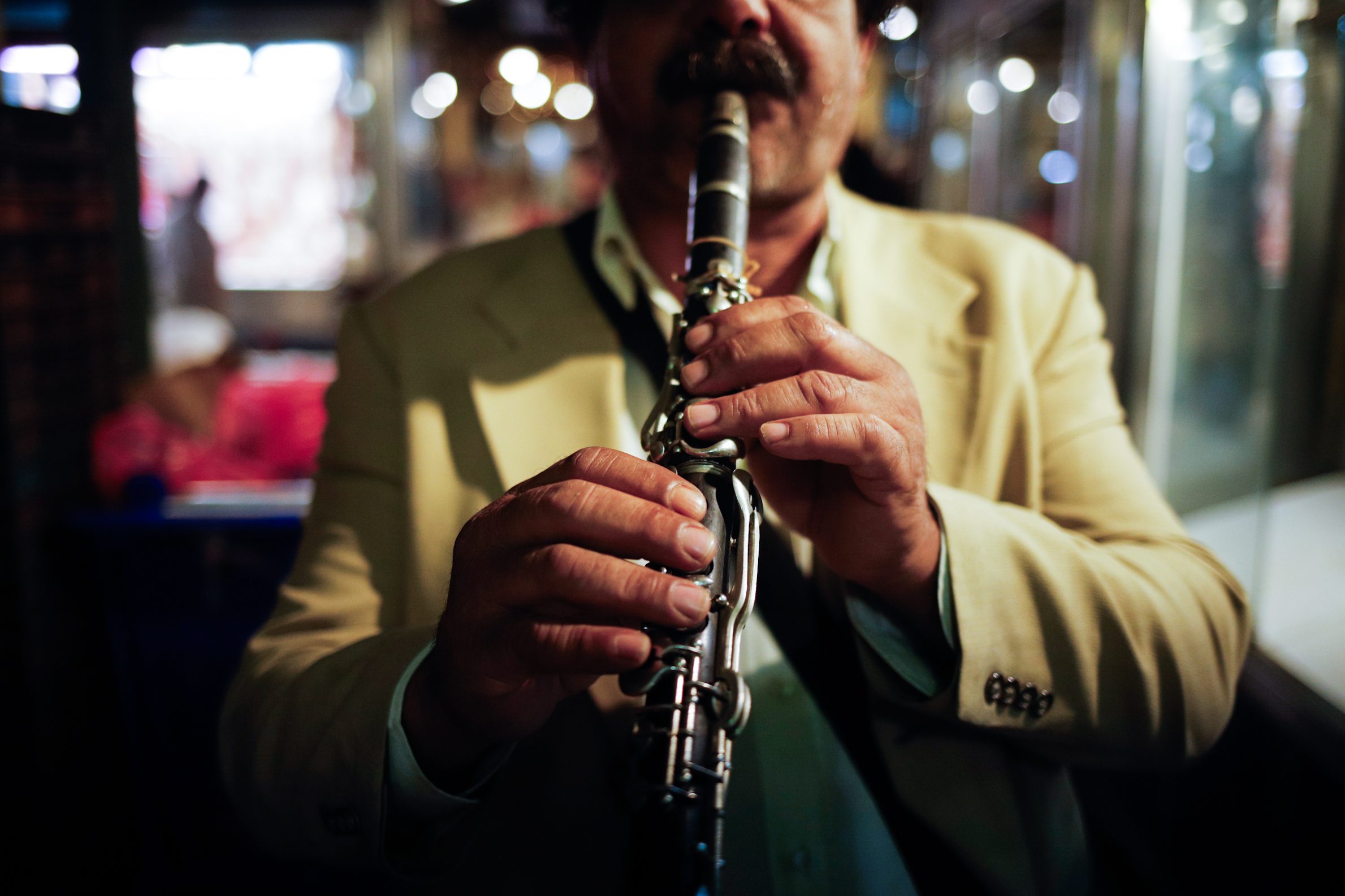
Mr. Fotis plays clarinet in the Varvakios Market. (Photo by fyi.news/Victoras Antonopoulos)

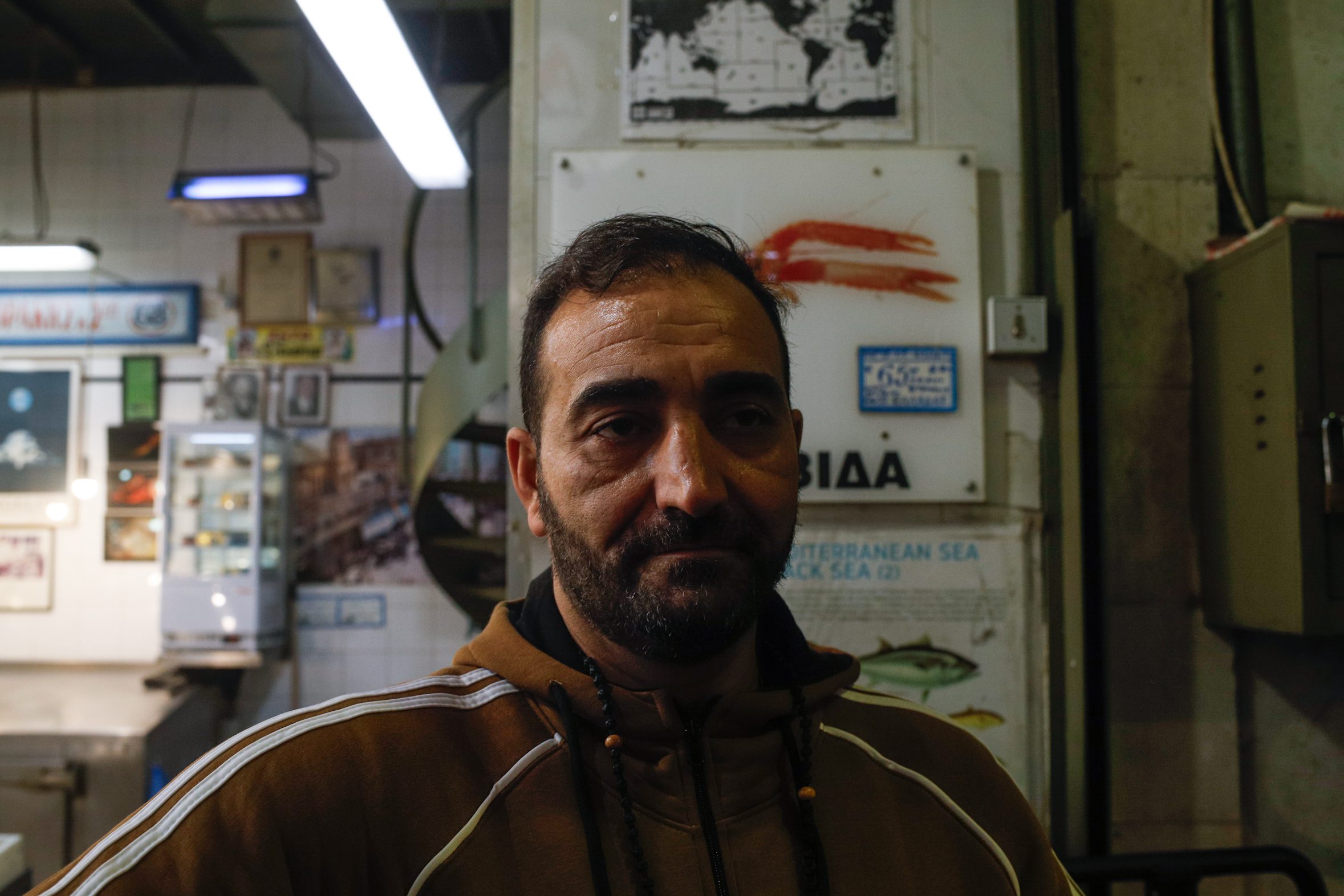
Entering the Varvakios market, we ran into Mr. Fotis, who has been making a living playing the clarinet since he was a child.

‘I go around shops and coffeeshops to make a few euros,’ he tells us. ‘It used to be different. Now everyone has cards; things have changed. We are struggling.’

‘Only in France people use cards. I take only cash,’ a man says from the back, overhearing our conversation. It’s Mr. Panagiotis, who has been making a living for the past five years by playing the bouzouki in the Streets of Athens.

‘On good days I can make up to 50 euros. On bad days… forget it. In recent years my daily earnings have been cut in half because everyone has cards. At least there are tourists around’, he says. Yesterday I small-talking with a foreigner and made 100 euros. But it’s not like that every day,’ he says.

Mr. Panagiotis often passes through the Varvakios area playing the bouzouki. (Photo by fyi.news/Victoras Antonopoulos)

The value of carrying cash

Coins left by passers-by on Mr. Spyros' barrel organ on Ermou Street. (Photo by fyi.news/Victoras Antonopoulos)

At times, we should to remember to withdraw or carry cash with us before leaving the house. By carrying even a few coins, we can contribute, as city residents, to an entire community of people who rely on them.

Using cash, beyond being a small act of solidarity toward those who need it, also allows us to interact more with the people of our city.

‘As the years go by, we become more and more isolated’ says Konstantinos, holding his books. ‘But in general, if someone wants to give something to someone else —whether they sell koulouria, or they’re a musician, a painter, a poet, or a jewelry maker —they ‘re really supporting them. There is still a way,’ he says.


AD(1024x768)