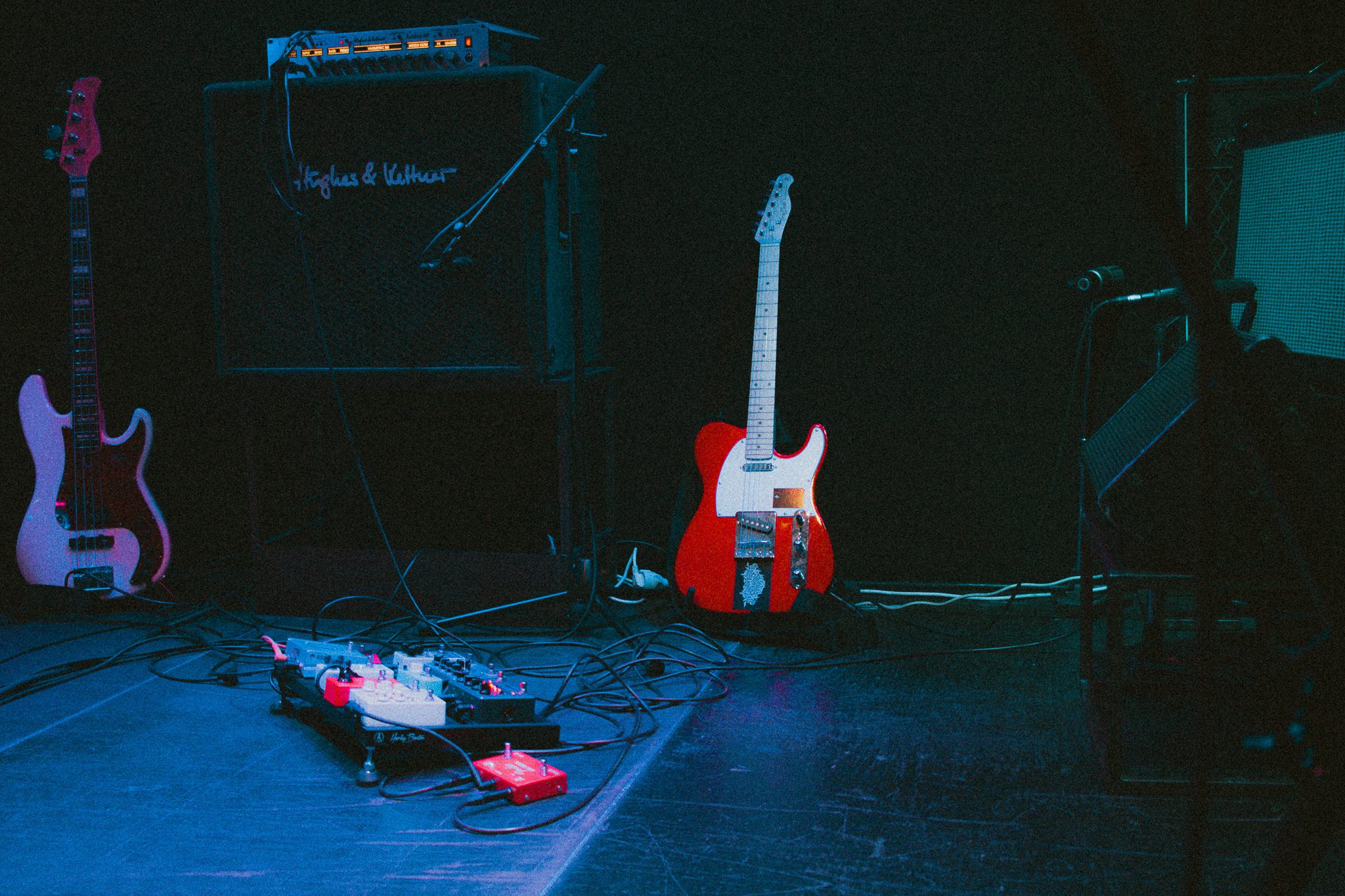
(Photo by Katerina Paspaliari)

Can kids still go to concerts? Greece’s new ban sparks debate

Add your Headline Text Here
@fyinews team

06/05/2026

Copy link
fyi:
  1. Can a child attend a concert in an indoor venue with their parent? From now on, no. A change in the law regarding alcohol and tobacco bans minors from entering indoor concert venues.
  2. Are children really being protected through a blanket ban? Parents, musicians and venue managers share their views on the issue in the report we prepared.
  3. Text: Anastasis Koutsogiannis | Photos: Katerina Paspaliari

By Anastasis Koutsogiannis

“Unfortunately, the kid won’t be allowed in. If you want, give me your ticket numbers so your money can be refunded.”

That was the response Noria Politi received from a concert organizing company after contacting them to confirm something she had just heard: minors are no longer allowed to attend concerts in indoor venues, even when accompanied by a parent.

“My first reaction was: no way, surely this only applies to unaccompanied minors,” says Noria, who had bought tickets just a few days earlier to attend a rap concert in an indoor venue with her 10-year-old son.

However, the amendment to the law regulating alcoholic beverages, passed last year, states clearly: “Minors are prohibited from entering, remaining in, or working in entertainment venues and bars of any kind” [editor’s note: this does not apply to outdoor concert venues].

The only exception is access to private events, which must be declared at least 48 hours in advance on the platform events.gov.gr.

Health Minister Adonis Georgiadis had commented on the matter: “We are taking responsibility for shielding the new generation from dangers threatening their health. This is not only about prohibitions, but about a comprehensive prevention strategy with zero tolerance for violations.”

“A hatchet blow in the name of so-called safety”

(Photo by Katerina Paspaliari)

“No one has ever truly been protected simply because something was forbidden to them. History offers endless examples,” says Pan Pan.

“What’s needed is education and information. Bans merely flatter the increasingly conservative instincts of a society that is too tired to raise its children with love and instead chooses to harden rules, making it even easier to marginalize its most vibrant part.”

“Live music is an outlet for so many kids. They can find alcohol anywhere; being barred from a concert won’t save them from its dangers. It’s a shame that culture is taking yet another hatchet blow in the name of some supposed safety,” he adds.

Strict bans are often presented as a solution to addiction, though this is rarely confirmed in practice. Studies suggest they may actually increase children’s curiosity by giving things a “forbidden allure.”

Examples from countries such as the United States and the United Kingdom indicate that alcohol consumption is not necessarily reduced, while binge-drinking behaviors may even intensify.

On the other hand, there are examples abroad that seem to work, such as differently colored wristbands for minors or alcohol-free zones.

“Once again, the state has chosen the easy solution of a generalized ban instead of strengthening the enforcement of already existing rules. This affects our daily lives and the way we choose to raise our children,” says Antzi Chatzipanagi, mother of two.

Noria, like Antzi, believes such bans undermine their role as parents.

“We attend concerts, theater performances and films together because I see them as direct, experiential educational tools. I cannot accept that some minister casually decided to preemptively deprive minors of contact with music in order to ‘save’ them from alcohol and cigarettes — especially considering smoking has already been banned in indoor spaces for years,” Noria points out.

“The burden falls on concert venues”

(Photo: Katerina Paspaliari)

The new law has already created serious problems for concert venue managers, the biggest being how to handle the new reality. There are many ambiguities regarding how different police authorities interpret and enforce the law, while non-compliance can lead to imprisonment, fines, or even permanent closure of a business.

“Essentially, all responsibility has been shifted onto concert venues, and we are now forced to manage multiple layers of confusion: organizers who, out of ignorance, continue selling tickets to minors; audiences confused because some venues enforce the law differently; parents who are being stripped of the obvious right to accompany their children to a concert; and regulatory authorities that often lack a clear understanding of how the law should be implemented,” explains Katerina Drakouli, Venue Manager at Fuzz Productions
, which manages the Floyd and Fuzz venues as well as Release Athens.

“Concert venues are now expected to operate under the same framework as nightclubs and entertainment centers, even though our activity is entirely different. There should be a clear distinction, because a concert is not simply a ‘night out for minors’ — it is often a shared experience between parents and children, something that instead of being encouraged is now universally excluded,” she continues.

At the same time, the law has also created tensions between adult customers and venue owners or staff.

“We’ve found ourselves in difficult situations many times with parents, because it is completely understandable that they cannot accept being forbidden from attending a concert with their children. One striking example was during a jazz concert, where two fathers had come with their children to see their favorite saxophonist. They told us, shocked, ‘But they may never get to see him again in Greece.’ Unfortunately, those children were deprived of a unique musical experience they might have remembered forever,” says Katerina.

Similar incidents happen frequently, with families traveling from other cities for concerts only to be denied entry in the end. In practice, what emerges is the exclusion of families from a live music experience that until recently was considered self-evident.

“Being forced to deny entry to parents with children is the stupidest thing I’ve ever been made to do in my life. That’s exactly what I tell the parents and kids left outside,” says an entrance supervisor at a well-known concert venue in Athens.

“We hope for an amendment to the law that restores a basic balance. To us, it’s clear that children up to 16 years old should be allowed to attend concerts only when accompanied by a parent, while for ages 16–17 a more realistic approach is needed,” Katerina continues.

“Live music is not only about entertainment — it is experience, education, and very often a moment shared between parents and children that they may remember for the rest of their lives. Protecting minors is necessary, but it cannot be achieved through their blanket exclusion from concerts,” she concludes.

“Do it now while you still can, because later it’ll be forbidden”

(Photo: Katerina Paspaliari)

“The first concert I ever went to was the Greek band “Trypes” at Rodon in 1996. I was 15 years old. By far the best concert of my life. I remember the entire venue — metalheads, punks and rockers — spending two hours in a giant mosh pit. Incredible scenes,” recalls musician Dimitris Aronis (Moa Bones).

“Almost my entire generation fell in love with Trypes. It wasn’t only because they were such a great band. There was something more. That relationship, at that age, within the social, cultural and sensory experiences called concerts, deeply shaped who we became. So deeply and on so many levels that we began to understand ourselves and the world around us,” he says.

“Thirty years have passed now. I feel as if I blinked and suddenly found myself in a cynical, loveless world. ‘Do it now while you still can, because later it’ll be forbidden,’ a friend once told me. And just like that, quietly, almost incomprehensibly, we arrived here — in the space-time of prohibition. One fine morning, the lawmaking state banned minors from entering live music venues indoors. In other words, it decided it could define the aesthetic and cultural framework within which our children move. Brilliant idea. What does this remind me of, what does this remind me of…” he continues pointedly.

“So from now on, yet another dynamic part of the educational process is abolished and replaced with a simple ‘forbidden.’ Then again, overall personal development is probably considered overrated these days. What we want now are normal children. Because at least normal children are born normally, fall in love normally, and die normally,” he concludes.

AD(1024x768)