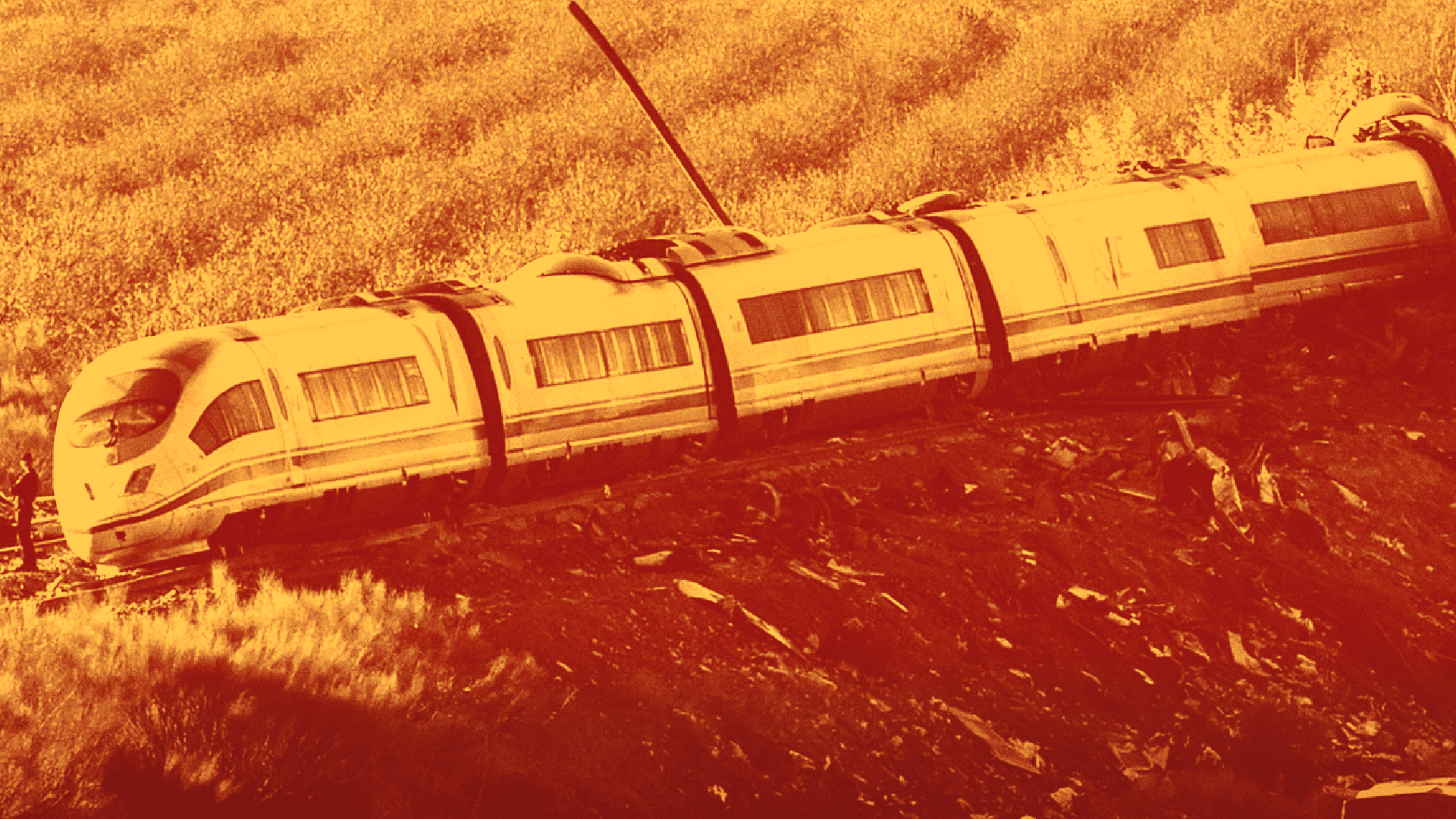
Two high-speed trains collided yesterday near the town of Urda in Spain, killing 68 people and injuring 107, including 15 seriously.
The two trains, one operated by Spain’s state-owned railway company Renfe and the other by private operator Iryo, were travelling in the same direction on the Madrid–Andalusia railway line.
The Iryo train was stationary when the Renfe train struck it from behind at high speed, causing several carriages to derail.
Authorities search for more victims
Rescue crews searched the wreckage overnight for additional victims.
The head of the Castilla-La Mancha regional government, Emiliano García-Page, said the death toll could rise, as rescue crews had “not yet been able to reach the underside of the carriages.”
Four offices have also been set up in Madrid, Toledo, Córdoba and Seville for victims’ relatives to provide DNA samples to help identify the dead.
At least three errors identified so far
According to El País, the information released so far points to at least three errors that led to the accident:
- The shutdown of a safety system that brought six trains to a halt, including the two involved in the collision.
- An incorrect instruction from the control centre ordering the Renfe train to resume its journey.
- The failure of the Iryo train to restart and the Renfe train to brake.
Second major fatal rail accident in 2026, fourth accident overall
This is Spain’s second major fatal rail accident in 2026. On January 18, an Iryo train travelling from Málaga to Madrid derailed and collided with a Renfe train travelling in the opposite direction, killing 46 people.
It is also the fourth fatal accident this year. On January 20, a train struck a collapsed wall near Barcelona, killing one person. On February 12, a car collided with a train at a level crossing, killing the driver.
Investment focused on new infrastructure
Spain’s high-speed rail network is the largest in Europe and the second-largest in the world after China’s.
Until this year, Spain had one of the lowest rates of fatal railway accidents in the EU, with one or fewer deaths per 1,000 kilometres of railway network.
Spain spends more on its high-speed rail network than any other EU country. However, much of that spending has gone towards building new infrastructure, with only around 16% allocated to maintenance, renewal and upgrades of the existing network.


 What is fyi.news?