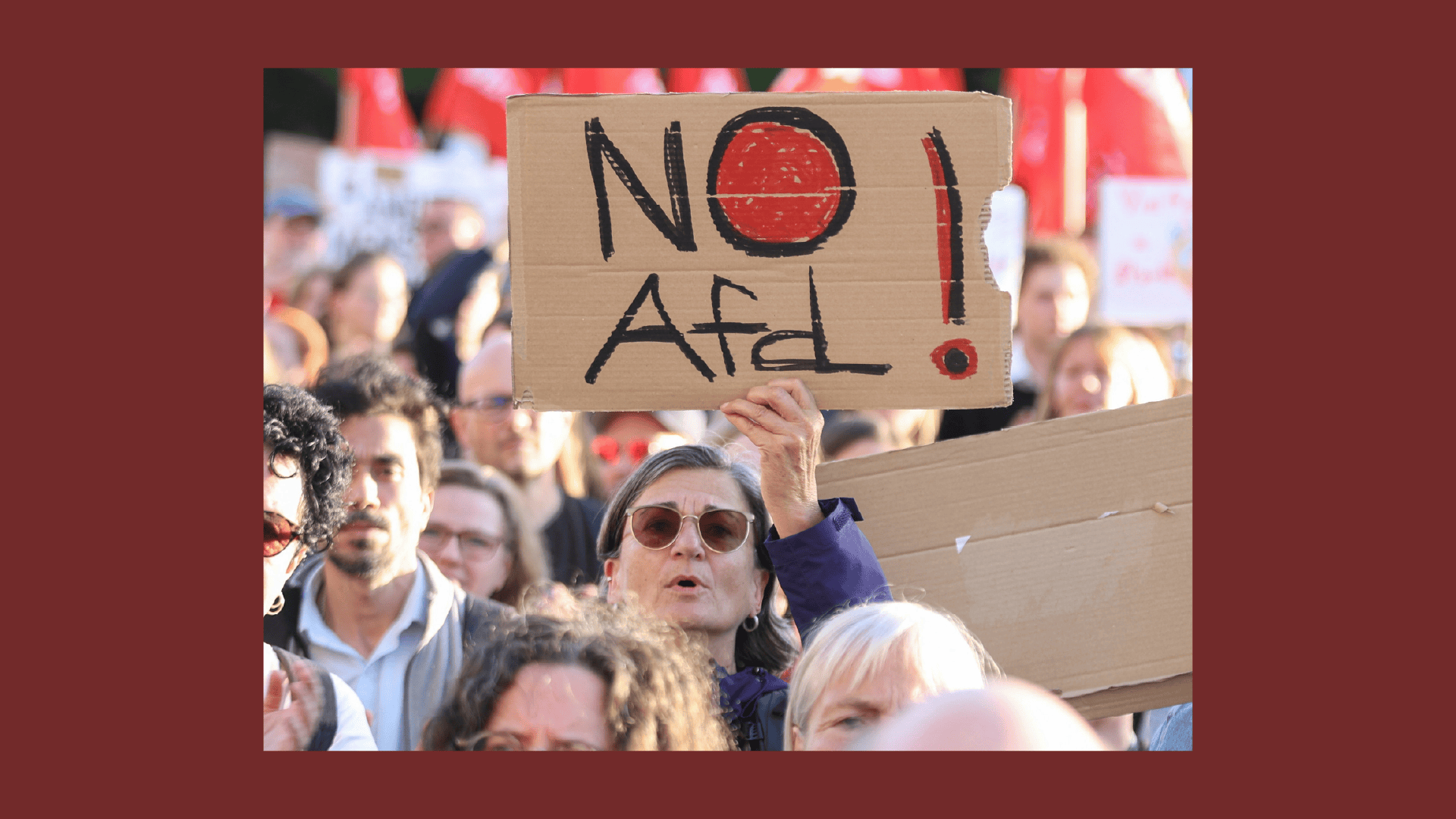
(REUTERS/Maryam Majd)

Germany after AfD’s victory

Add your Headline Text Here
@fyinews team

08/09/2026

Copy link
fyi:
  • The election outcome
  • AfD’s agenda
  • The aftermath and the “firewall”
  • The BSW exception
  • Where does the AfD stand?
  • Where is Saxony-Anhalt?
  • The East-West economic divide
  • AfD’s Saxony-Anhalt leader
  • What about the rest of the country?
  • Sources

The election outcome

The far-right Alternative for Germany (AfD) secured its biggest electoral victory to date in Saxony-Anhalt’s state election, winning 43.8% of the vote and 39 of the 83 seats in the state parliament.

German Chancellor Friedrich Merz’s CDU received 17.2% and 15 seats, followed by the Social Democrats with 9.3% and eight seats, the Greens with 8.9% and eight seats, the Left Party (Die Linke) with 8.6% and eight seats, and the BSW with 5.3% and five seats.

Voter turnout reached 76.5%, the highest ever recorded in Saxony-Anhalt.

AfD's agenda

EPA/CLEMENS BILAN

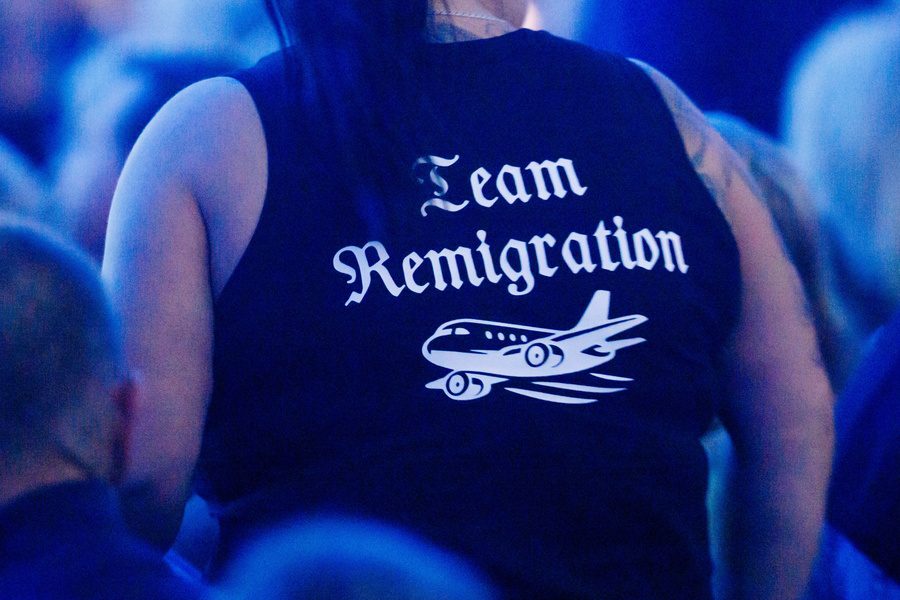
The Alternative for Germany (AfD) is a far-right party with anti-immigration positions and has been classified as a suspected extremist organisation by Germany’s domestic intelligence agency.

Its positions include mass deportations and separate school classes for children from immigrant backgrounds.

Before entering parliament, the AfD expressed less extreme positions in an effort to avoid legal mechanisms that could exclude it from parliament and public debate.

The aftermath and the “firewall”

(UNSPLASH)

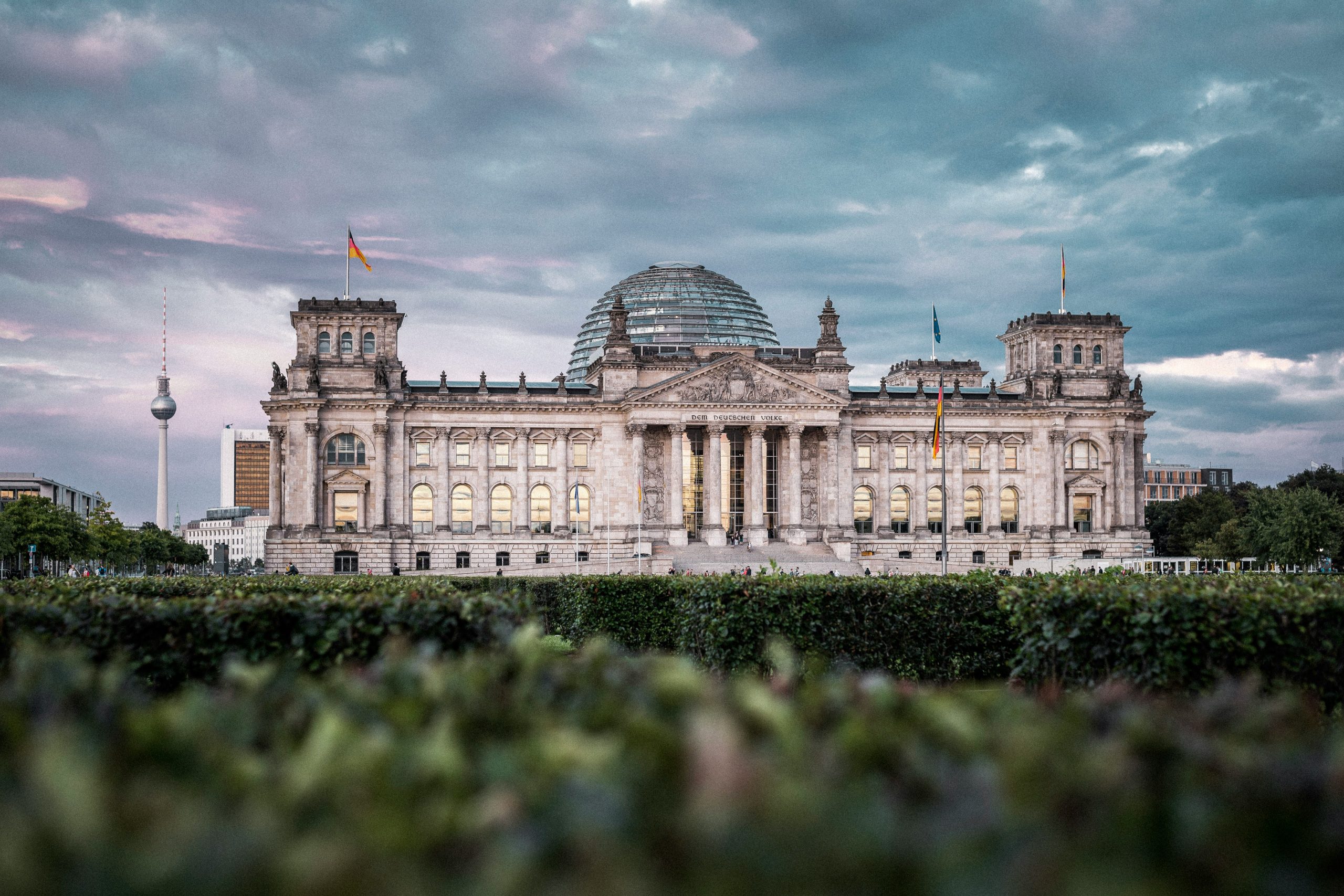
The AfD did not win an absolute majority and therefore cannot govern alone. To form a government, it would need the support of another party. However, the other parties have ruled out cooperating with it.

This political approach is known as the “Brandmauer,” or “firewall”:

Literally, it refers to a wall designed to stop a fire from spreading from one building to another.

In politics, it refers to the isolation of extremist parties by mainstream democratic parties.

The BSW exception

The only party that has not adopted the same position is the BSW*, which emerged from the Left Party (Die Linke).

Despite its left-wing roots, both the party and its founder have since shifted towards more nationalist positions.

The BSW has also left open the possibility of forming a coalition with the AfD, pointing to positions the two parties share.


The party takes its name from its founder, Sahra Wagenknecht: Bündnis Sahra Wagenknecht.

Where does the AfD stand?

(EPA/FILIP SINGER)

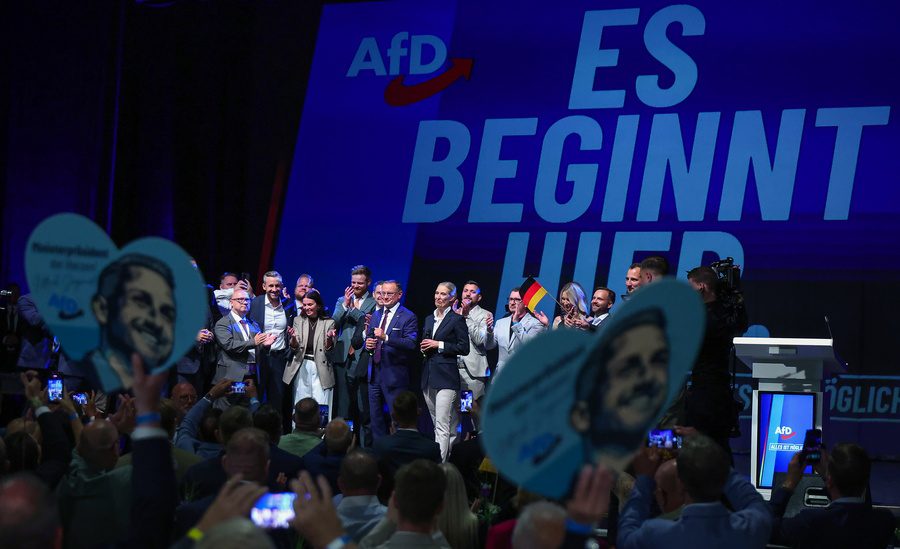
Τhe AfD, however, has made clear that it wants to govern alone.

One possible scenario is a new state election in Saxony-Anhalt, which could give the party a chance to secure an outright majority.

An AfD majority is not out of reach. If the BSW were to fall below the 5% threshold and remain outside the state parliament, the AfD could secure an absolute majority of seats.

Where is Saxony-Anhalt?

Saxony-Anhalt is one of Germany’s 16 federal states and was part of East Germany before the fall of the Berlin Wall.

Experts largely attribute the AfD’s strong performance to widespread dissatisfaction with the state of the economy. Wages are below the German average and unemployment is higher, partly due to job losses caused by deindustrialisation following German reunification.

At the same time, residents oppose further immigration, even though the share of foreign residents in Saxony-Anhalt remains lower than in Germany as a whole.

The East-West economic divide

The economy of former East Germany remains weaker than that of former West Germany, contributing to dissatisfaction among residents.

For example, the average gross monthly salary is €3,013 in the East, compared with €3,655 in the West. Unemployment stands at 7.8% in the East, compared with 5.1% in the West, while 98% of Germany’s inheritance tax is paid in the West.

The East also faces demographic challenges. Between 1990 and 2022, its population fell by 15%, while the population of former West Germany increased by 10%.


AfD’s Saxony-Anhalt leader

(EPA/HANNIBAL HANSCHKE)

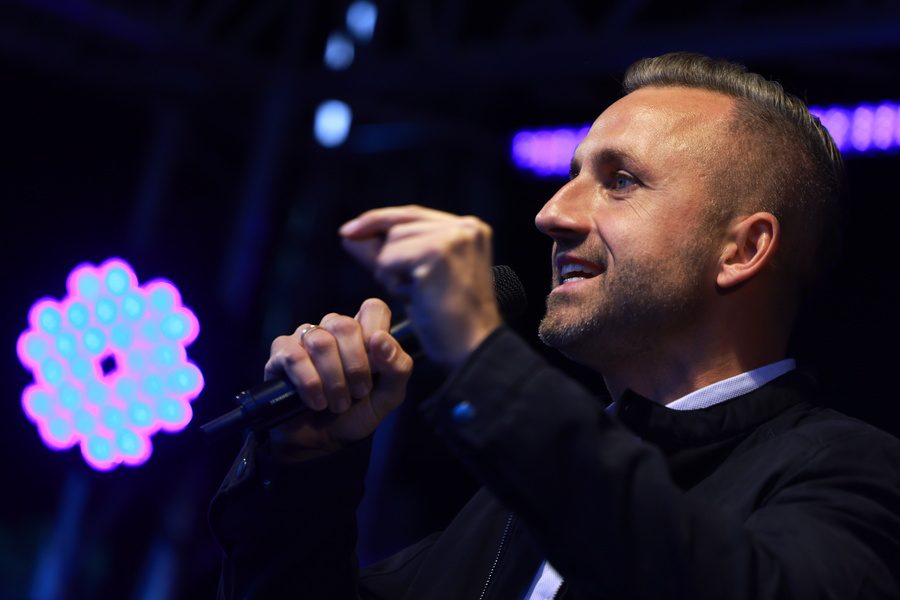
The AfD’s leader in Saxony-Anhalt is Ulrich Siegmund, a businessman who was a member of the CDU until 2015 before joining the AfD. Two years later, he was elected to the state parliament.

Siegmund is one of the AfD’s most recognisable figures, with a strong social media presence and more than 400,000 followers on Instagram and 763,500 on TikTok.

This may partly explain his appeal among younger voters in the election, with the AfD receiving 43% of the vote among 18- to 24-year-olds.

What about the rest of the country?

(EPA/HANNIBAL HANSCHKE)

In Thuringia, the AfD came first in the September 2024 state election with around 32.8% of the vote but remained outside government.

Germany’s next state elections will take place on Sunday, September 20, 2026, in Berlin, for the House of Representatives, and in Mecklenburg-Vorpommern.

Nationwide, support for the AfD has risen to 27%, while the CDU has fallen to 21%.

Sources

Deutsche Welle [1], [2]

Conversation [1], [2]

Guardian

AD(1024x768)