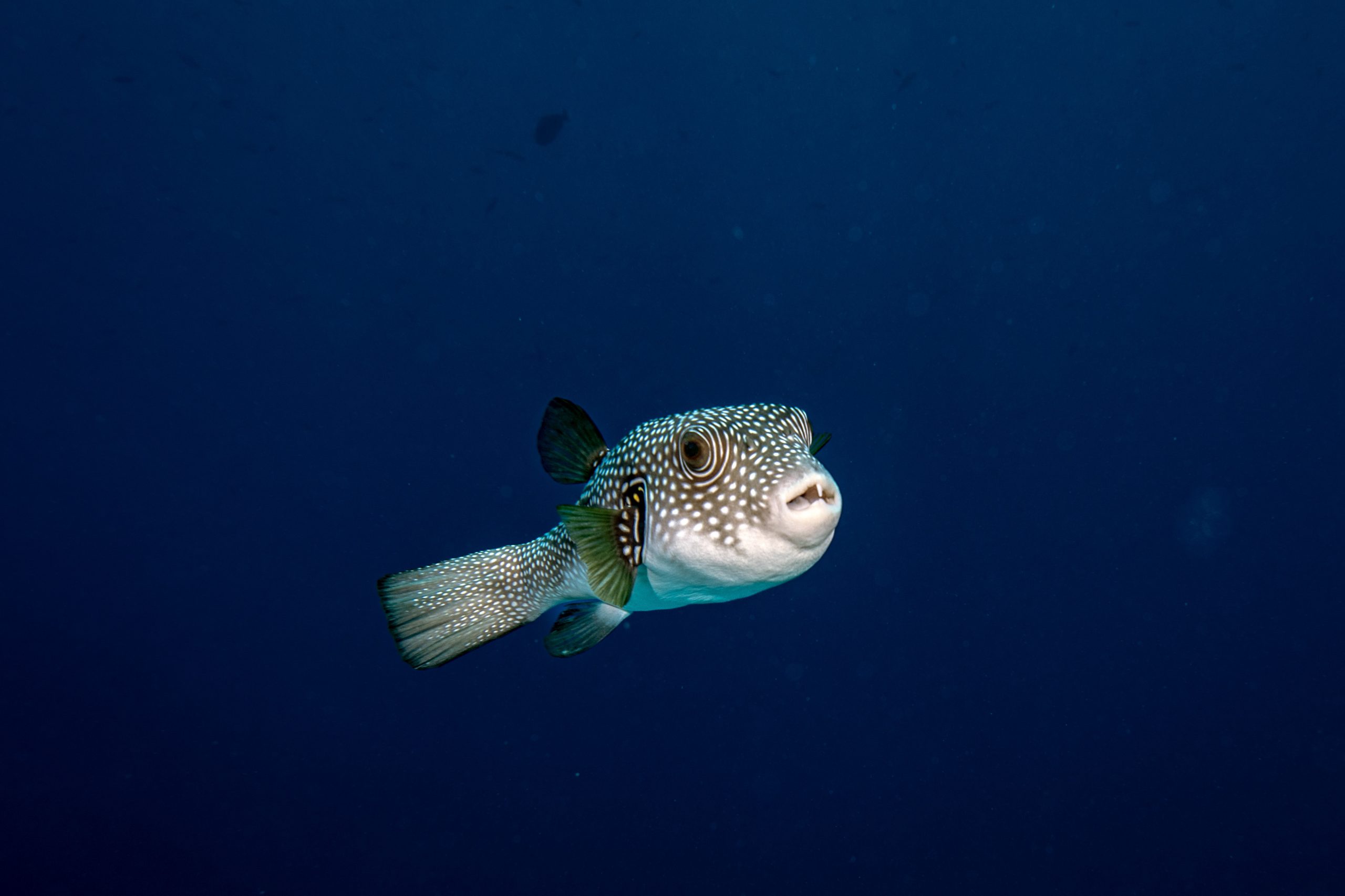
The silver-cheeked toadfish, an invasive, toxic fish of Indo-Pacific origin, is now spreading beyond the waters of Crete and the Dodecanese, where it had been most frequently recorded in previous years. According to a Kathimerini report, its presence has been confirmed on beaches in Attica, from Palaia Fokaia and Saronida to Varkiza, as well as in the South Euboean Gulf, in areas such as Bourtzi, Lefkandi and Eretria.
The species entered the Mediterranean through the Red Sea and first appeared in Greek waters in 2005. Its spread is causing concern both for the safety of bathers, following the first reports of attacks, and for coastal fishing. With its powerful teeth, the silver-cheeked toadfish destroys nets and longlines while feeding on catches. It is also considered highly dangerous if consumed, as it contains a powerful neurotoxin that can be fatal and is not neutralised by cooking.
As a possible management strategy, experts point to the Cyprus model, where financial incentives were given to fishermen to eradicate it.
Scientists link the expansion of its presence to rising sea temperatures, its high adaptability, the availability of food and the absence of natural predators in the Mediterranean. For this reason, they describe it as a biological invasion strengthened by climate change, rather than a temporary phenomenon. Specifically, according to a recent study, environmental conditions in many Greek marine areas will continue to favour its presence and spread at least until 2035.
The Cyprus model, involving financial incentives for fishermen to remove the species, has been proposed as a possible management strategy. However, experts stress that the goal is not to eliminate the silver-cheeked toadfish entirely, but to limit its impact.
Source: Kathimerini


 What is fyi.news?