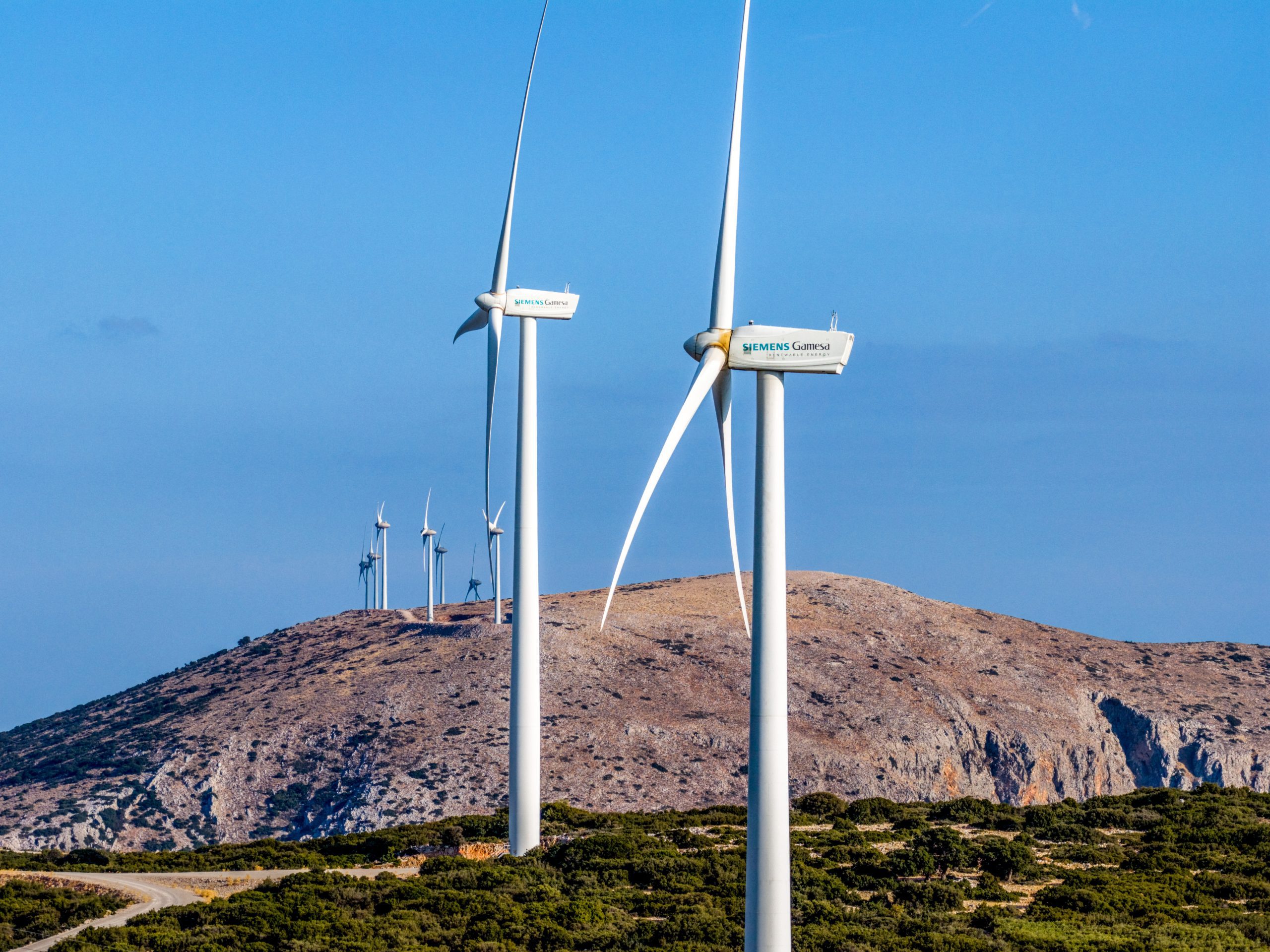
A new special spatial planning framework for renewable energy sources has been opened to public consultation in Greece, introducing stricter restrictions on the siting of new wind and solar energy projects. Among the key provisions is a complete ban on the installation of wind farms on islands smaller than 300 square kilometres and in areas located above 1,200 metres in altitude.
The island provision means that new wind projects will only be permitted on the country’s 15 largest islands, including Crete, Euboea, Rhodes and Naxos. Smaller islands, where strong local opposition to wind turbine installations has emerged in recent years — such as Skyros and Tinos — would be excluded, according to a report by Kathimerini.
Despite the new restrictions, the framework does not affect projects that have already received environmental approval or submitted a complete licensing application by May 20.
The new rules also prohibit wind energy projects in areas designated by the Environment Ministry as “untouched mountains” (mountainous regions without road networks and with limited human intervention) including parts of the Lefka Ori, Taygetus and Agrafa mountain ranges.
The framework further excludes wind farms from nature protection zones and certain Natura 2000 sites, while photovoltaic projects will be completely banned in Natura areas, forests and forest land. At the same time, the proposal introduces minimum distance requirements from residential settlements and additional environmental assessment obligations, including specialised studies on bird fauna.
However, the new restrictions will not apply to projects that have already secured environmental permits or submitted complete application files by May 20. According to the report, this exemption covers projects amounting to tens of gigawatts that are already at an advanced stage of development or licensing.
Source: Kathimerini


 What is fyi.news?