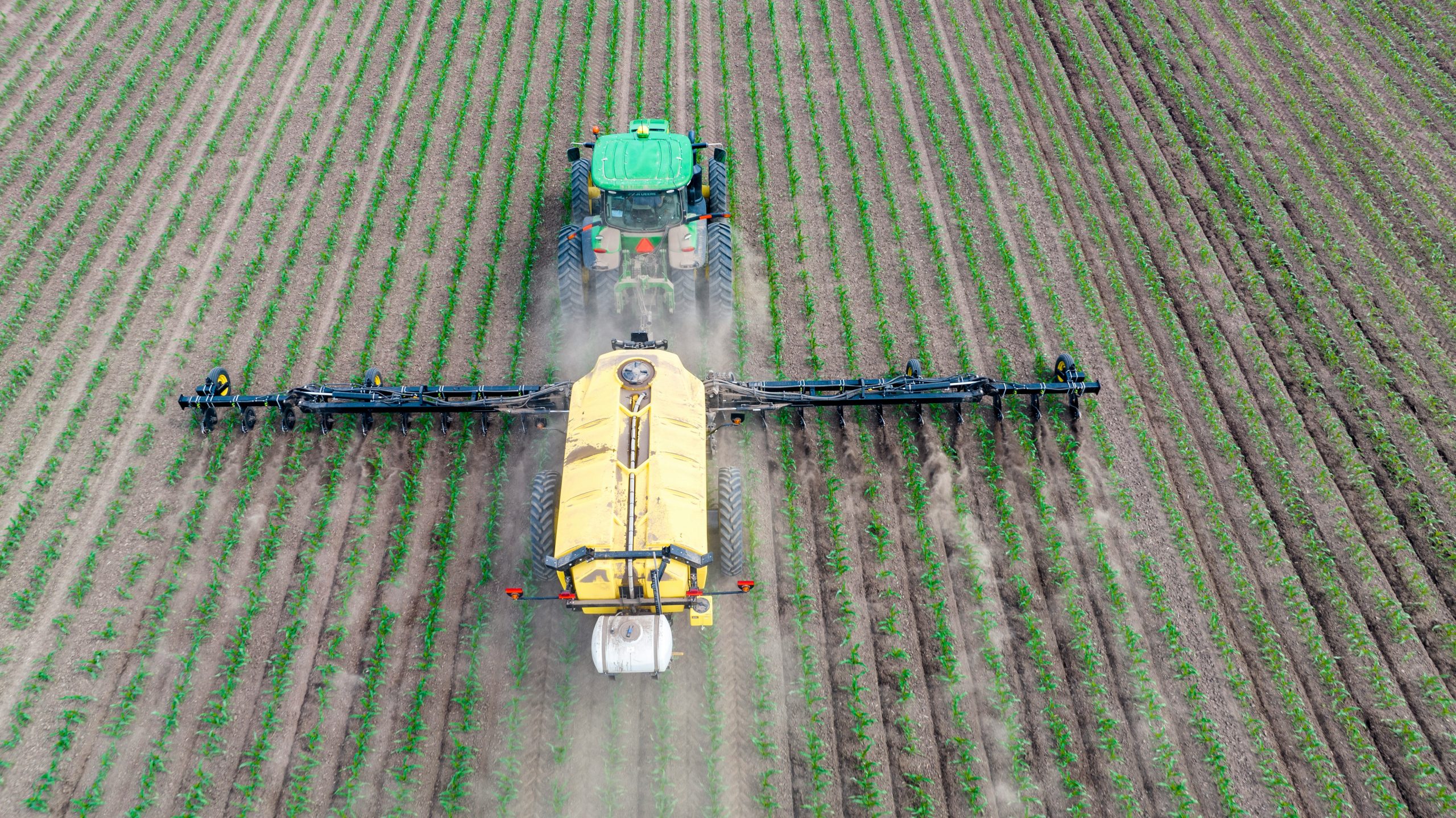
Moody’s is warning that Europe could enter a new cycle of food price increases from the autumn of 2026 and throughout 2027, as rising fertilizer costs gradually feed into agricultural production and ultimately consumer prices, according to a report by Kathimerini. The forecast mainly concerns staple crops such as wheat and corn, where fertilizers account for a significant share of operating costs.
According to the agency, nitrogen fertilizer prices in the EU have risen by around 25% compared to levels before the U.S.-Israel conflict with Iran. The increase is linked both to higher natural gas costs — a key raw material in fertilizer production — and to disruptions in global exports through the Strait of Hormuz, through which large quantities of products such as ammonia, urea, and sulfur used in fertilizers are transported.
Agricultural costs are also expected to be affected by climate change — including heatwaves, floods, and droughts — as well as by the EU’s new environmental tariffs on imported fertilizers.
Moody’s notes that the impact has not yet become strongly visible on supermarket shelves because many European farmers still hold fertilizer stocks purchased earlier, while last year’s strong harvest kept global grain inventories high. However, if elevated prices persist, many producers may reduce fertilizer use in the next planting cycle, increasing the risk of lower yields and poorer crop quality.
The agency also points out that geopolitical pressures coincide with longer-term burdens on agriculture: more frequent heatwaves, droughts, and floods are already raising production costs, while the EU’s carbon border adjustment mechanism is expected to further increase the cost of imported fertilizers in the coming years.
Source: Kathimerini


 What is fyi.news?