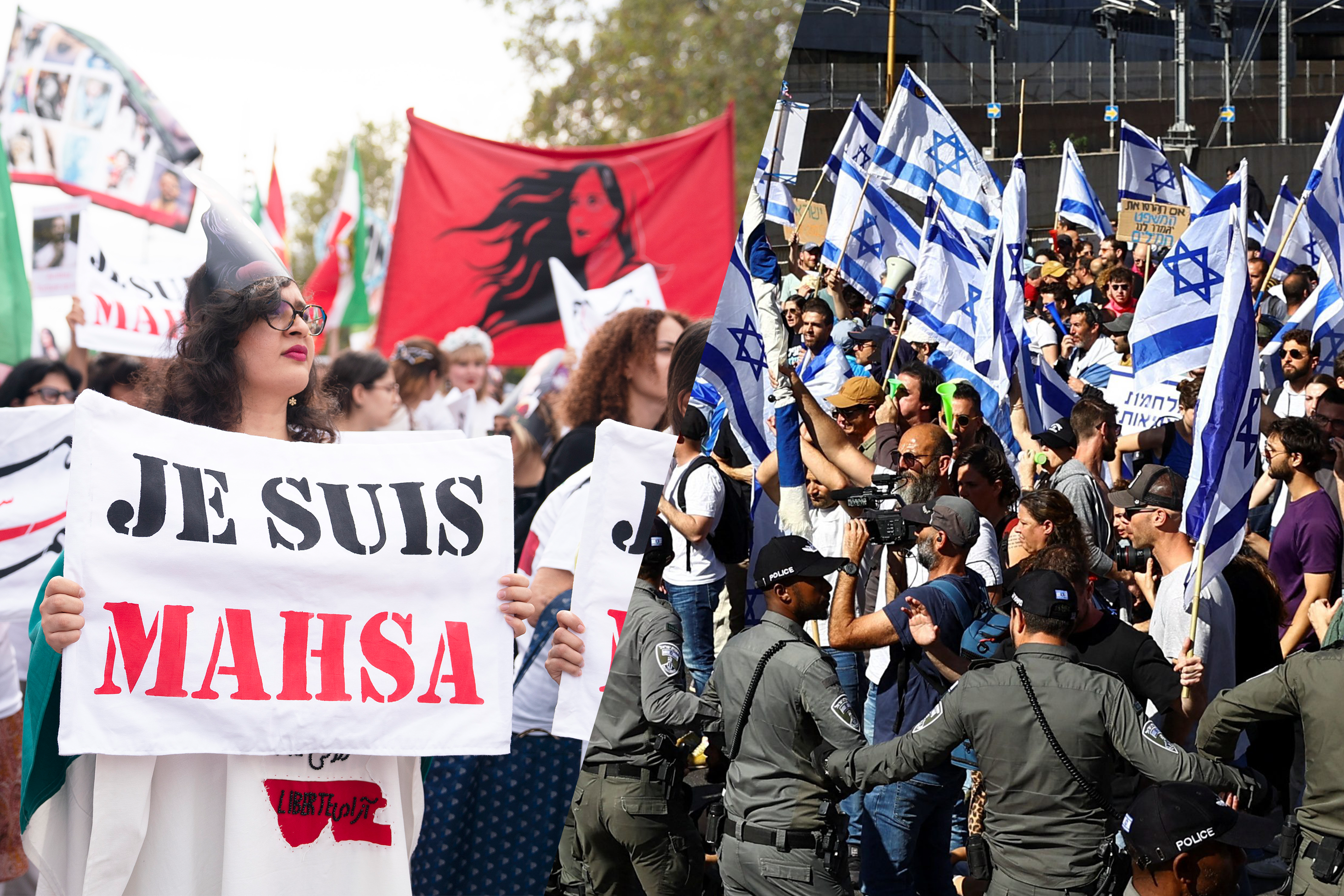
Six days after the tense dawn that kept even seasoned Middle East analysts, internationalists, and journalists awake all night, anticipating Israel’s potential response, we have veered away from the brink of a global conflict. Ultimately, it appears that neither side desired such an outcome.
From Sunday until now, the sheer volume of information flooding in has been immense and scattered, making it difficult to manage, let alone sift through and analyze.
Israeli Prime Minister Benjamin Netanyahu is facing intense pressure from his far-right partners to escalate the crisis with Iran and dismantle Hamas in Gaza.
In addition to analyzing Israel’s Iron Dome and Iran’s underground nuclear facilities, it’s essential to understand these countries’ internal dynamics to get a complete picture of what’s happening. The influence of the domestic audience, although not always primary, exists alongside the strategic maneuvers and power struggles of the two sides in the region and their pro-Western or non-Western perspectives.
Israeli Prime Minister B. Netanyahu is suffocating under pressure from warmongering advisers and far-right partners to escalate the crisis with Iran and to dismantle Hamas and Gaza. The septuagenarian “Bibi” has managed to serve longer than any prime minister in the history of Israel despite having faced prosecution for corruption, electoral defeats, and enduring numerous months of significant protest rallies. This resilience is partly attributed to a justice reform that reduced the judiciary’s power.
But could these perilous crises serve internal agendas?
In an effort to regain footing following the significant setback on October 7, where he faced accusations of serious security lapses and disapproval from the relatives of hostages, Netanyahu seeks to craft a new narrative. This narrative involves responding to Iran, albeit on a smaller scale, to bolster support domestically and internationally. Additionally, it aims to restore Netanyahu’s standing within the international community, which had distanced itself from him since the end of 2023, particularly after the strikes on civilians in Gaza.
But are leaders truly so cynical and power-hungry that they would toy with the prospect of complete destruction, even at the expense of countless human lives? Or could it be that these perilous crises serve internal motives driven by necessity?
Mahsa Amini’s death while in custody by the morality police ignited widespread protests across the country
In Iran, amidst the departure of drones and ballistic missiles on Saturday night, another kind of explosion is rocking society. The death of Mahsa Amini in September 2022 while in the custody of the morality police, accused of violating the hijab law, triggered widespread protests in cities across the nation, with people demanding social freedom and political reform. Since then, Iranian authorities have intensified their oppressive measures, targeting women and girls who defy the mandatory veil laws with brutal force.
However, another issue continues to afflict Iranians increasingly each day: their standard of living. Despite efforts, it has yet to rebound to pre-2018 levels before the Trump sanctions. High inflation persists, fueling significant public discontent. Official figures from Iran’s Statistics Center indicate inflation at around 40%. Nonetheless, the recent attack has shifted the focus.
The Middle East isn’t conducive to trivial confrontations; it’s not a matter of casual stances or picking sides.
The Middle East is complex and difficult to understand unless you delve into its intricate history and events, viewing them through a lens unclouded by bias. Genuine empathy and a deep understanding are essential for those impacted by the consequences of war.
On a political level, the Middle East is not conducive to casual confrontation or taking sides. It’s an inherently polarized region grappling with its own complexities and challenges. In the face of such adversity, it’s essential to approach the situation thoughtfully rather than hastily aligning with one camp or another.


 What is fyi.news?