Back in Pyongyang, it is impossible for visitors to move around freely. That is why there are professional minders—fluent in several foreign languages—with a single mission: not to let you out of their sight.
Even under those conditions, the capital’s striking images are generously on display for visitors.
“We were shown—always from inside the bus—the modern districts of the city with their colourful high-rise buildings; the blocks of futuristic skyscrapers; trendy barbecue restaurants; and ultra-modern motorways with a handful of expensive cars—Chinese-made as well as domestically produced—and very few electric scooters. Giant bronze statues of Kim Jong-un adorn many corners of the spotless, park-filled city where the favoured North Koreans live. We visited museums, the Arch of Triumph marking liberation from Japanese rule, an ultra-modern children’s hospital with paintings of Western fairy tales on the walls (Snow White and Cinderella among them), and a maternity hospital shaped like a mother’s embrace—just some of what appeared before me,” Giannouli recounts.
“Meanwhile, women in North Korea receive leave from work three months before giving birth and three months after, and milk (if they don’t breastfeed), as well as nappies, are provided free by the state.”
The most privileged residents of the capital also have greater access to products and imagery from other countries, mainly China and Russia. No one, however, has access to the internet—“because the Americans cut it off, that’s what they’re told.”
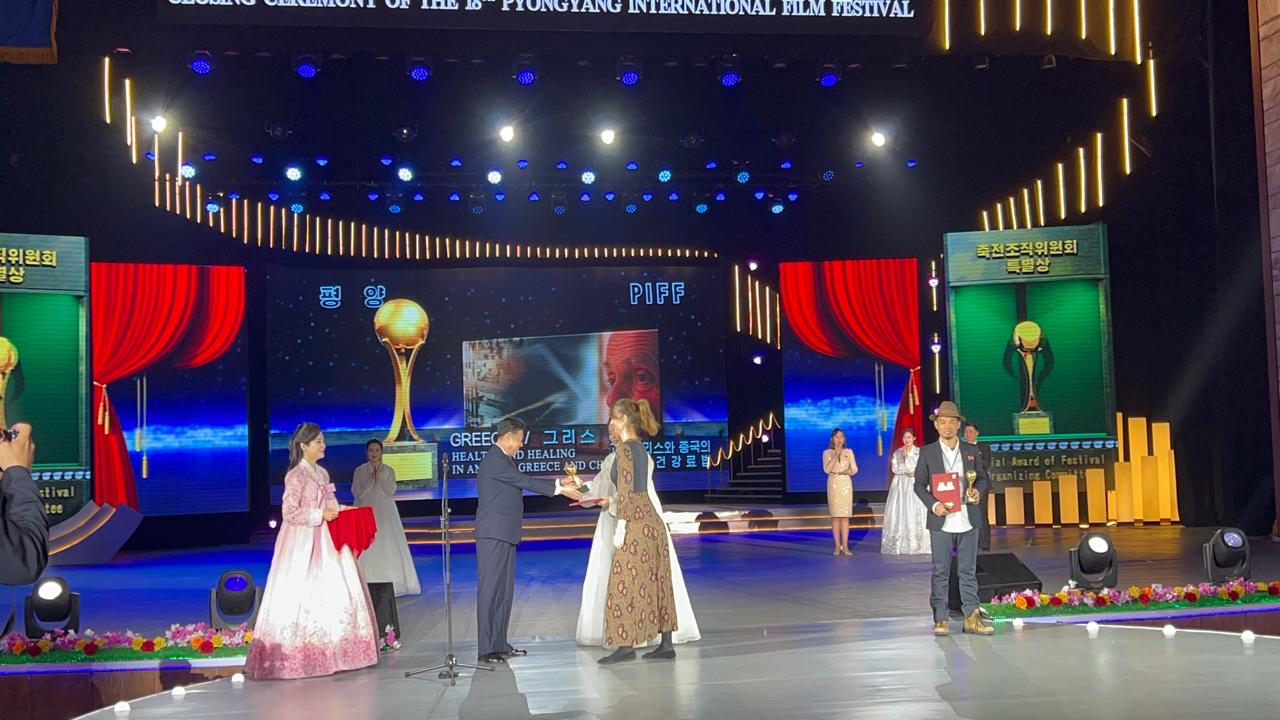
“They do communicate with each other through their own local network, via smartphones. They order food and buy clothes online—usually Chinese knock-offs. And through the films they watch at the Festival, they get glimpses of the outside world,” she explains.
In fact, in the film that opened the Festival, one of the lead actresses had an OnlyFans account.
Certain rules governing everyday life—such as dress—are particularly strict. “Jeans are considered a symbol of capitalist conformity and are therefore banned for both men and women. Make-up is allowed only after graduating from university, and it’s limited to powder and a little lipstick in muted tones—no manicures,” she notes.


 What is fyi.news?