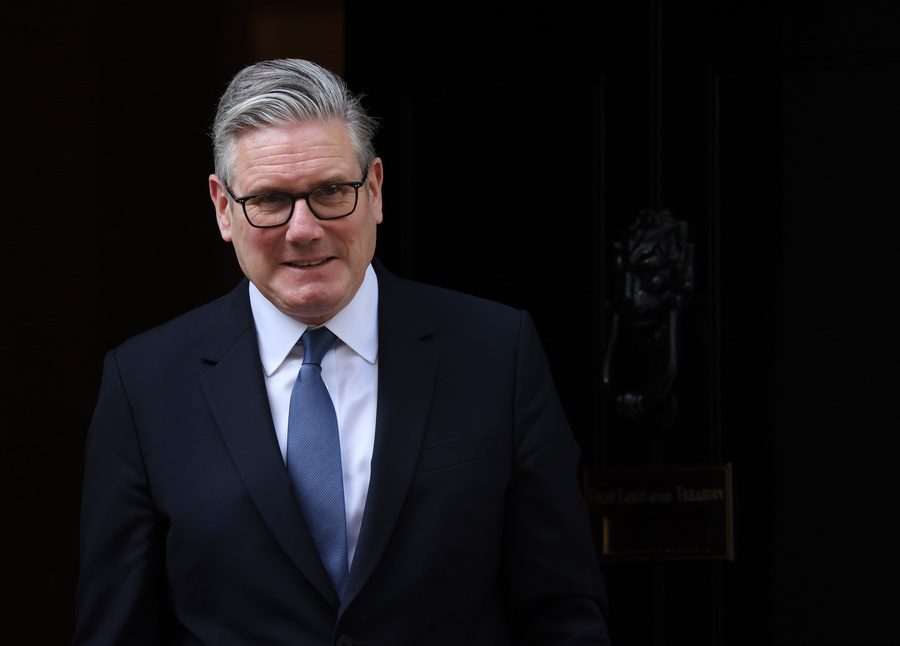
Keir Starmer stated that he will not resign, despite the intense political pressure he is facing after the local elections in England, Scotland, and Wales. Starmer pledged that he would continue governing and described his administration as “a ten-year project,” despite growing calls — even within Labour — for him to step down following the election results.
Labour recorded the biggest losses for a governing party in local elections in more than 30 years, losing 1,015 council seats just two years after its landslide victory in the national elections.
A key reason for public dissatisfaction with the government is the rising cost of living, worsened by the wars in Ukraine and Iran.
The decline was not limited to Labour. The Conservatives also lost 466 seats, confirming, according to Reuters, the gradual weakening of Britain’s traditional two-party system. Losses from the two major parties shifted in different political directions: Labour voters moved toward the Greens and nationalist parties in Scotland and Wales, while a large share of Conservative voters turned to the far-right Reform UK led by Nigel Farage.
Reform UK emerged as the biggest winner of the elections, gaining 1,151 seats and taking control of councils even in areas that had traditionally supported Labour. In some cases, Labour lost municipalities it had controlled for decades, such as Wigan in northern England, which it had governed for more than 50 years.
Starmer himself admitted that his government had made “unnecessary mistakes” and failed to give citizens the sense of change it had promised. The cost-of-living crisis remains a major source of dissatisfaction, further intensified by the geopolitical consequences of the wars in Ukraine and Iran.
Sources: Reuters [1], [2]


 What is fyi.news?