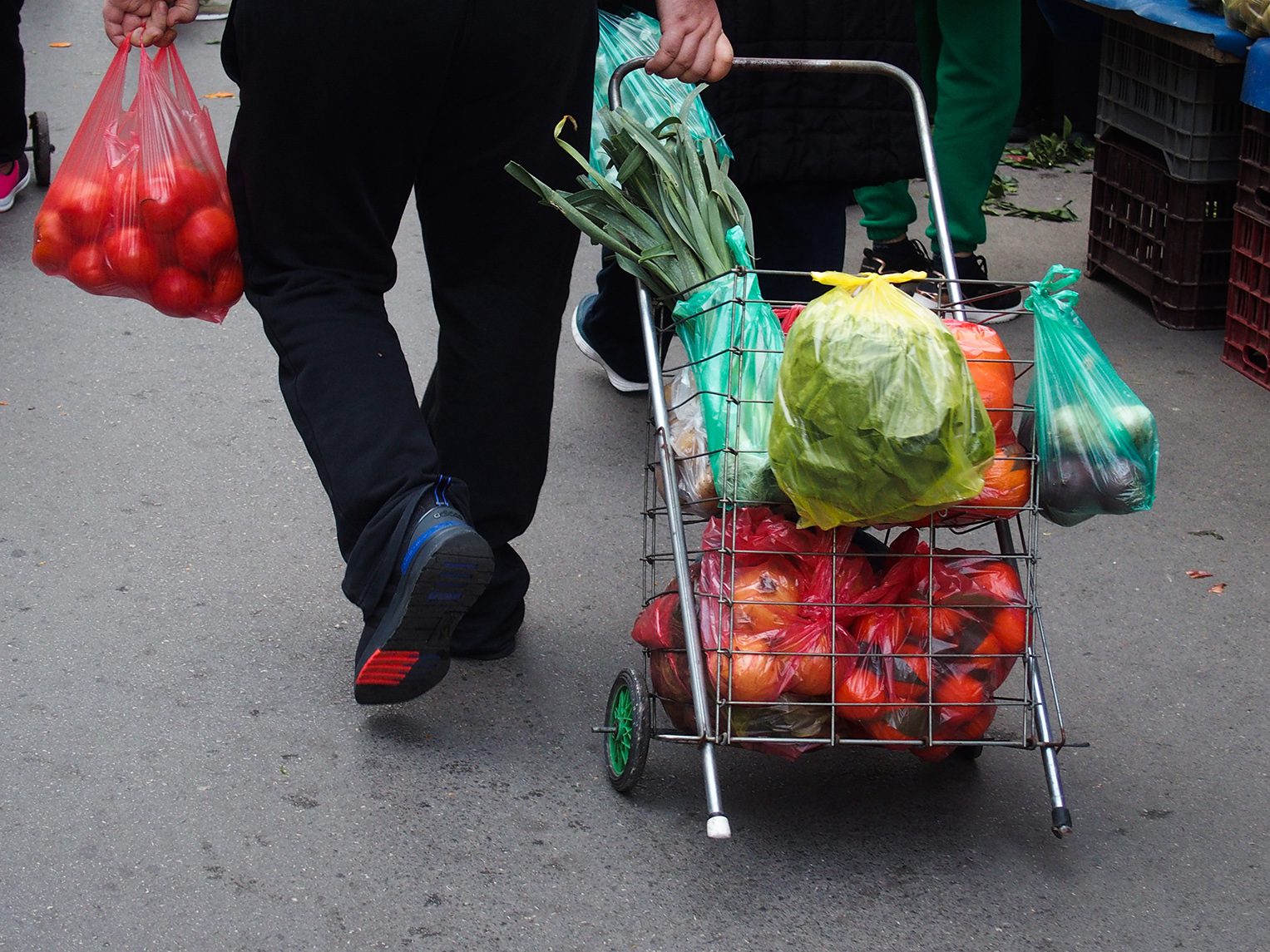
According to Eurostat, inflation in Greece increased to 3.4% in March (up from 3.1% in February), while in the eurozone, it decreased to 2.4% in the same month (down from 2.6% in February).
Greece registered the second-highest rate of price increase in a month, following Portugal, as reported by Eurostat.
Inflation is the overall rise in prices, leading to a decrease in the purchasing power of currency. This means that someone with €1 can buy less today than yesterday.
According to a Pulse survey, one in two Greek citizens considers costliness and high prices to be the top problems in society.
The highest inflation levels in the Eurozone were recorded by Croatia (4.9%), Austria (4.2%), and Estonia (4.1%), while the lowest were in Lithuania (0.3%), Finland (0 .7%), Latvia (1%) and Italy (1.3%).
It is worth noting that based on previous data from Eurostat, more than 22% of the population in EU countries has been experiencing poverty and social exclusion over the past eight years. In Greece, according to the Hellenic Statistical Authority (ELSTAT), the percentage of people at risk of poverty in 2022 was 18.9%.


 What is fyi.news?