What is fyi.news?
- What happened?
- How did it happen?
- What does the Minister of Transport say?
- What do the two companies say?
- Spain’s railway network
- The worst railway disaster
- What will happen from here on?
- Sources


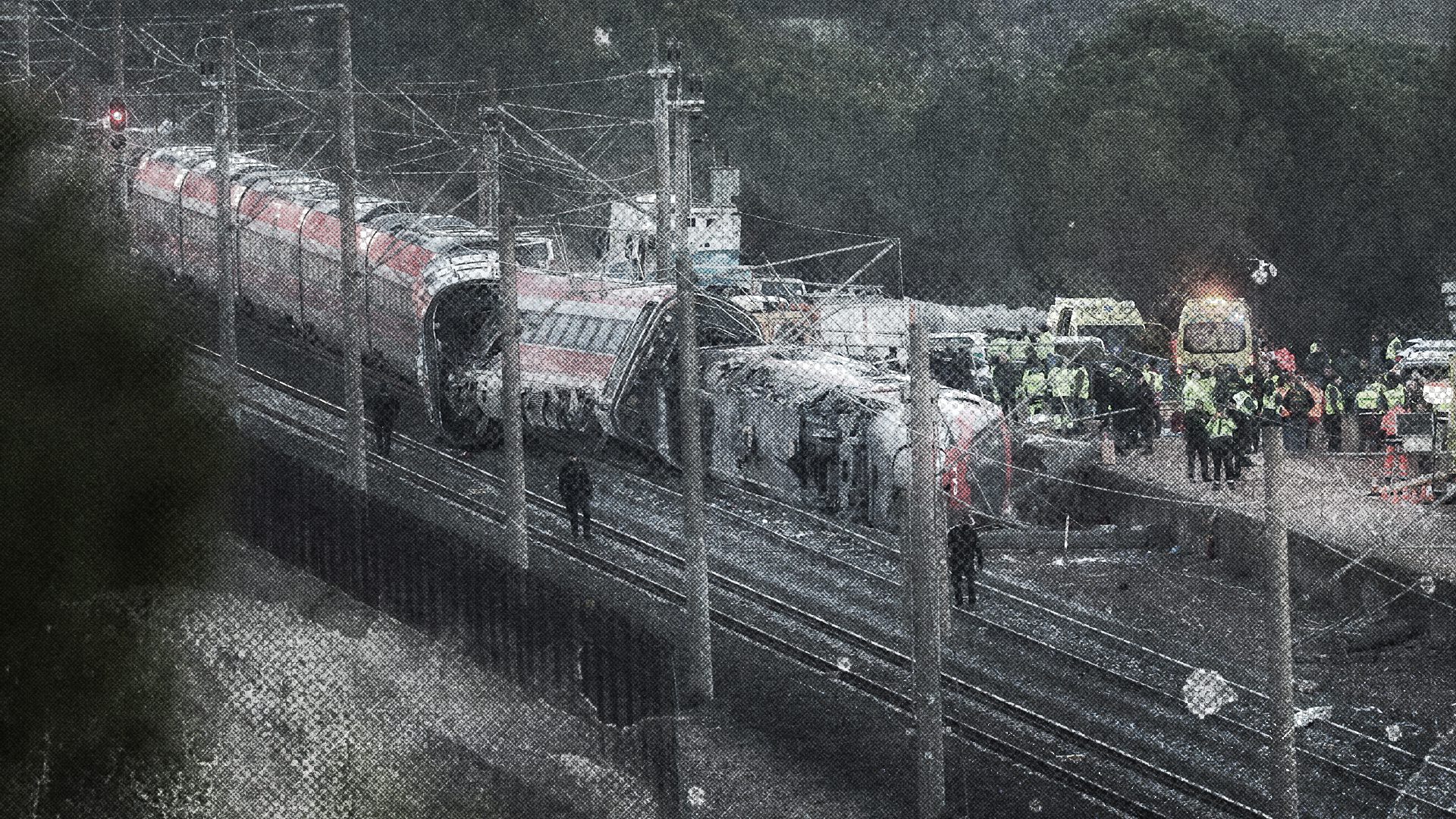

At least 39 people were killed and 152 injured (24 seriously) in the collision of two trains in Andalusia, Spain.
In total, there were approximately 500 passengers on the two trains, mainly Spaniards.
What does the Minister of Transport say?
The collision was so powerful, according to Spain’s Minister of Transport, Óscar Puente, that the first two carriages of the Renfe train were “thrown into the air.”
He described it as “very strange” and wondered “how an incident of such force could occur on a straight section of track that has been recently renovated, involving an almost brand-new train.”
What do the two companies say?
Iryo is a private company, the majority of which is owned by the Italian state company Ferrovie dello Stato Italiane, the owner of Hellenic Train.
It announced that it deeply regrets the incident and added that the train’s most recent inspection (the train was built in 2022) had taken place on Thursday 15.01.
Renfe stressed that the derailment of its train was caused by the collision with the Iryo train, and added that rescuers are still working to free trapped passengers.
Spain’s railway network
Spain ranks second worldwide, after China, in the length of its high-speed rail network (3,100 km).
Approximately 40 million passengers use the country’s high-speed network (over 250 km/h) each year, with average train speeds competing with those of Japan and France.
A high-speed train operated by the private company Iryo (Malaga to Madrid with 300 passengers) derailed and crashed into another train operated by the state company Renfe (Madrid to Huelva with 184 passengers), with the causes still unknown.
Most of the dead and injured were in the first two carriages of the Renfe train, onto which the rear part of the Iryo train—after derailing—fell.
The accident occurred on Sunday 18.01 near Adamuz in Córdoba (360 km south of Madrid), at 19:45 (20:45 Greek time).
 (fyiteam/Reuters)
The collision was so powerful, according to Spain’s Minister of Transport, Óscar Puente, that the first two carriages of the Renfe train were “thrown into the air.”
He described it as “very strange” and wondered “how an incident of such force could occur on a straight section of track that has been recently renovated, involving an almost brand-new train.”
Iryo is a private company, the majority of which is owned by the Italian state company Ferrovie dello Stato Italiane, the owner of Hellenic Train.
It announced that it deeply regrets the incident and added that the train’s most recent inspection (the train was built in 2022) had taken place on Thursday 15.01.
Renfe stressed that the derailment of its train was caused by the collision with the Iryo train, and added that rescuers are still working to free trapped passengers.
Spain ranks second worldwide, after China, in the length of its high-speed rail network (3,100 km).
Approximately 40 million passengers use the country’s high-speed network (over 250 km/h) each year, with average train speeds competing with those of Japan and France.
 (fyiteam/Reuters)
This is the second worst railway disaster of the 21st century in Spain.
In the summer of 2013, a train carrying 218 passengers derailed (due to excessive speed) just before Santiago de Compostela (Galicia), resulting in 80 deaths and 140 injuries.
The worst railway disaster in Spain occurred in 1944, with an undetermined number of fatalities (research estimates between 100 and 500).
Due to the situation, “high-speed train traffic between Madrid and Córdoba, Seville, Málaga and Huelva (cities in southern Spain) will be suspended at least for today, Monday 19.01,” announced Spain’s railway infrastructure manager (Adif).
The Ministry of Transport announced that a competent committee will examine what happened, with investigations expected to last one month.