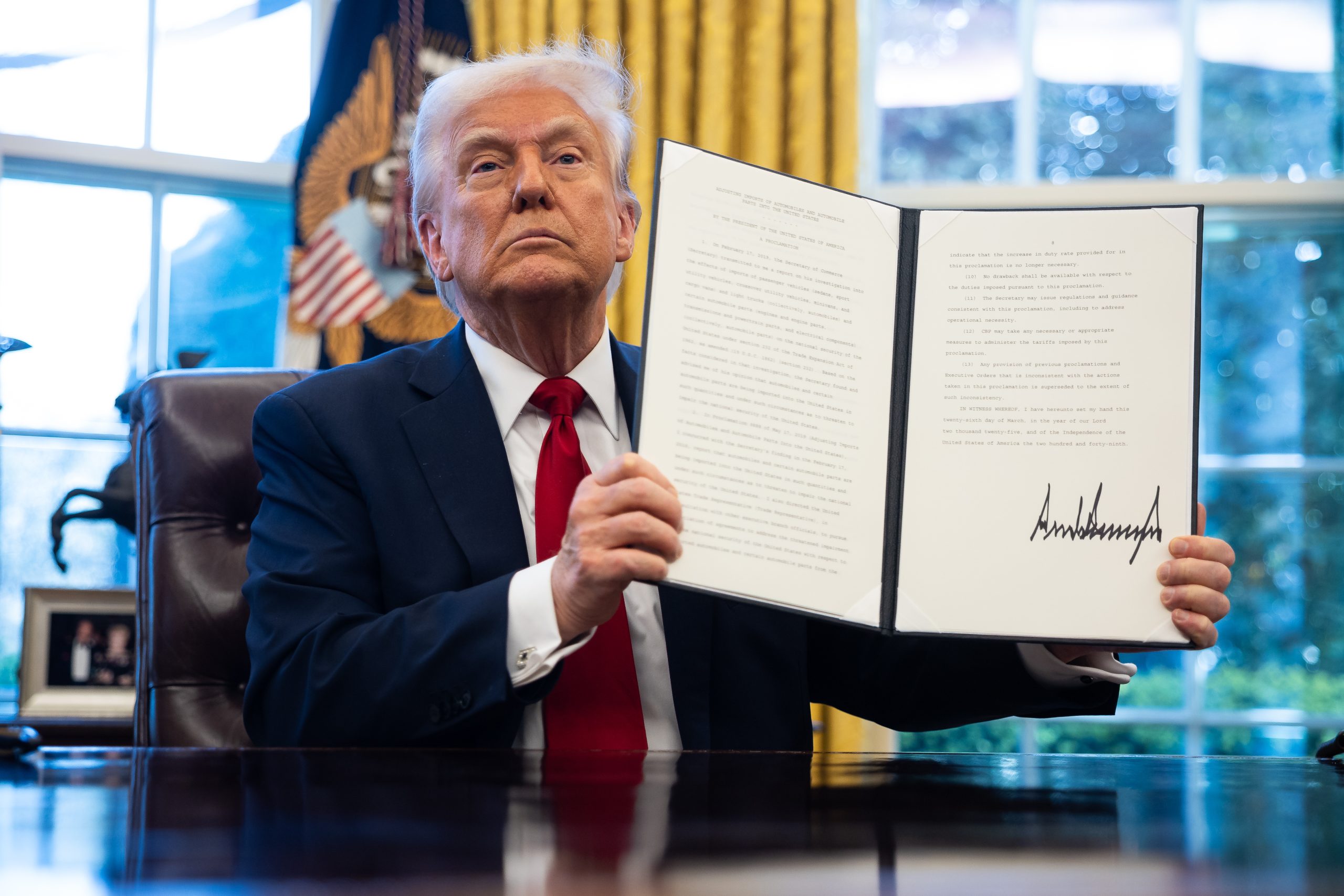
U.S. President Donald Trump imposed a 25% tariff on imported cars and their parts starting next week (April 3), which will lead to higher vehicle prices, as half of the cars sold in the U.S. are imported.
This measure is expected to have a strong impact on the European Union, as one-quarter of total car exports (valued at €38.4 billion) go to the U.S. Germany will be particularly affected, as the three largest car manufacturers in the country produce 73% of the total vehicles the EU exports to the U.S. The EU is preparing to respond with similar tariffs on American products.
Mexico is the largest source of vehicle imports to the U.S., surpassing Japan, South Korea, Canada, and Germany.
For Germany, the U.S. is the primary market for its automotive industry. Nearly one in three Porsches is exported to the United States, and one in six BMWs is shipped there. Mercedes, Volkswagen, and Audi have production facilities in the U.S. and Mexico, but they are still expected to be impacted by the tariff increase, according to the New York Times.
The U.S. president aims to boost the domestic market, stating that those with factories in the U.S. will benefit, and the tariffs will encourage automakers and suppliers with factories in Canada or Mexico to move their operations to the U.S.


 What is fyi.news?