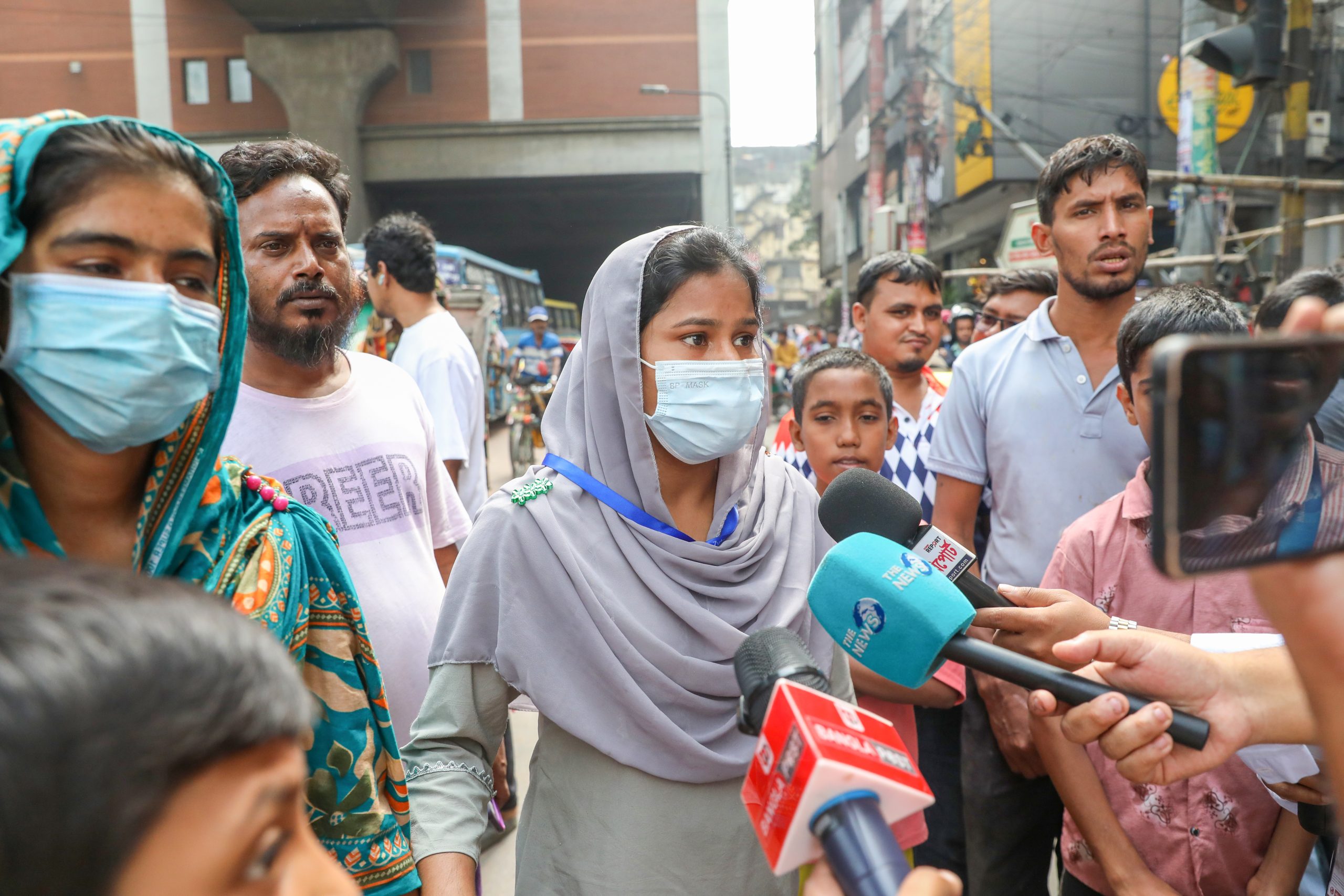
Bangladesh has agreed to raise the minimum wage for garment industry workers following days of protests that brought hundreds of factories to a standstill, sparked clashes with police and left at least one protester dead.
The demonstrations took place in the capital, Dhaka, and industrial areas including Gazipur, Narayanganj and Ashulia. Workers blocked major roads, while police used batons and water cannons against protesters.
The current minimum wage stands at approximately $100 per month, while workers are demanding more than $242, an increase of around 140%. They say their wages are insufficient to cover basic expenses such as housing, electricity and food, while factory owners argue that such an increase would not be financially viable.
Bangladesh is the world’s second-largest garment exporter after China.
The government has formed a six-member committee comprising representatives of workers and employers to determine the size of the increase. A decision is expected by the end of the year, with the new wages scheduled to take effect in January 2027.
Bangladesh is the world’s second-largest garment exporter after China. The industry employs more than four million people, most of them women, and accounts for approximately 80% of the country’s export earnings. International brands that source garments from Bangladesh include H&M, Zara and Uniqlo.
Source: The New York Times


 What is fyi.news?