(fyiteam)

A brief summary of the 28th of October

Add your Headline Text Here
@fyinews team

29/10/2024

Copy link
fyi:

• The key figures
• What happened on October 28, 1940?
• The Occupation
• The Governments of the Occupation
• The National Resistance Movement
• Impact on human lives
• The Holocaust in Greece
• When was the October 28th anniversary first celebrated?

The key figures

(fyiteam)

Ioannis Metaxas

Ioannis Michail Metaxas was a military officer, Prime Minister of Greece, and the leader of the dictatorial regime established on August 4, 1936. He died in 1941.

Benito Mussolini

Benito Mussolini was the founder and leader of the Fascist Party in Italy and an ally of Adolf Hitler. He ruled Italy as a dictator from 1922 until 1943 and was executed by Italian partisans in Como two years later.

What happened on October 28, 1940?

(fyiteam)

In the early hours of October 28, 1940, Mussolini sent an ultimatum to Greece through the ambassador in Athens, Emanuele Grazzi, who delivered it directly to Ioannis Metaxas. The Italians aimed to gain control over strategic locations, such as ports and airports in Greece, without resistance.

Upon receiving the ultimatum, Metaxas responded negatively to the Italian ambassador in French: “Alors, c’est la guerre” (So, this means war). This response became known in history as the “NO.”

The Greco-Italian War of 1940-41, or the Epic of ’40, lasted from October 28, 1940, until June 1, 1941, when German forces completed their occupation of the country.

The Occupation

(fyiteam)

In April 1941, with the German invasion, the Occupation of Greece began. During the Occupation, the death toll, including soldiers and civilians, reached hundreds of thousands, and the Greek economy collapsed.

The Occupation ended when the German army withdrew from Greece in October 1944. In Crete, German forces remained until mid-1945.

The Governments of the Occupation

Following the Nazi invasion, Greece had three parallel “governments”:


  • The exiled Greek government took refuge as a “free government” in Cairo (April 1941 – October 1944).
  • The occupying forces appointed the occupation government (April 1941 – October 1944).
  • The “mountain government” was formed mainly by the EAM in the liberated areas (March 1944 – September 1944).

The National Resistance Movement

From the autumn of 1941, mass resistance was organized in Greece, with the three largest resistance organizations being:

  • The National Liberation Front (EAM) was the largest resistance organization founded by the Communist Party of Greece (KKE) and other smaller socialist parties. Its military wing was the National Popular Liberation Army (ELAS), mainly led by Aris Velouchiotis.
  • The second-largest resistance organization was the National Democratic Greek League (EDES), formed by Napoleon Zervas. The British supported his armed groups.
  • The third-largest resistance organization was the National and Social Liberation (EKKA), established in 1942 by the Venizelist colonel Dimitrios Psarros in collaboration with politicians.

Impact on human lives

(fyiteam)

Greece lost approximately 10% of its population. Military losses, along with those of civilians from hunger, hardships, and executions, are estimated at around 600,000.

Mass executions of civilians by the Nazis and their collaborators total over 300. Among these were the massacres of Kalavryta, Distomo, Kandanos, and the Drama region.

During the period of ’41-’42, there were about three mass executions per month, while in ’43-’44, this number quadrupled.

The Holocaust in Greece

(fyiteam)

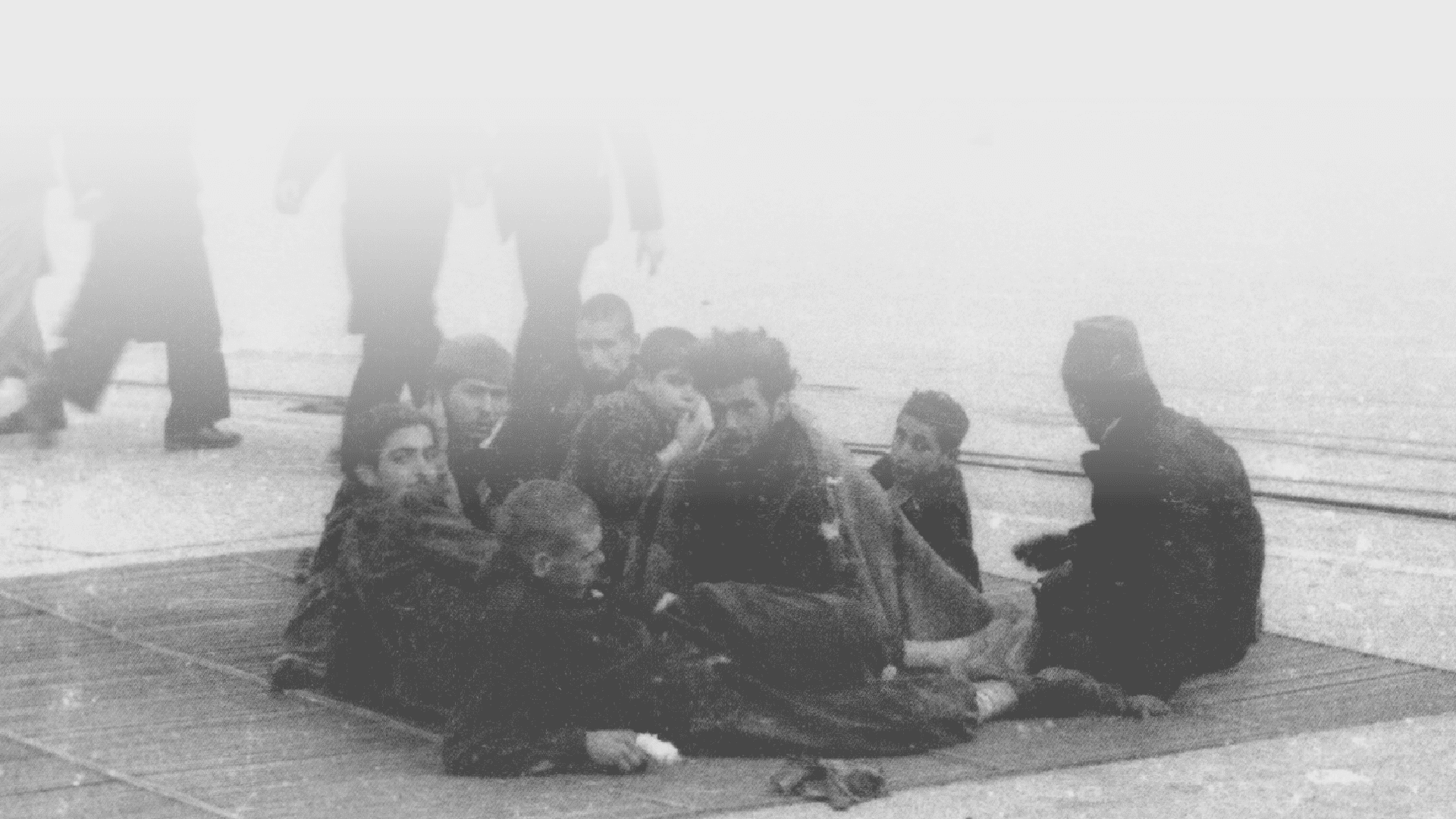
Of the 71,611 Greek Jews before the war, 58,886 were exterminated in concentration camps. This represents a rate of 90%, one of the highest in occupied Europe.

The largest number of murdered Greek Jews came from Thessaloniki. By the end of the war, approximately 45,000 residents of the city had been exterminated, nearly 97% of its Jewish population.

When was the October 28th anniversary first celebrated?

(fyiteam)

The national anniversary of October 28th was first officially celebrated on October 28, 1944, with a parade attended by Prime Minister Georgios Papandreou.

AD(1024x768)