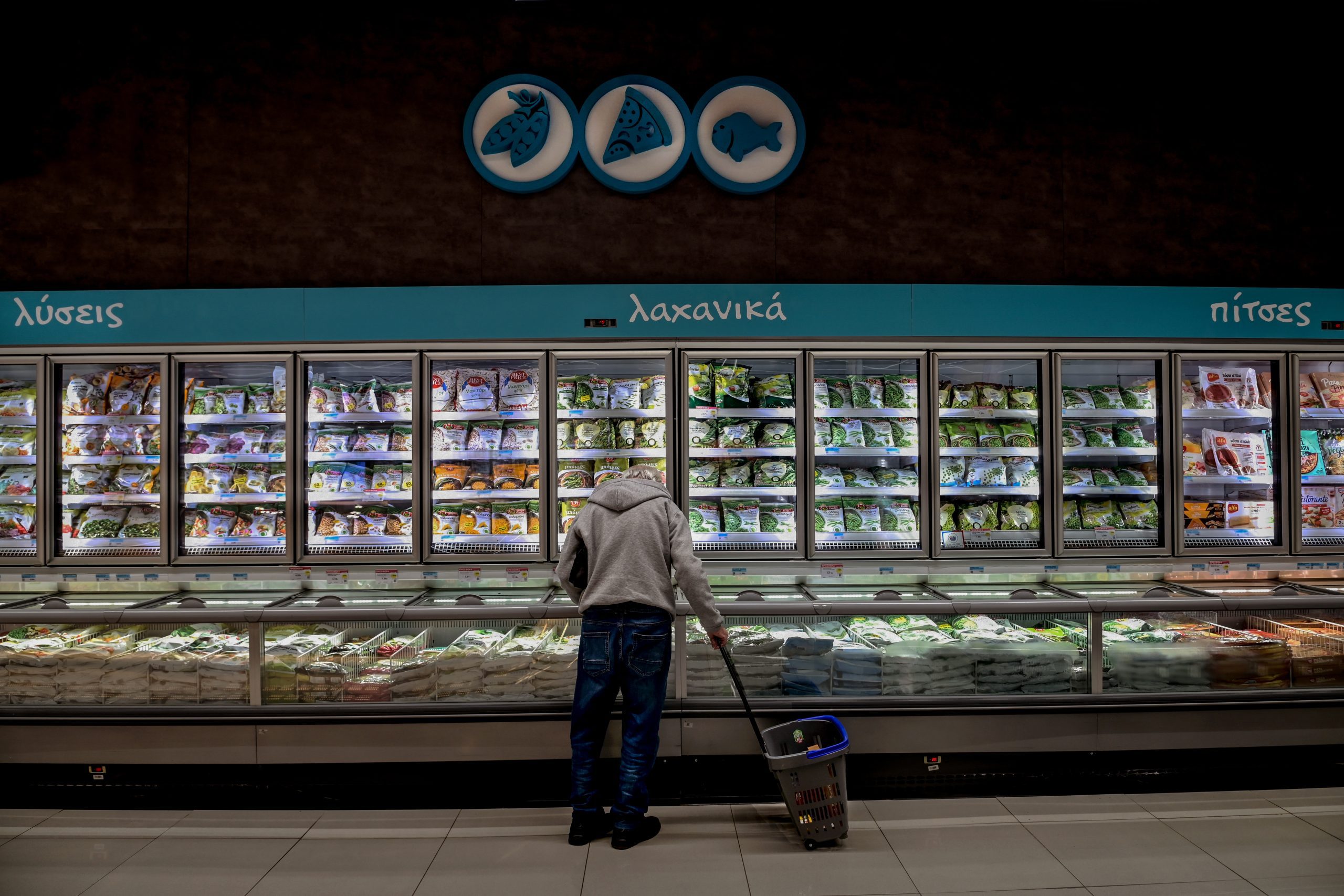
Nearly 35% of the average Greek household budget went to food and housing in 2025, according to ELSTAT’s Household Budget Survey, based on a sample of 5,540 households. Food and non-alcoholic beverages accounted for 20.4% of spending, down from 20.7% in 2024, while housing accounted for 14.7%, up from 14.4%.
The burden was greater for lower-income households. Among the poorest 20% of households, food and housing accounted for 54.4% of total spending. For households that rent, housing costs averaged 23.4% of the monthly budget, with rent accounting for 17.3%.
The spending gap between the richest and poorest households also widened, with the richest 20% spending 5.78 times as much as the poorest 20%, compared with 5.68 times in 2024.
Average monthly spending rose by 5.5% at current prices, from €1,724.54 in 2024 to €1,820.20. Adjusted for inflation, the increase was 2.9%. Spending remained 4.7% below 2010 levels and 12% below 2008 levels, without adjusting for inflation.
At the same time, the gap in consumption widened, with average equivalised spending by the richest 20% reaching 5.78 times that of the poorest 20%, up from 5.68 times in 2024.
Food consumption patterns also changed. Quantities increased mainly for eggs (+11.8%), olive oil (+8.4%), alcoholic beverages (+6.5%), rice (+5.8%) and pasta (+2.7%), while they fell for fish (-2.6%), bread (-2.4%), vegetables (-1.6%), and fruit and milk (-1.2%).
Source: ELSTAT, Kathimerini


 What is fyi.news?