(Orange Press Agency)

Is the 89-year-old Michalis Chrysochoidis’s nemesis?

Add your Headline Text Here
@fyinews team

29/04/2026

Copy link
fyi:
  1. One story is dominating the domestic—and international—news cycle, and above all my own mind: the “manhunt for the arrest of an 89-year-old man” who opened fire at the EFKA office in Kerameikos and at the Court of Appeal.
  2. But there comes a moment when every superhero, or similar figure of the kind we usually encounter in cinema or in Homer, comes face to face with his nemesis.
  3. Yet behind the tragicomic nature of the story, there are several points worth pausing over, mainly because we have already begun reading the usual complaints about “insufficient repression.”

News


One story is dominating the domestic—and international—news cycle, and above all my own mind: the “manhunt for the arrest of an 89-year-old man” — eighty-nine — who took his own shotgun to the EFKA office, fired and wounded an employee, then took a taxi to the Court of Appeal, made it as far as the ground floor, fired there too, wounding another four people, left, abandoned the shotgun, informed two employees who tried to play hero that he had another gun in his trench coat, walked away, and remained at large for six hours.

Beyond the “manhunt” to arrest an 89-year-old, one headline in particular caught my attention: “89-year-old nowhere to be found, searches under way in Kalamata, on trains and at KTEL bus stations — His niece revealed his identity; he often went to EFKA to cause trouble.” Magic.

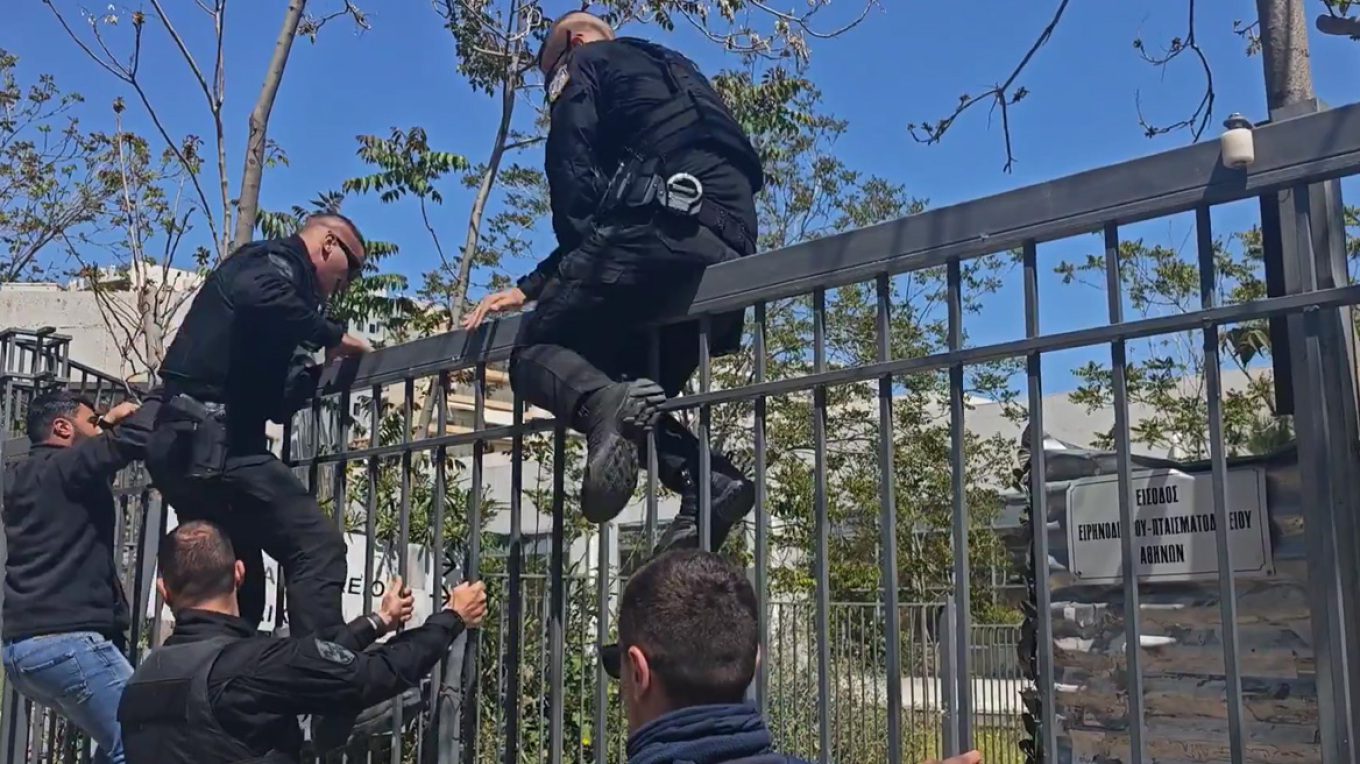
Then we read: “A short while ago, the alarm was raised again at the Court of First Instance after information emerged that the 89-year-old might be inside the building, prompting police authorities to launch a raid.” And we saw the remarkable images that followed, with the Hellenic Police’s Rambos vaulting over railings in an effort to locate the 89-year-old. Unthinkable.

Of course, he was not at the Court of Appeal. At that very moment, this lone wolf who had thrown an entire capital into chaos was on his way to enchanting Patras.

We are talking about a man who, at such an advanced age, managed to get past police vans, patrol cars and riot police units that are permanently stationed at and around the Court of Appeal, whether on Loukareos Street or Alexandras Avenue. Right next to Athens Police Headquarters. He got into a taxi — his first mistake, since the first act of snitching came from the taxi driver — reached Patras, checked into a hotel — his second mistake — and hoped he would soon make it to Italy. Those two mistakes, however, cost him victory, and after his arrest, Vassilis Paleokostas remained number one in the profession.

If there is one person I would not want to be right now, it is Michalis Chrysochoidis. Granted, at no point in my life have I ever expressed any such strange and irrational desire. And I want to believe I never will. But I do think it is worth taking a little time to put ourselves in this man’s shoes.

He is a member of a government that has staked everything on “citizens’ security” and the doctrine of “law and order,” pursued through repression. And he himself has made no secret of his relationship with repression. One might say that enforcing it is what gives him the strength to carry on.

The beatings of protesters, and the supposedly cinematic arrests and operations in which he, other members of the government and friendly media outlets take such pride, have made him something of a legend among right-wing audiences, even though he himself comes from political spaces that were not right-wing. He is also, let us not forget, the man who boasts of having dismantled 17 November.

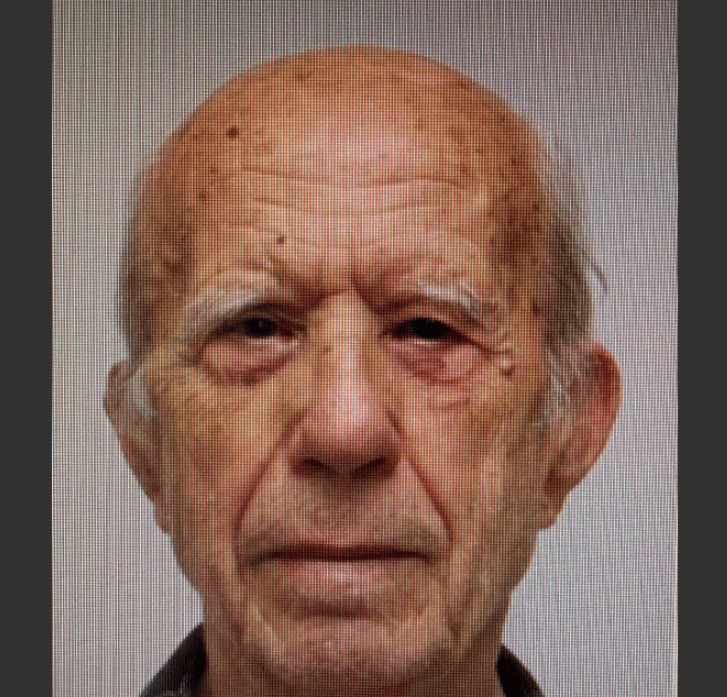
But there comes a moment when every superhero, or similar figure of the kind we usually encounter in cinema or in Homer, acquires his nemesis, his weak spot, or an enemy. Superman had kryptonite. Achilles had his heel. Alafouzos has the sight of joy on the lips of every Panathinaikos fan. Team Rocket has Ash Ketchum. Well, Michalis Chrysochoidis now has an adversary too, and it is this man here:

And now, Michalis Chrysochoidis, what do you do? Do you take responsibility for the fiasco? “Someone did not do their job properly, and lives may have been put at risk as a result,” you said. Who? Hand him over, the way the taxi driver handed over the 89-year-old, and shut your ears to everyone saying that this someone is you. They are just looking for an excuse, an excuse to topple you from your throne. It is not worth sacrificing yourself over an 89-year-old who made a fool of you -I mean, who embarrassed the Greece of your dreams. You still have so much to offer. Nothing must deter you from your great goal: for the number of police officers to surpass the number of residents of Athens. Hasta la victoria siempre.

Yet behind the tragicomic nature of the story — we are talking about an armed 89-year-old man who made it from Athens to Patras after shooting four people at two different locations in Athens — there are several points worth pausing over.

Mainly because we have already begun reading complaints about insufficient repression, from the permanently aggrieved right — on this issue, at least — and from various short-sighted people who, in trying to criticise the government, end up adopting its own rhetoric.

Repression always focuses on the “after.” In this case, the “after” of an armed attack by an 89-year-old man. Repression never focuses on the “before,” because every state chooses to ignore it. The “before” follows a course made up of years and circumstances that the state itself either did not see, chose not to see, or created.

At this moment, it is not important for me to focus on this man’s motives, nor do we need to construct his profile. And let us once again avoid psychiatricising public discourse; I will refrain from making any assumptions. I write this more as a response to the tiresome calls for repression and security.

Of course, especially for a state, it ought to matter what makes a person do something like this. For this particular government — although it is important to say that the state has continuity, and it is usually short-sighted to blame only the government of the day, which bears responsibility at that particular moment, rather than power as a whole for social and economic hardship — it probably does not matter all that much. And if this is an “isolated incident,” how many other times do we read about rising “crime,” for instance? How many times has the state’s response not been repression? Perhaps never.

For the state, all that matters is how it will deal with so-called “crime” as it rises. If it is rising, that is, because very often “crime” is used as a vague narrative against the available data. But that is another matter.

In any case, it may now sound like a cliché, but prevention should be the only thing that matters. In some societies, which do not wait to outsource everything to the state, prevention and solidarity do exist. Very often, however, that unfortunately does not happen, and people wait for salvation from the state.

We hear the term “prevention” all the time, and in many fields — wildfires, medicine — but rarely is it given the importance it deserves. Society is simmering, and those who do not see it are distorting reality to our detriment.

Repression only soothes the instincts of people who choose not to see the sadness and the economic and social hardship around them, among other things. People who think a weapon magically lands in someone’s hands.

AD(1024x768)