(EUROKINISSI)

Athens: How safe are commutes on the Electric Railway?

Add your Headline Text Here
@fyinews team

10/03/2026

Copy link
fyi:
  1. If you take the Electric Railway (Line 1) frequently, you’ve probably experienced it: delays, breakdowns, and trainsets over 40 years old.
  2. What’s really happening on Line 1, and how safe are the rides? Anastasis Koutsogiannis prepared a report precisely on this.

By Anastasis Koutsogiannis

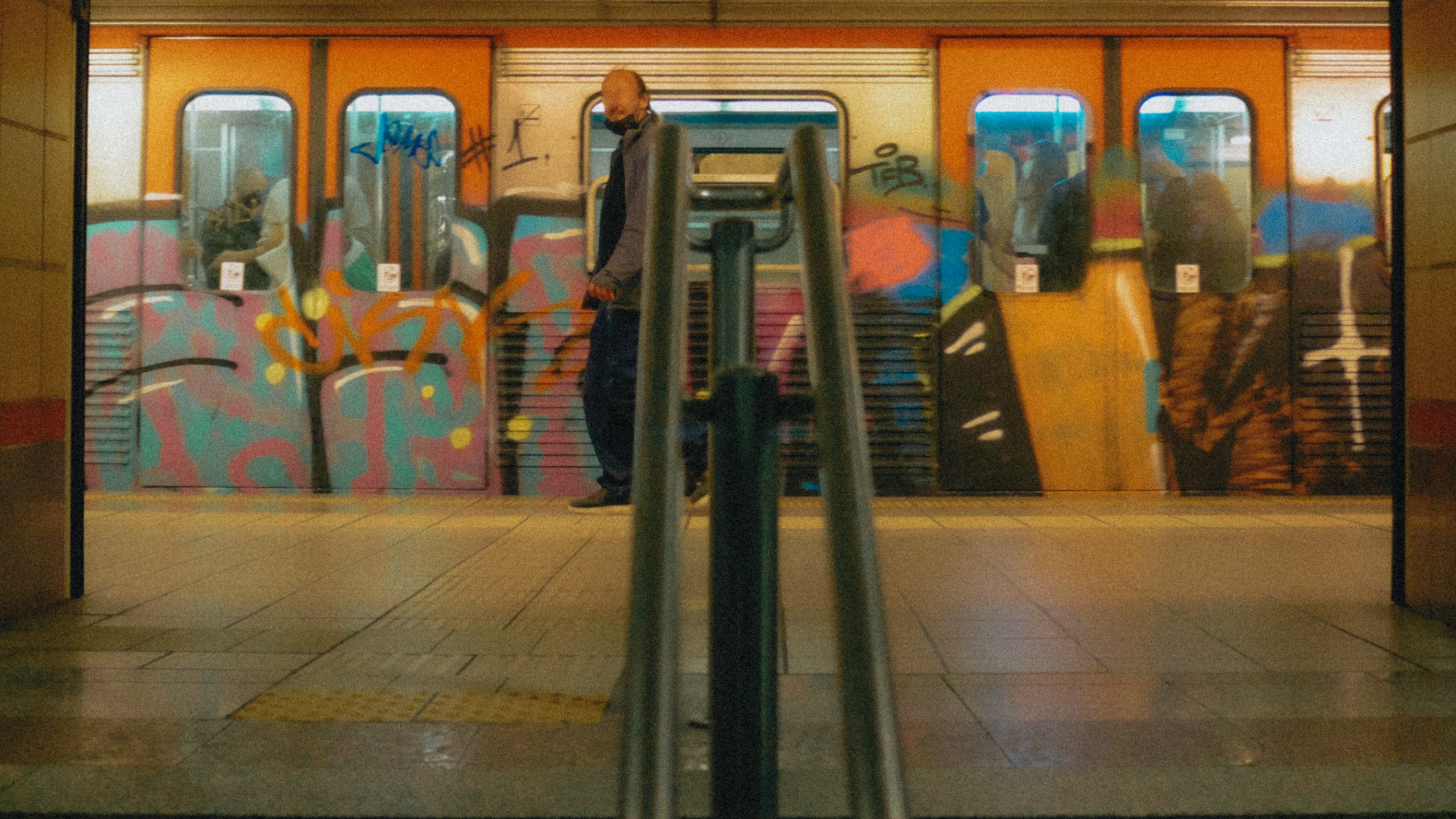
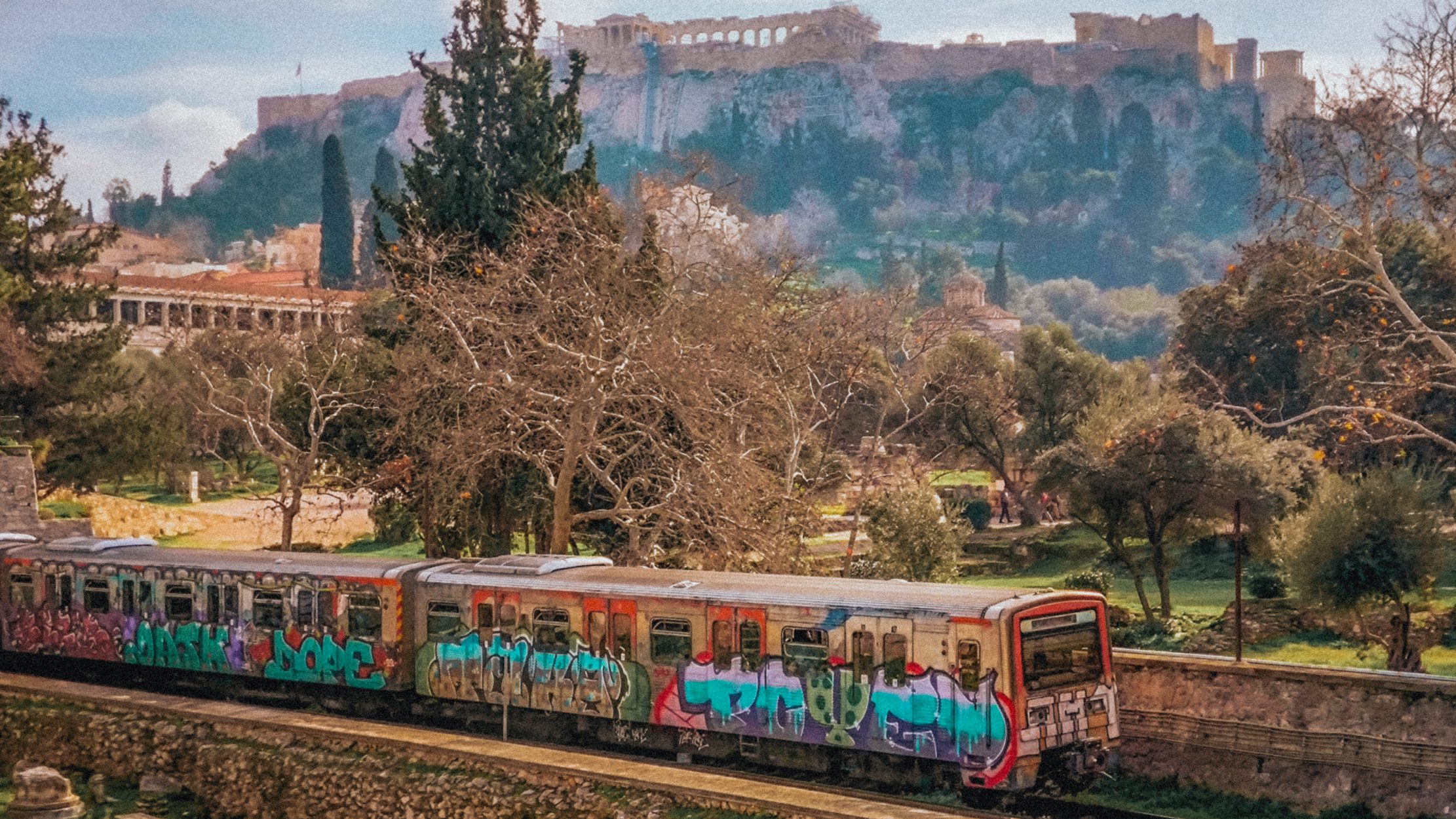
Immediate interventions with carriage overhauls and new rolling stock are needed for the “troubled” Electric Railway (Line 1), as currently trains over 40 years old are in operation, causing problems for both workers and passengers. The trains, which carry tens of thousands daily along the Kifisia-Piraeus axis, frequently break down due to their age, with problems recurring repeatedly.

One such incident, described as “serious” and which caused passenger disruption, occurred on Tuesday, 24/02.

According to a passenger complaint, a train bound for Piraeus did not stop at the Kato Patissia station, bypassed the platform, and stopped a few meters further. The driver announced there was a problem with the braking system, continued to Agios Nikolaos station, where passengers who wished were allowed to disembark. The train then continued to Piraeus with remaining passengers.

After our inquiry, STASY confirmed the incident, noting that the train “overran the platform for a few meters at Kato Patissia station, and according to operating procedures, passengers were not let off at that station, but at the next one.”

“The train was deemed capable, based on technical indicators, to continue to the terminal station, where it arrived without any platform overrun at subsequent stations. At the terminal station, Piraeus, the train was withdrawn for technical inspection at the depot,” the response stated.

“Rare, but it can happen”

(EUROKINISSI)

“Although rare, it’s an incident that can happen,” said Panagiotis Kontogiannis, chief technician and member of the STASY Workers’ Union board.

“Due to age, the trains can experience any issue at any time. Braking is serious, and for that reason, the driver must stop correctly at the next station, let passengers off, and send the train for adjustment at the STASY repair facility in Piraeus.”

“In this case, since technical indicators allowed it, the driver acted correctly by continuing the route,” he continued.

Braking problems appear in all trains not only because of age but also due to the lack of a general reconstruction.

“They are being addressed. This is not something that would turn fatal,” Mr. Kontogiannis explained.

“The train control system of ISAP, and STASY in general [responsible for ISAP (Line 1), Metro (Lines 2 and 3), and Tram], is in very good condition. There is no possibility of two trains on the same track heading in opposite directions.”

However, passenger concern during the incident last Tuesday, as well as the general sense of insecurity among commuters, is entirely understandable, as operational malfunctions on ISAP are frequent.

Only a year has passed since two very serious incidents: the ISAP train that emitted smoke at Moschato station in late December 2024, and the incident of doors opening while in motion between Ano Patisia and Perissos stations on New Year’s Day 2025.

The latter incident is described by Mr. Kontogiannis as “the most serious recorded ever” regarding safety, as it has already occurred twice, with the second occurrence just a few days later, on 3 January 2025.

One train – One story

(EUROKINISSI)

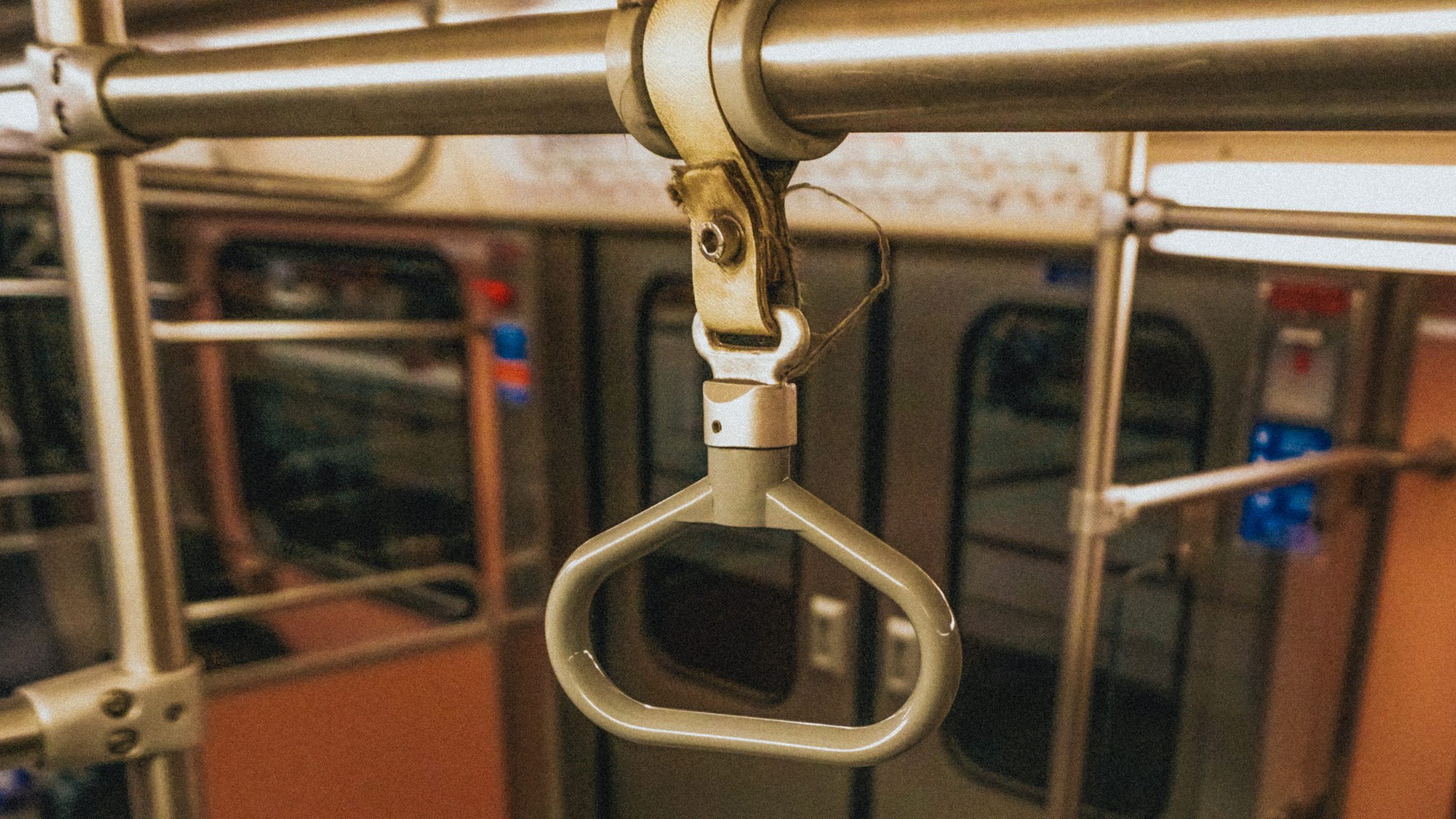
Currently, 17–18 trains in operation were purchased in 1983–1985, 1993–1995, and 2002–2004, which due to age “present several problems, especially with electronic systems.” Four of these have been borrowed from the Metro and were manufactured in 2000.

Approximately 28 other trains exist, 10 of which (purchased in 1992) are scheduled for refurbishment in a second phase. The remaining 17–18, purchased shortly before the 2004 Olympics, have shown electronic issues and remain inactive, although generally in good condition.

“Instead of having 30 trains available, we only have 17–18, barely enough to maintain a 7–8 minute service frequency,” explained Mr. Kontogiannis.

“An immediate relief for staff and passengers would have been the 14 trains currently in refurbishment for over 3 years. The first should have been delivered in July 2024, according to the contract between STASY and the Spanish manufacturer CAF.”

According to the original schedule, the delivery and phased integration of the 14 trains (manufactured 1983–1985) should have been completed in 34 months from contract signing (December 2022), i.e., by October 2025.

Even though the Prime Minister visited the NK Trailers factory in Volos in June 2025, where refurbishment work is ongoing, and announced that the first trains would be delivered “early 2026,” not a single carriage has yet been delivered.

Purchase or refurbishment?

(ΕUROKINISSI)

The original refurbishment cost of the 14 trains was €65.5 million, and after a €6.2 million increase (excluding VAT) due to the Pandemic, the Ukraine war, and the energy crisis, reached €71.7 million (excluding VAT), according to the STASY decision published on Diavgeia.

“With slightly more money, they could have purchased brand-new trains. VAT-inclusive refurbishment cost roughly €90 million for 70 carriages, i.e., €1.2 million per carriage,” noted Mr. Kontogiannis.

“A new carriage might cost €1.6–1.8 million, whereas at the time of the tender it was around €1.5 million. Therefore, the refurbishment cost of one 40+-year-old carriage approaches that of a new one. And new is actually new,” he emphasized.

In December 2025, Hellenic Train purchased 23 new-generation electric trainsets for €308 million, expected to be delivered by the end of 2027, with a cancellation clause in case of delays.

Ministry response

(EUROKINISSI)

After contacting the Ministry of Transport, we received answers to the three main questions arising from the report.

Regarding the delays in the delivery of the trains under refurbishment, the Ministry of Transport’s Press Office stated that this is due to “a series of international developments, such as the war in Ukraine, the energy crisis, and the broader disruption of the global supply chain, factors that significantly affected production and equipment availability,” as noted in the STASY decision published on Diavgeia.

The response also emphasized that “delays also arose due to a legal dispute between the factory in Volos, where part of the project is being carried out, and the contractor company CAF.”

Due to the delays, in December 2025, STASY imposed penalties on CAF totaling €3.8 million.

We were also informed that “the first refurbished train is expected to be delivered next month and, after the completion of the necessary tests, will enter regular service on the network.”

Regarding our question about the choice to refurbish old trains rather than purchase new ones, the Ministry stated that refurbishment costs almost half as much (approximately €1.6 million per carriage) compared to purchasing a new train (approximately €2.9 million per carriage or €17.4 million per full train), a figure significantly higher than the one reported by employees

Ministry’s full response

After contacting the Ministry of Transport, we received answers to three key questions arising from the report:

  1. Why has delivery of the refurbished trains been delayed, despite the contract specifying October 2025 as the final deadline?
  2. When is the first train expected to be delivered?
  3. Why were 40+ year-old trains refurbished instead of purchasing new ones, which could already be in service for only slightly more money?

Ministry reply


Following the inquiries regarding the upgrade of Line 1 trains, and based on STASY’s update, we were informed as follows:

The project concerns the refurbishment of 14 trains from the 8th delivery batch on Line 1 and is carried out by the Spanish company CAF S.A. on behalf of STASY, following a 2020 tender with contract signed in 2022.

Implementation was affected by a series of international developments, including the Ukraine war, energy crisis, and global supply chain disruptions, significantly impacting equipment production and availability. Delays also resulted from legal disputes between the Volos factory, where part of the project is executed, and CAF.

For all delays, and by Ministry order, STASY imposed penalties on CAF totaling €3.8 million in December 2025, as stipulated in the contract.

The project involves upgrading and gradually reintegrating trains into service. The first refurbished train is expected next month, and after completion of necessary tests, it will enter regular service.

Regarding the choice of refurbishment over purchasing new trains, the evaluation was based on clear economic market data. According to STASY, purchasing new trains is significantly more expensive than refurbishing existing ones. For a six-car trainset, the estimated cost of a new train is €17.4 million (~€2.9 million per carriage).

The total refurbishment cost of a similar trainset is approximately €9.6 million (~€1.6 million per carriage). Refurbishment costs roughly half as much as buying new, allowing fleet renewal at much lower public expense. Market research from upcoming STASY and Elliniko Metro tenders supports these estimates.

The refurbishment option is also faster to implement. Acquiring new trains requires design, production, and testing, taking several years internationally.

The modernization of the 14 trainsets is part of the “Transport 2021–2027” program and funded by EU funds. Refurbishment extends the life of the trains by ~25 years, and car bodies and bogies are reused, promoting circular economy principles.


AD(1024x768)