What happened?
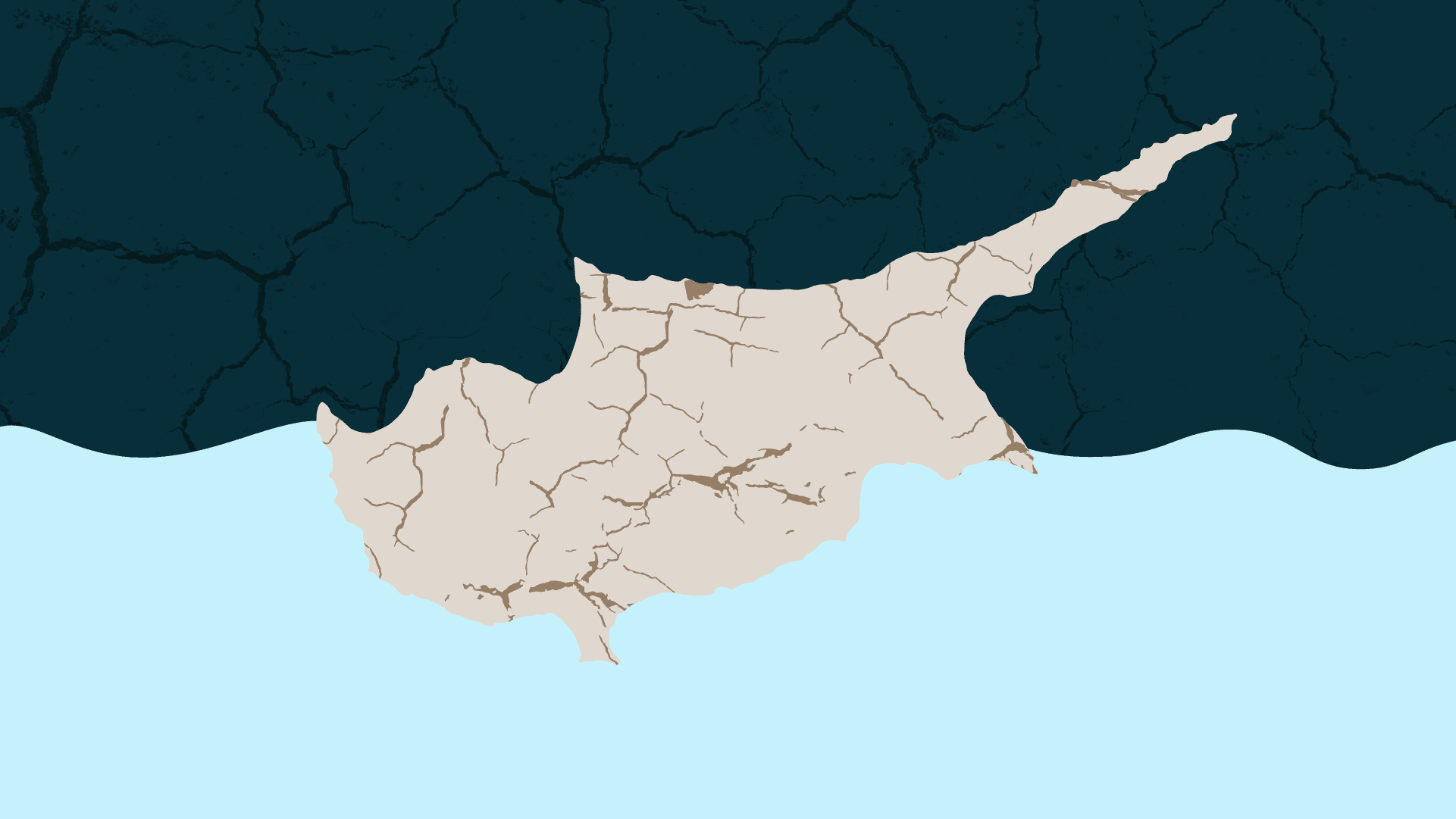
“The authorities in Cyprus have called on residents to reduce water consumption by 10% compared to 2025 (roughly 2 fewer cubic meters per person per day), due to unprecedented drought on the island.
At the same time, an emergency package of €31 million was announced, as reservoirs are at their lowest levels since 1901, with little chance of replenishment before the tourist season begins.”
What does the 10% reduction mean in practice?
“According to Iliana Tofa, director of the Water Development Department (WDD), a 10% reduction in consumption corresponds to 10 million cubic meters of water—roughly the annual output of a 30,000 m³ desalination unit.”
Water is running out
“In February, reservoir levels stood at 13.7% of total capacity, compared with 26% at the same time last year.
This year, inflows to Kouris Dam, the largest in Limassol district, are just 3.5 million m³, at 12.5% capacity, compared with 21.6% last year.
Total inflows to major reservoirs this year amount to 18 million m³.”
Overconsumption
“Average water consumption per capita in Europe is 120 liters per person per day. In parts of Cyprus, due to high temperatures, consumption can reach 500 liters per person per day.
The goal is to keep usage around 140 liters per person per day, which authorities say will not reduce quality of life, because ‘use is not abuse.'”
Other measures taken
“Water reuse is already underway, along with repairs to leakages, which can reach up to 40% in local networks.
Households will also receive financial support to invest in water-saving devices.
Cyprus has made water scarcity a priority of its EU Council presidency, allocating €200 million to improve infrastructure, while fast-tracking the installation of desalination units.”
Climate change is making it worse
“The situation is exacerbated by climate change, as temperatures in the region are rising 20% faster than the global average.
Annual rainfall has fallen roughly 15% since 1901, while water demand has increased 300% due to population growth and tourism.
Three million tourists—almost three times the permanent population—visit Cyprus each year.”
Desalination plants
“By the end of 2026, seven new mobile desalination units are expected to operate, supplementing the seven existing units (five permanent and two mobile).
Permanent units currently operate in Larnaca, Vasiliko, Dhekalia, Episkopi, and Paphos, with two mobile units in Moni and Kissonerga.
Two mobile units are expected in March 2026 in Garylli and Limassol port, and three more in October 2026 in Episkopi, Ayia Napa, and Vasiliko.
Two permanent units are expected in December 2026 in Mazotos and Germasogeia.
Together, these units will provide 397,000 m³ of water per day.”
Critics of desalination
“Desalination plants are not only expensive but also potentially harmful, requiring significant energy and threatening marine life if the brine is not properly dispersed.
‘Twenty years ago, scientists predicted that temperatures in Nicosia would be like Cairo by 2030 and Bahrain by 2045—we knew what was coming,’ say Cypriot environmentalists.
‘It’s shameful that public spaces are still covered with grass and that we have so many pools and golf courses,’ they conclude.”
What scientists say
“Research and modeling show that, in the worst-case scenario, temperatures could rise 4.5°C by 2100 […] Agriculture could collapse, droughts may cause mass population movements, and we may not be able to secure food,” says a professor at the Cyprus Institute.
Farmers are already significantly affected, having been ordered to reduce irrigation by 30%.”
Sources:


 What is fyi.news?