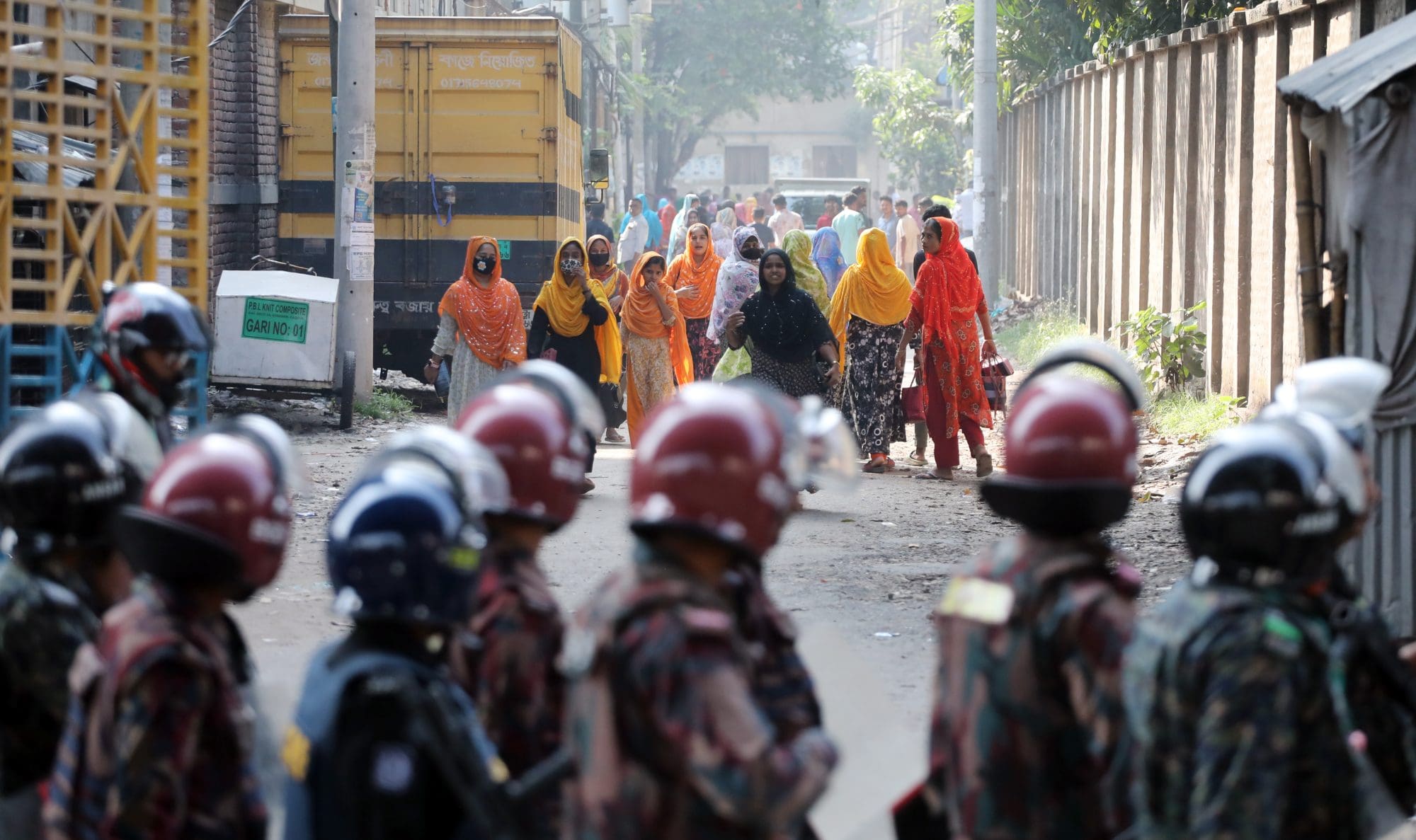
After weeks of protests, garment workers in Bangladesh have secured a 36% pay rise.
The protests are estimated to have cost the country’s economy hundreds of millions of dollars, prompting the relevant ministry to agree to raise the sector’s minimum monthly wage from 12,500 taka ($100) to 17,000 taka ($136).
Official economic figures describe the garment industry as the driving force behind the country’s exports. The sector generates around $38 billion annually, employs four million people and accounts for four-fifths of the country’s exports. It is also a major source of employment for women in rural areas.
Bangladesh is the world’s second-largest garment exporter, after China.
The agreed minimum wage of 17,000 taka falls short of the 30,000 taka ($240) demanded by protesters, and it remains unclear whether they will accept the offer.
“Although we are not entirely satisfied, the outcome is not entirely bad either,” a representative of the workers’ union formed to negotiate with the government told reporters.
The Bangladesh Garment Manufacturers and Exporters Association (BGMEA) said on Sunday that the protests had cost the industry around $428 million in losses, while orders worth $254 million had been diverted to other countries.
The wage increase will take effect in December, with workers receiving their new wages in January.
Source: Al Jazeera


 What is fyi.news?