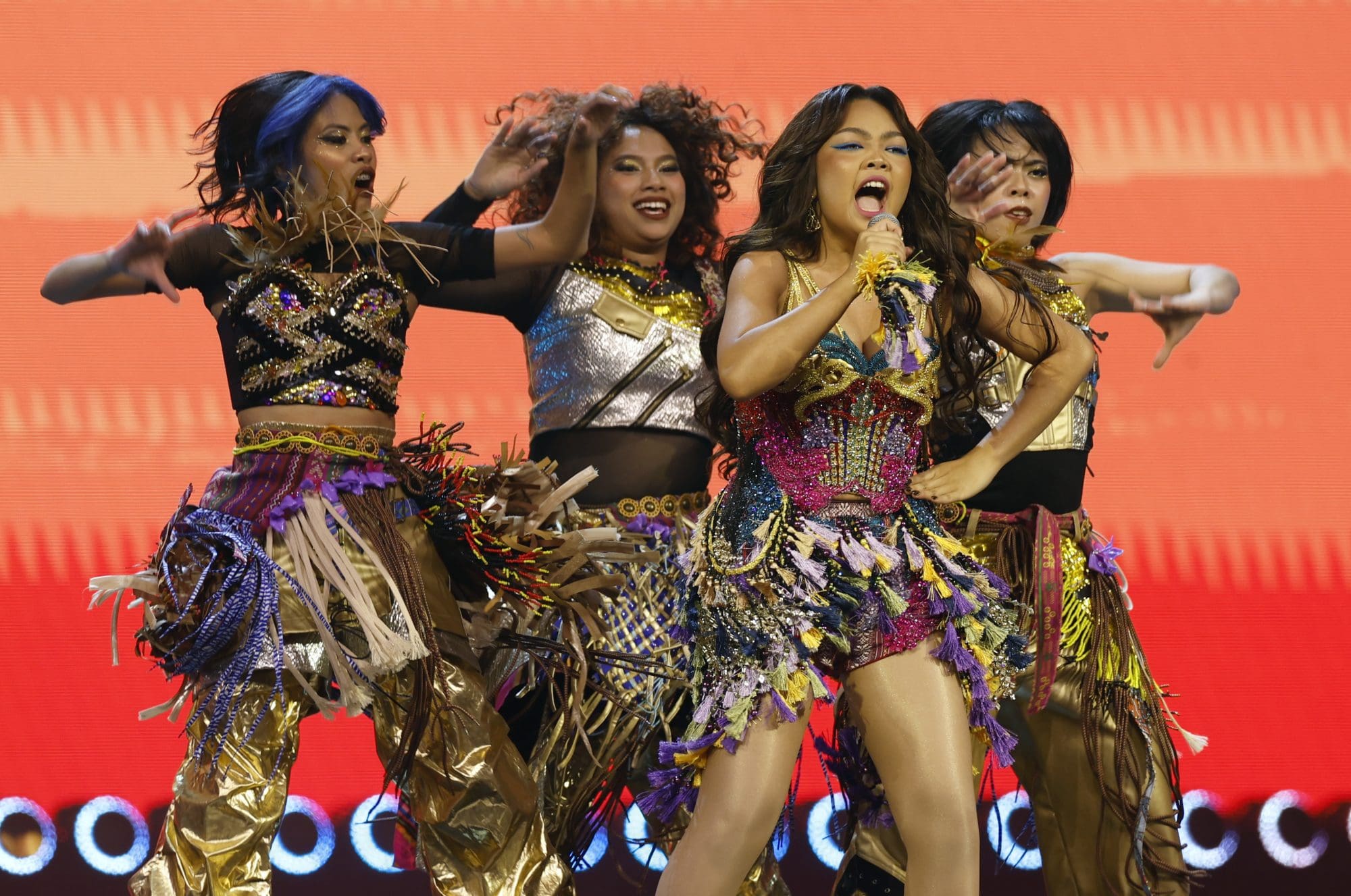
Carmelle of the Philippines won the inaugural Eurovision Song Contest Asia, held on Saturday in Bangkok, Thailand, defeating representatives from 10 other countries: Bangladesh, Bhutan, Cambodia, Laos, Malaysia, Mongolia, Nepal, South Korea, Thailand and Vietnam. The contest was broadcast live on YouTube and regional television channels, marking the European music competition’s first expansion into Asia.
Despite the organisers’ ambitions, the inaugural Eurovision Asia was considerably smaller than its European counterpart. Ahead of the event, concerns had been raised about limited funding, technical difficulties and weak audience demand. This was the third attempt to bring Eurovision to Asia, following two earlier initiatives that were abandoned. Similarly, NBC’s American Song Contest lasted just one season, in 2022.
The Asian version of Eurovision retained the competition’s characteristic theatricality, featuring elaborate stage sets and costumes.
Several of Asia’s largest music markets, including China, Japan and India, were absent from the inaugural contest, despite the international influence of their music industries. Organisers are in talks about their participation in future editions, believing their inclusion could significantly broaden the contest’s appeal.
The Asian version of Eurovision retained the competition’s characteristic theatricality, with elaborate stage sets and costumes, including traditional attire and feathers. However, nine of the 11 entries focused on love, with musical styles ranging from ballads to a cappella hip-hop, suggesting that Asian audiences’ musical preferences may differ from those associated with the European competition.
Martin Green, Eurovision director at the European Broadcasting Union (EBU), acknowledged that the European contest’s success does not guarantee a similar reception in Asia, stressing that the new competition needs time to establish its own identity and audience. “Bringing people together through music is fundamentally a good idea,” he told The New York Times, adding that “Europe shouldn’t keep it all to itself.”
Source: The New York Times


 What is fyi.news?