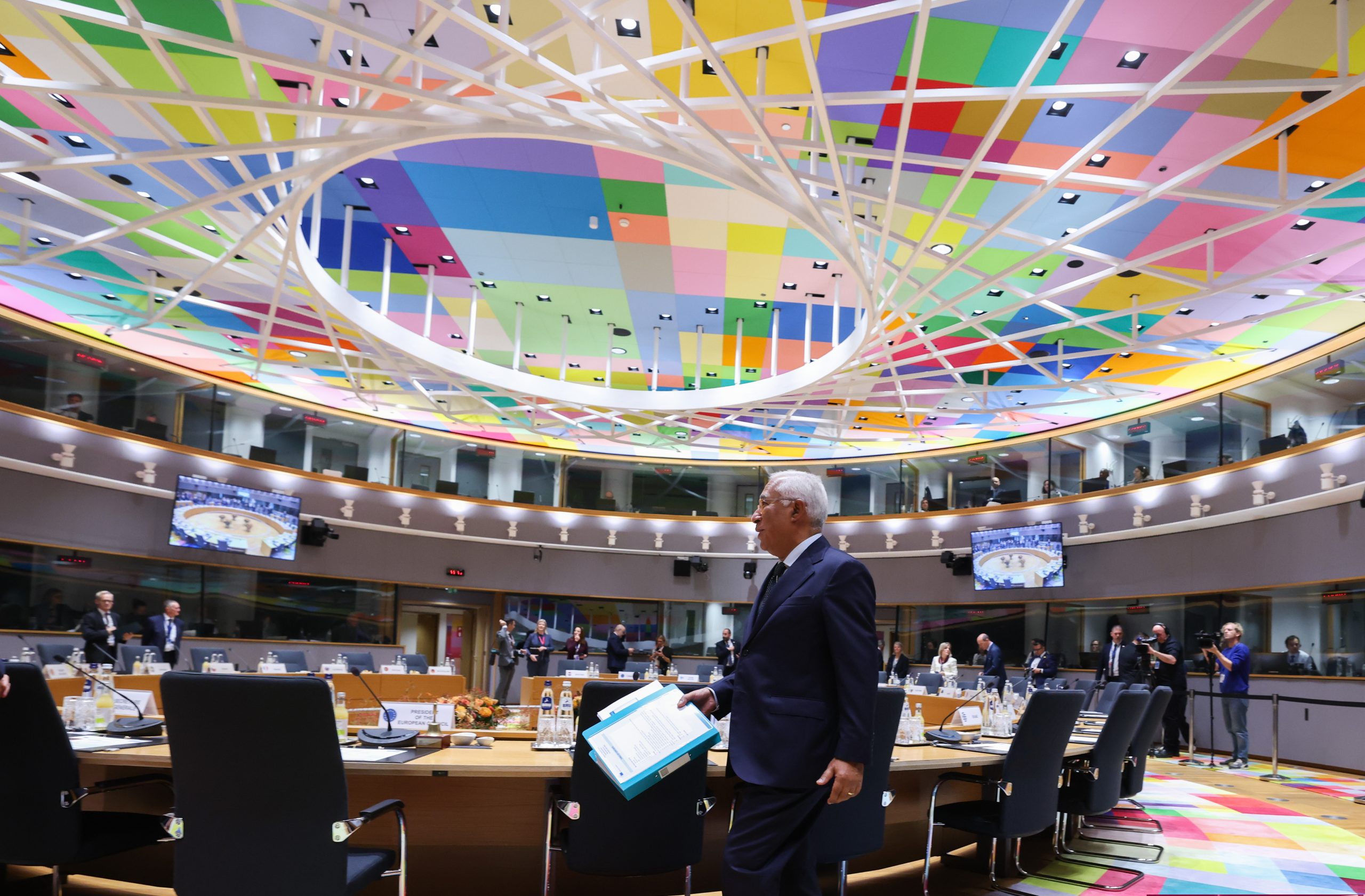
The two-day EU summit (October 15–16) opened today in Brussels amid sharp disagreements over high energy prices, the new EU budget and competitiveness, as rising energy costs and international competition place growing pressure on the European economy.
The summit is a meeting of the European Council, where leaders of the EU’s 27 member states set the bloc’s main political priorities but do not themselves pass legislation.
On energy policy, Italy and the Czech Republic are calling for the EU’s Emissions Trading System (ETS), which imposes costs on industries for their carbon dioxide emissions, to be relaxed or temporarily suspended. Denmark, Sweden and Finland, however, warn that weakening the system would undermine investment in clean energy and efforts to reduce dependence on imported fuels.
Greece will seek additional EU measures and greater flexibility to address high energy costs and oppose funding cuts, Prime Minister Kyriakos Mitsotakis said.
The proposed EU budget has also divided countries that contribute more than they receive, such as Germany, and those that benefit from EU funding. The main dispute concerns the allocation of resources between agricultural and regional subsidies and priorities such as innovation, competitiveness and defence. German Chancellor Friedrich Merz warned that negotiations would be particularly difficult.
Greek Prime Minister Kyriakos Mitsotakis called for additional EU measures and greater flexibility to support households and businesses facing high energy costs. He also reiterated Greece’s opposition, alongside 15 other member states, to cuts in Cohesion Policy funding for regional development and the Common Agricultural Policy.
The agenda also includes measures to address rising imports from China, with the EU’s trade deficit with the country reaching €360 billion in 2025. Funding for Ukraine in 2027 is expected to be discussed tomorrow in the presence of Ukrainian President Volodymyr Zelenskyy.
Sources: Reuters, ΕRΤ


 What is fyi.news?