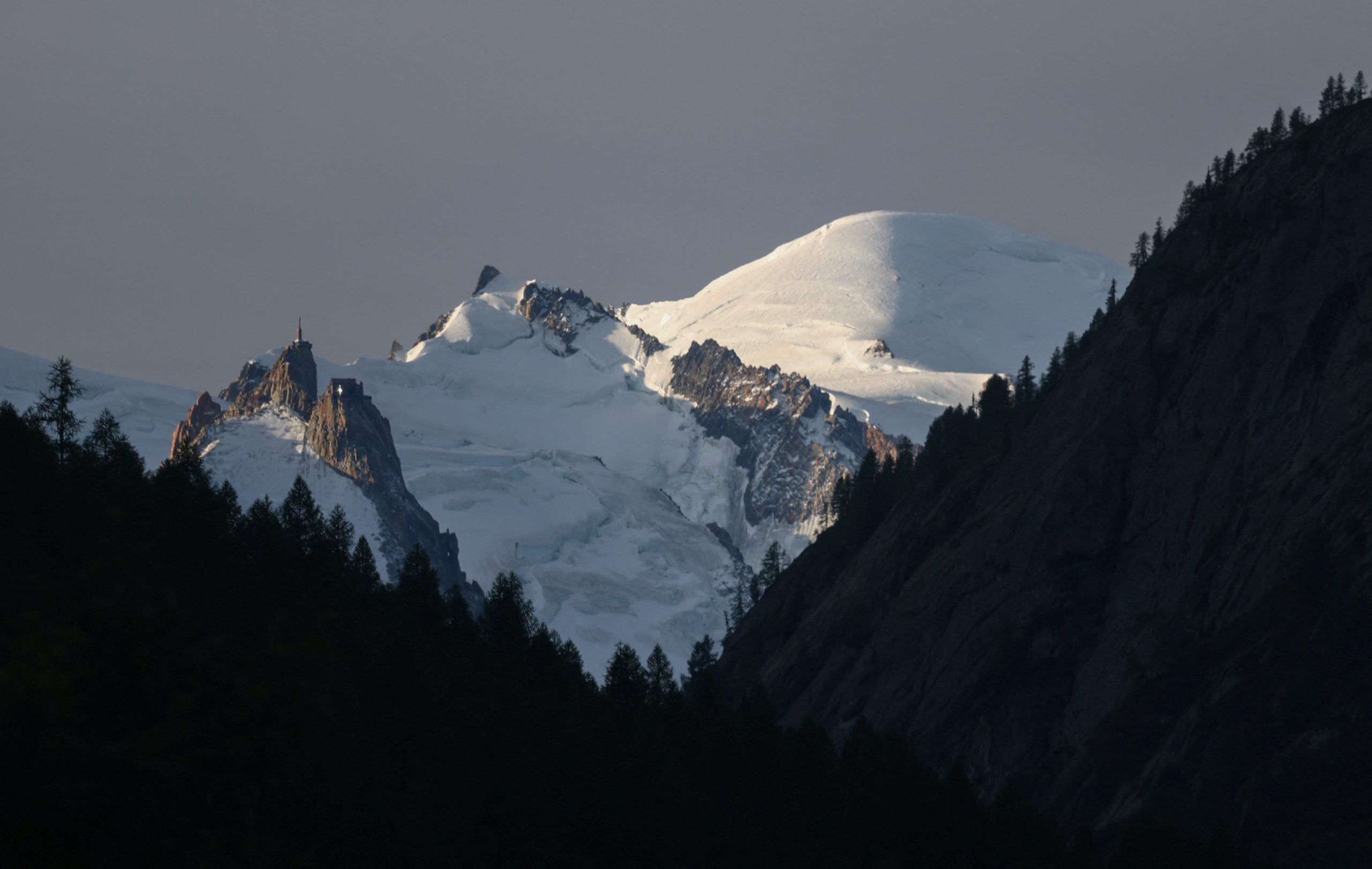
Mont Blanc, the highest peak in Western Europe, has lost 1.29 metres in height over the past year, according to recent measurements by French surveyors. The mountain now stands at 4,807.47 metres, down from 4,808.76 metres in 2025.
Mont Blanc’s summit is covered by a layer of snow and ice approximately 15 metres thick, above the mountain’s rocky peak, which reaches 4,792 metres. Its height fluctuates constantly depending on temperatures, snowfall and winds, which affect how snow accumulates and is distributed.
The latest measurement comes as Switzerland has lost 20% of its glacier ice over the past five years.
The latest measurements, taken in September using satellite technology and drones, show that the summit is 3.43 metres below its record height of 4,810.90 metres in 2007, but 1.88 metres above its record low in 2023.
Experts stress that annual fluctuations in summit height do not necessarily reflect changes in overall ice mass and are not, on their own, evidence of climate change. However, the latest measurement comes amid accelerating glacier retreat in the Alps. Switzerland has lost 20% of its glacier ice over the past five years, including 5.5% between 2025 and 2026 alone.
Jean des Garets, who led the surveying expedition, noted that the effects of climate change are already visible at lower elevations, where glaciers are retreating and, in some places, have been replaced by streams. He clarified, however, that “for now, climate change does not appear to have the same impact above 4,000 metres,” pointing to the different conditions at higher elevations in the Alps.
Source: The Guardian


 What is fyi.news?