What is fyi.news?
“When my son was 4 years old, he had febrile seizures, something like an epileptic seizure. In a state of shock, we took him to the hospital, and the only pediatrician, after many consecutive days on call, was at home. The first aid was provided by the nurses, who literally went above and beyond and managed to bring the child around. After some time, a general practitioner who happened to be at the hospital and was working in the Internal Medicine department finally examined my son.”
Maria, 38, lives on Samos and has an 8-year-old son. As she points out to fyi.news, she has lived in fear ever since. She and her family are now considering moving to Athens. The main reason is that the island’s public hospital has only one pediatrician.
Recalling the day her son suffered the febrile seizures, she says that was when she realized that Samos is an entire prefecture (together with Ikaria and Fournoi) where residents “are left to fate—or misfortune.”
Today, Samos still has only one pediatrician, the same doctor who, in early May, posted a video in which she said through tears that she was working her fifth consecutive on-call shift, while describing her exhaustion.
“What is being said about the exhaustion of healthcare staff is absolutely true,” Maria stresses, referring to the pediatrician’s remarks.
By contrast, Health Minister Adonis Georgiadis stated that “no excessive workload and no excessive on-call duty on her part was found,” concluding that he would not allow “communication games involving the National Health System (ESY).”
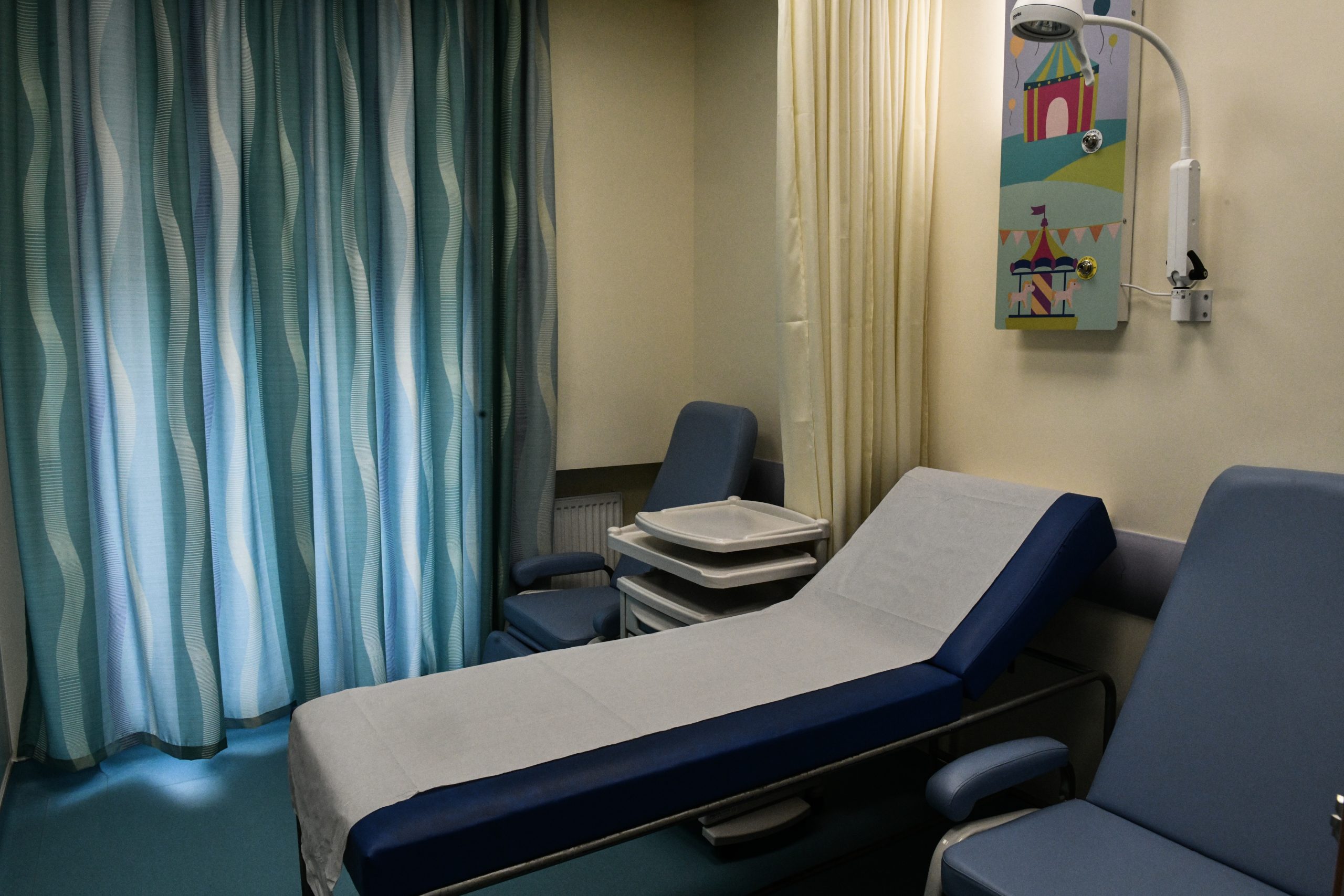
Samos, however, faces severe shortages and is only one of many islands in the same situation. Their residents -parents like Maria—live with fear and insecurity.
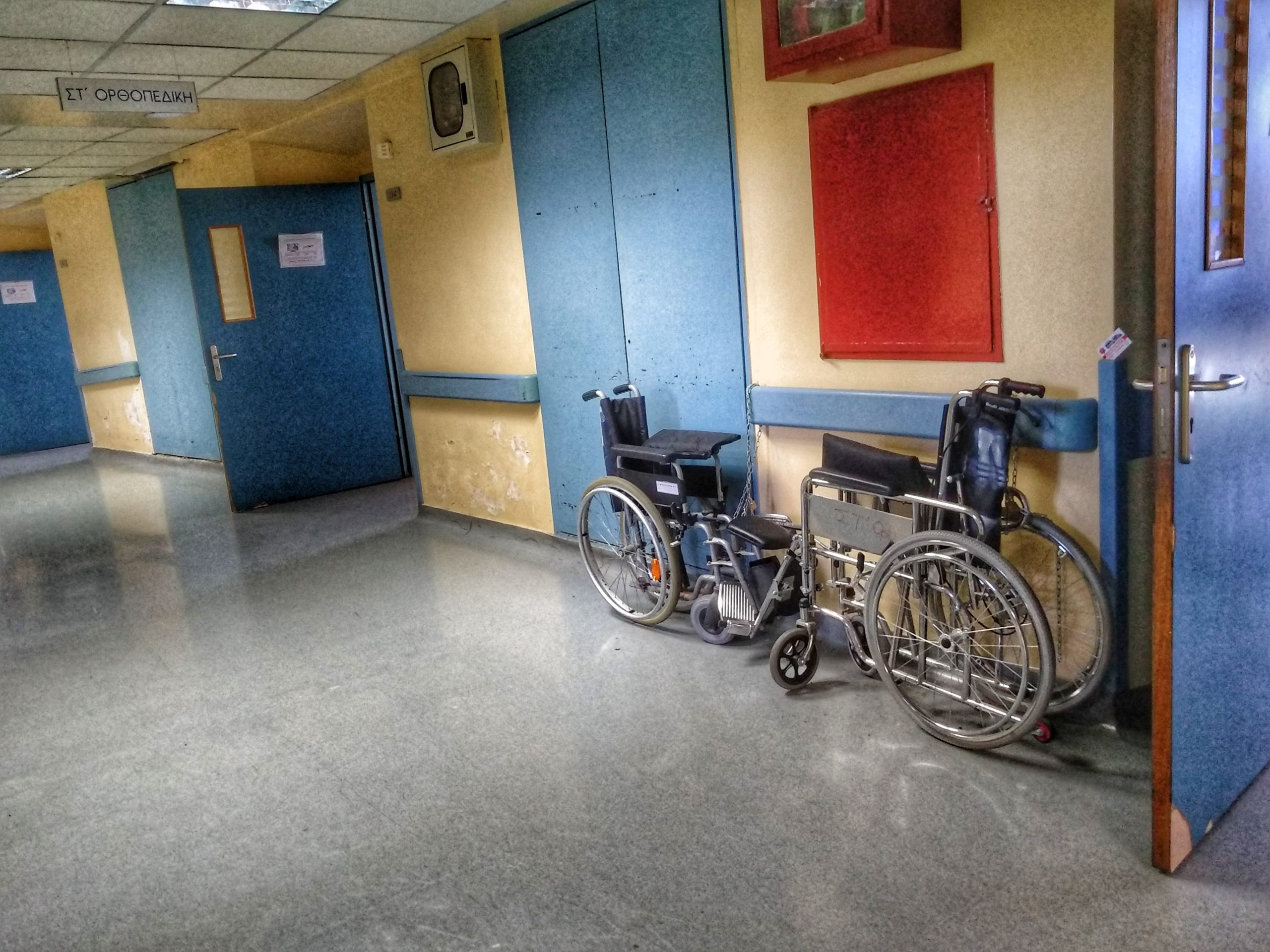
FIle Photo (ΕUROKINISSI)
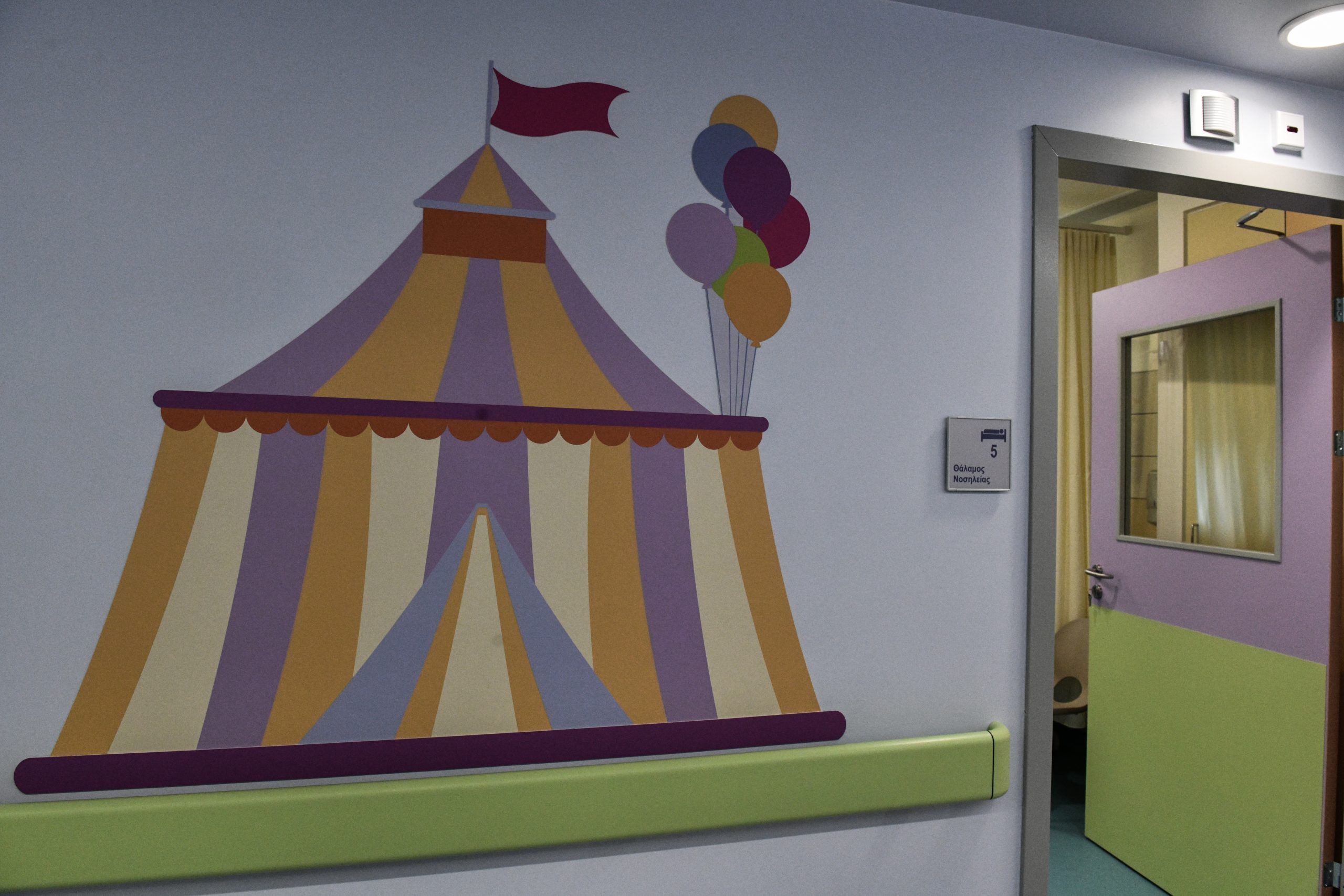
The Pediatric Department of Samos mainly serves Samos itself, but it also receives patient transfers from Ikaria, Patmos, Agathonisi and Leipsoi. Many residents therefore depend on this service.
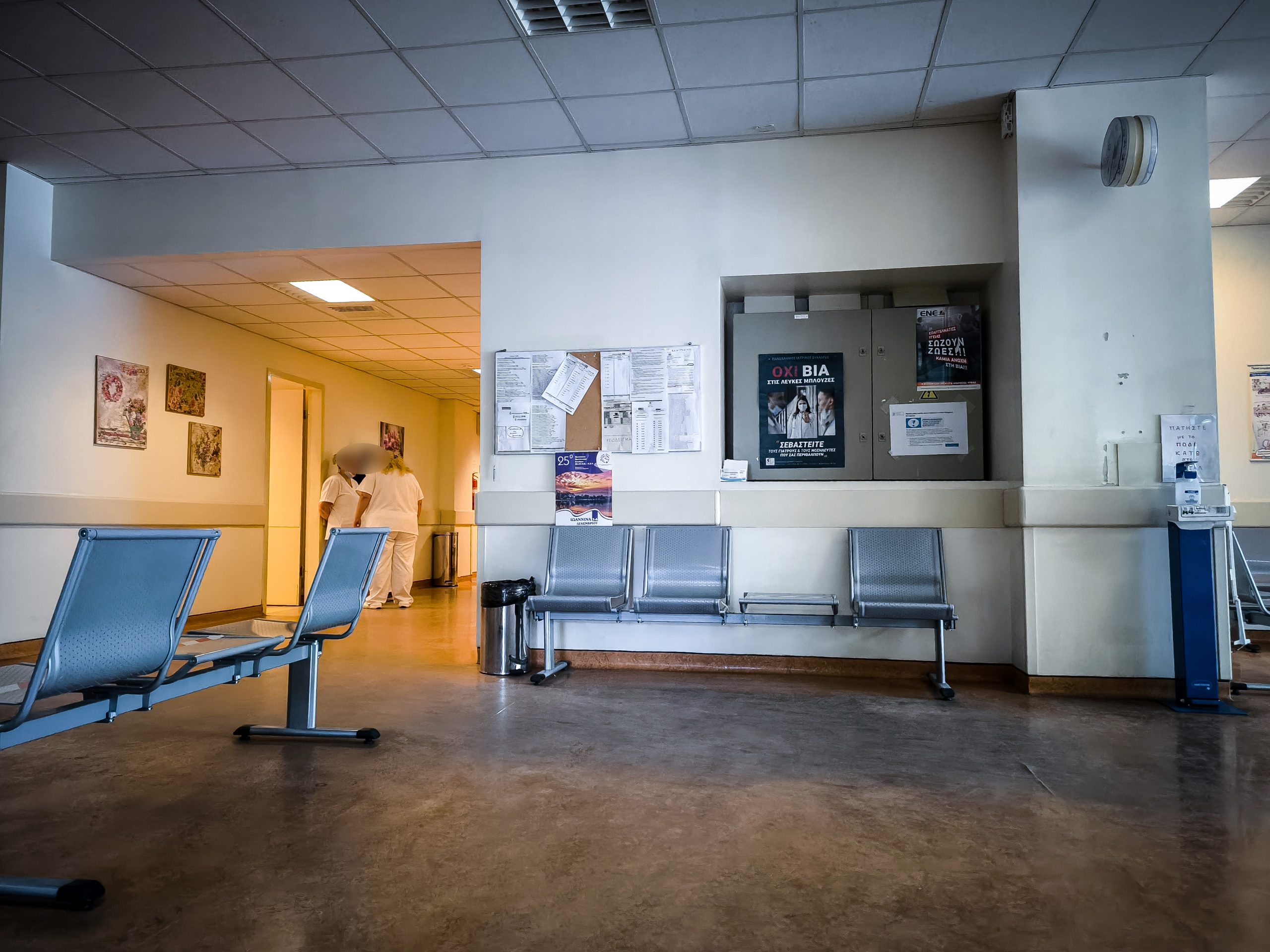
“In essence, we do not have a pediatric service. There is one pediatrician fighting on her own, occasionally supported through temporary staff transfers. Just as we do not have a proper Internal Medicine department or Cardiology department. The island’s permanent population is 45,000 and it also covers the surrounding islands. Imagine what happens during the tourist season. It is one pediatrician running around, and we try to fill the gaps through staff transfers,” Stratos Kapolis, president of the Samos Medical Association, tells fyi.news.
He adds that a department needs four pediatricians to operate safely, just as any clinical department needs at least four doctors.
“At the very least there should be three pediatricians, because even if there are two, each one would still have to do fifteen on-call shifts per month. When we reach these levels of excessive on-call duty, incidents like the pediatrician’s case—or the one in 2024 (referring to the island’s pediatrician who collapsed and had to be hospitalized with stroke-like symptoms)—are bound to happen. It could become even worse, either for a colleague or for young patients,” he notes.
He also commented on Adonis Georgiadis’ statement regarding the pediatrician and her five consecutive on-call shifts. The minister had said that “during her time there she saw a total of 19 children and admitted four. All were scheduled cases and none were emergencies.”
“It doesn’t work like that,” Kapolis explains. “One day may be busier, another less so. It is not about how many cases there are, but how dangerous they are. How serious they are. One case could be meningitis requiring an emergency transfer. It could be something very severe. I cannot follow the logic of looking at average numbers. Healthcare cannot be measured by those kinds of figures.”
FIle Photo (ΕUROKINISSI)
Another island facing pediatrician shortages is Zakynthos, with a population of more than 40,000. According to Giannis Galanopoulos, president of the Federation of Hospital Doctors’ Associations of Greece (OENGE), the shortages are comparable to those on Samos.
“The whole of Zakynthos had two pediatricians for the entire island. After an incident, one was suspended, and now only one department director remains. She covers the entire month through active, mixed, and service on-call shifts, without being able to take time off, without being able to take a single day of leave, without being able to leave Zakynthos. This is on an island where, as with many others, the population more than doubles during the summer because of tourism.”
Another example is Ithaca, which has no pediatrician at all. In an interview in early May, Smaragda Sardeli, district governor of the Ionian Islands, stated that the island has been without a pediatrician for a year and a half. Before that, the permanent pediatrician covered the island only twice a week. Parents are forced to travel off-island, even to Patras, and the situation becomes even more difficult during bad weather and periods of limited transport, when travel may be impossible.
“The islands are areas with difficult access to the center—to Athens or major cities. There are particular problems during bad weather, when ferries cannot sail or helicopters and planes cannot easily fly, especially in urgent cases. Situations can become extremely dangerous if there are no options available for children to receive hospital treatment,” says Galanopoulos.
On islands such as Ios, Dimitra Salonikiotou, president of the Cyclades Health Workers’ Union, tells fyi.news that there is not even a pediatrician at the Health Center. The Health Center on Milos also lacks a pediatrician, although there is private-sector coverage. Tinos has one position and private-sector coverage as well.
She stresses, however, that this does not mean “parents should have to pay a private doctor. There should be a pediatrician at the Health Center.”
FIle Photo (ΕUROKINISSI)
As is often the case where there is no pediatrician in a public healthcare facility, the available solutions are extremely limited. They are either costly or not medically ideal.
One “solution” is to travel to Athens or to another island, such as Santorini in the case of Ios. In other words, parents must leave the island with their child in order to see a pediatrician at a hospital or health center. The other “solution” is for the child to be examined by a general practitioner.
“What is happening is not reasonable. And it is certainly a hardship. General practitioners are supposed to examine children at the Health Center, because they receive some pediatric training and can partly cover the need, but that does not mean a pediatrician is unnecessary. Quite the opposite,” says Salonikiotou.
In Ios, parents do not even have the option of a private pediatrician. In Tinos, however, the private sector is effectively the only option, as the island relies almost entirely on it.
“It is good that private pediatricians exist, but sometimes a child needs hospitalization, intravenous antibiotics, or inpatient treatment. And not everyone has the financial means to turn to a private doctor. Primary care provided by a private practitioner in a clinic is one thing; secondary care provided in a hospital is another. Also, these are islands where a private pediatrician may visit only twice a month for scheduled appointments, which means they cannot be available at all times or in emergencies,” stresses Giannis Galanopoulos.
FIle Photo (ΕUROKINISSI)
Why, then, are there so many shortages on the islands, in hospitals and health centers? The main reason is the lack of incentives.
“Our basic demand is for financial and scientific/professional incentives. Let’s not fool ourselves. Why would someone come here? The base salary of a Grade B specialist doctor is €1,200. Would someone come to Samos? They would rather stay somewhere close to home. Because if they come to Samos, with rent and living expenses, they would still need support from their parents. And it is not only Samos facing this problem; the surrounding islands face it too,” says Stratos Kapolis.
He concludes: “Just as incentives were provided for the summer months, let them also be provided during the winter months. People on the islands do not get sick only in the summer. The minister should understand that. We get sick in winter too.”
The problem is not only the lack of financial incentives. Another issue is the deterrent effect of the extremely high workload doctors are expected to face on the islands. If, for example, a department is supposed to have five positions but the ministry advertises only one vacancy, it is hardly attractive for a doctor to take on such a burden alone.
“The state does not even follow the staffing levels it has set for itself. The corresponding positions are simply not advertised. In the end, someone will prefer to open a private practice in Athens or another large city, or wait to be appointed later in a major urban center. They will not go to an island because there is no reason for them to do so,” says the president of OENGE.
“For me, Samos is the center of the earth. But someone from mainland Greece will prefer to stay close to their home region unless incentives are provided—and we have been saying this for years,” notes Stratos Kapolis.
For those who have chosen to live on Samos, the island may indeed be “the center of the earth.” Yet the shortages in secondary healthcare create a constant sense of insecurity that residents are forced to live with.
“Parents in Samos live with the fear that something serious might happen to our children. We feel fear and insecurity because if it does happen, we genuinely do not know whether, at that specific moment, there will be a pediatrician available at the hospital,” Maria says.