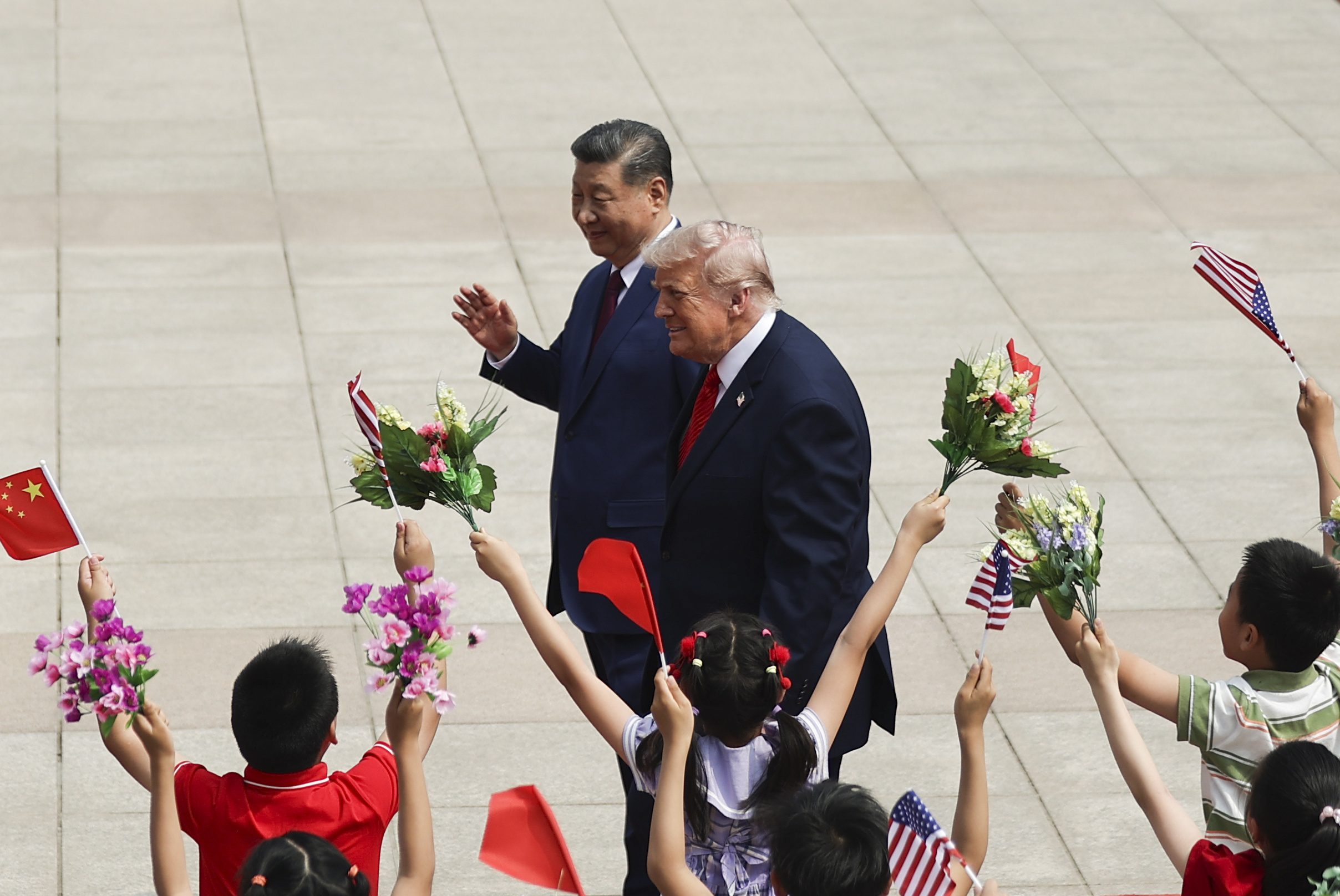
President Donald Trump arrived in Beijing accompanied by more than a dozen CEOs from major American corporations such as Apple, Nvidia, and Tesla, marking the first visit by a U.S. president to China in nine years. The Chinese side clearly invested in the symbolic importance of the visit, organizing a ceremonial reception with military honors, children’s choirs, and joint appearances by the two leaders at historic sites across Beijing.
The atmosphere of the talks appeared positive from both sides. Trump described his nearly two-hour meeting with Xi Jinping as “excellent,” while Xi spoke of a “new era” in U.S.–China relations, based on stable ties and managed competition. Despite the positive rhetoric, the core points of tension remain unresolved: tariffs, restrictions on exports of advanced American chips to China, the war in Iran, and above all Taiwan.
The United States does not officially recognize Taiwan as an independent state, but it maintains close ties with the island, including military cooperation and arms sales.
Xi strongly reiterated Beijing’s position on Taiwan, warning that it is “the most important issue in China–U.S. relations” and that any mishandling could lead to a “very dangerous situation.” While the United States does not formally recognize Taiwan as independent, it continues to maintain close relations with the island through military cooperation and weapons sales — something China sees as a constant source of strategic pressure.
Beyond geopolitics, the visit also carried a clear economic dimension. Trump sought to present the presence of the CEOs as evidence of a renewed business rapprochement, at a time when the world’s two largest economies remain both deeply interdependent and increasingly competitive.
Source: BBC [1], [2], CNN


 What is fyi.news?