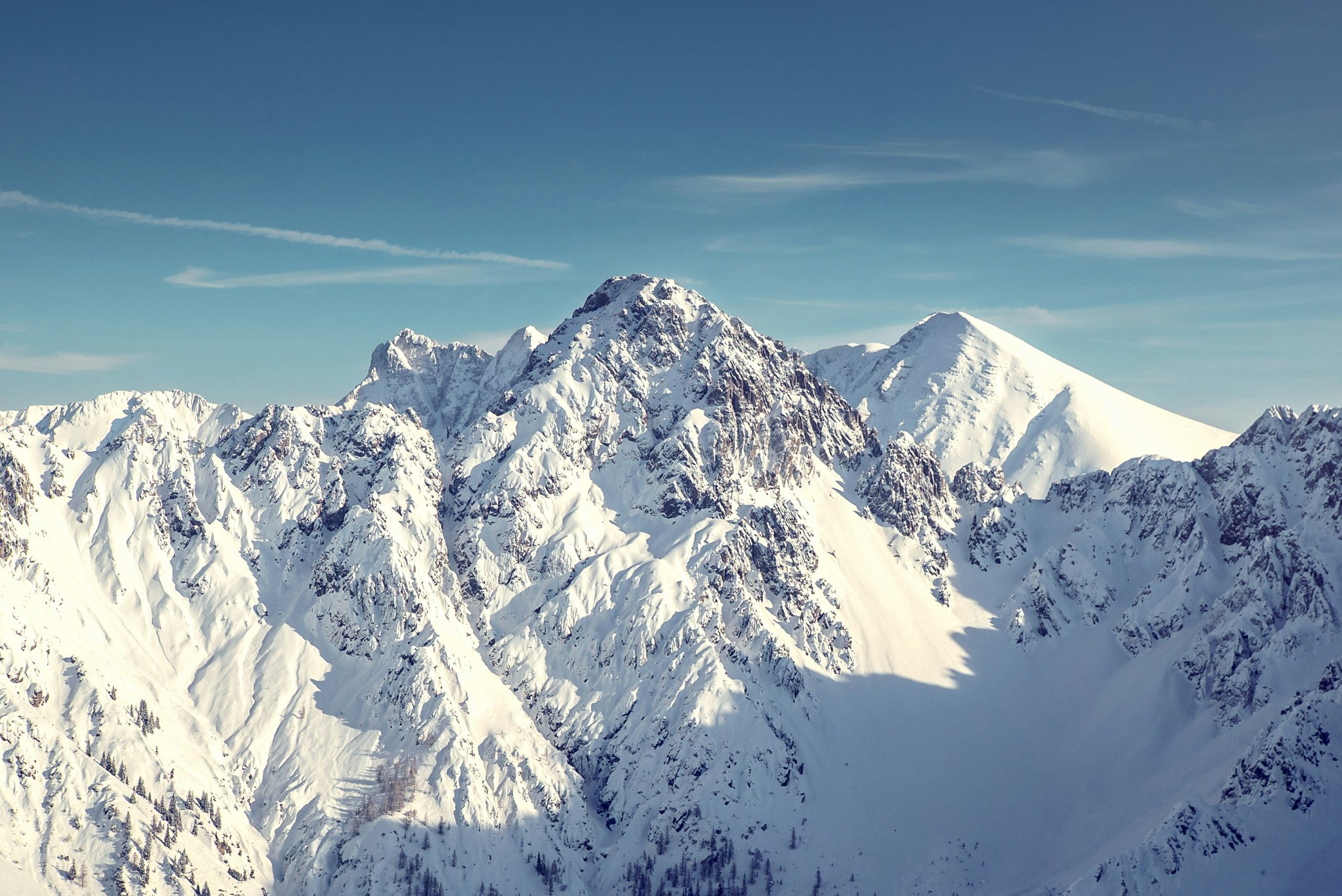
If countries do not take stronger action on climate change and upgrade their existing environmental plans, 97% of the glaciers in the European Alps are expected to melt within the next century, with most of this loss occurring over the next 20 years, according to a new study.
Specifically, under current policies, temperatures are projected to rise by 2.7°C, with only 110 of the roughly 3,200 glaciers in Central Europe surviving. Even if the goals of the Paris Agreement are met, limiting warming to 1.5°C, 87% of glaciers will be lost, while at 2°C, the loss reaches 92%. In an extreme warming scenario of 4°C, nearly all glaciers (99%) disappear, leaving only 20 remaining by 2100. In all scenarios, the largest loss is expected very soon, with the “peak” occurring immediately after 2025.
Glaciers are large ice masses formed from compacted snow and take hundreds of years to develop.
The glaciers in the Alps are small and very sensitive to temperature increases. According to the lead researcher, the Alps as we know them are expected to change completely. Many ski resorts will no longer have access to glaciers, and water supply to nearby villages will also be affected.
Globally, 79% of glaciers are projected to disappear by 2100 if emissions are not drastically reduced, the study notes. After Central Europe, the next most affected regions are expected to be western Canada and the United States (Rocky Mountains), while the most “resilient” glaciers are those at high altitudes, such as in Iceland and Russia.
Source: Politico


 What is fyi.news?