What is Mercosur in simple terms?
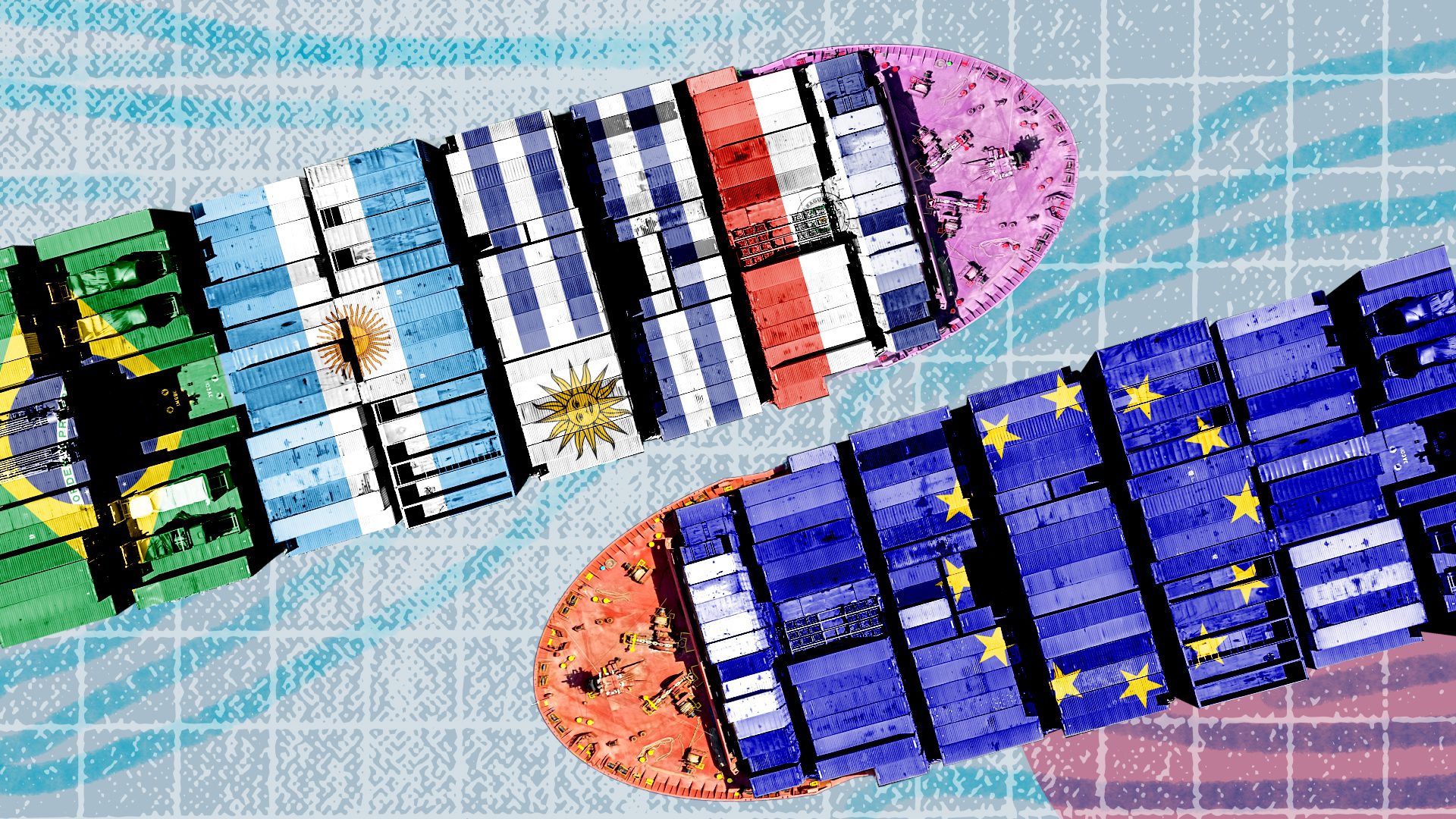
Mercosur, as an agreement, is the one signed between the EU and Brazil, Argentina, Uruguay and Paraguay, after 26 years of negotiations.
Mercosur (Mercado Común del Sur), as a union, is a trade bloc between South American countries, which has existed since 1991 (it somewhat resembles the EU, but without the political character), with the aim of promoting free trade within the zone and the movement of goods and people.
What does the Mercosur agreement provide for?
It provides for the creation of one of the largest free trade areas in the world, with nearly 780 million consumers and a significant share of global GDP.
It provides for the reduction and elimination of tariffs, some of which are currently high, with the aim of boosting exports from both sides.
Beyond trade, it also includes rules regarding standards, sustainability and political cooperation between the two sides.
The products
The EU will export to South America mainly:
- Cars and their spare parts
- Industrial machinery and equipment
- Chemicals and pharmaceutical products
- Spirits and processed food products
Mercosur will export to the EU mainly:
- Beef, poultry, pork
- Sugar and ethanol
- Rice, honey, corn
- Soy products and animal feed
What benefits does the agreement bring?
Consumers will be able to buy imported products at lower prices.
Exporters will save approximately €4 billion from the reduction/elimination of tariffs on products such as cars, machinery, wine and alcohol.
Supporters of the agreement include among its advantages the reduction of dependence on China and the strengthening of economic cooperation between Europe and South America, mainly because we are in a constantly changing global trade environment (e.g. due to Trump’s tariffs).
The criticism of the agreement (part one)
The agreement will lead to the import of cheap South American products, mainly beef, which, however, do not meet the EU’s environmental and health standards.
Specifically, producers in the EU argue that Mercosur countries use genetically modified varieties and pesticides that are not allowed in the EU.
The criticism of the agreement (part two)
The agreement runs counter to the environmental logic the EU is trying to adopt, as long-distance trade, as in the case of the EU with South American countries, increases greenhouse gas emissions.
In addition, it will intensify deforestation, as Mercosur countries will increase exports of agricultural products and raw materials that often come from forest areas, mainly the Amazon.
*Large-scale cattle farming in Brazil is the main cause of deforestation in the Amazon.
Why did France react strongly?
The French government and French Members of the European Parliament did everything to block the agreement.
Why? Because France is the leading agricultural power in the EU, first in grain production (20.8% of the EU) and beef (20% of the EU), and a major exporter of its agricultural and livestock products within the EU.
Farmers in France are protesting because they fear they will face unfair competition from countries outside the EU that do not have the same strict production standards.
Greece and Mercosur
The agreement could strengthen Greece–Mercosur trade relations (which today is the country’s 22nd largest trading partner), due to the easier and cheaper sale of goods.
Greek farmers fear that cheaper product imports will hit domestic production, since production costs in Greece are 300% higher than in South America.
On the other hand, cooperatives that already export to these countries will benefit from the reduction of tariffs.
The next steps
The President of the Commission and the President of the European Council are arriving in South America to sign the agreement; however, back in the EU we will know by Monday (19.01) whether Members of the European Parliament will ultimately vote or refer the entire agreement to the European Court of Justice for a legal opinion.
If they vote in favor, they will temporarily block the agreement, as we will have to wait up to two years for the European Court to issue its opinion.
Sources
Politico
Reuters
Associated Press
Le Monde
Financial Times
Ευρωπαϊκή Ένωση
Mercosur
Newmoney


 What is fyi.news?