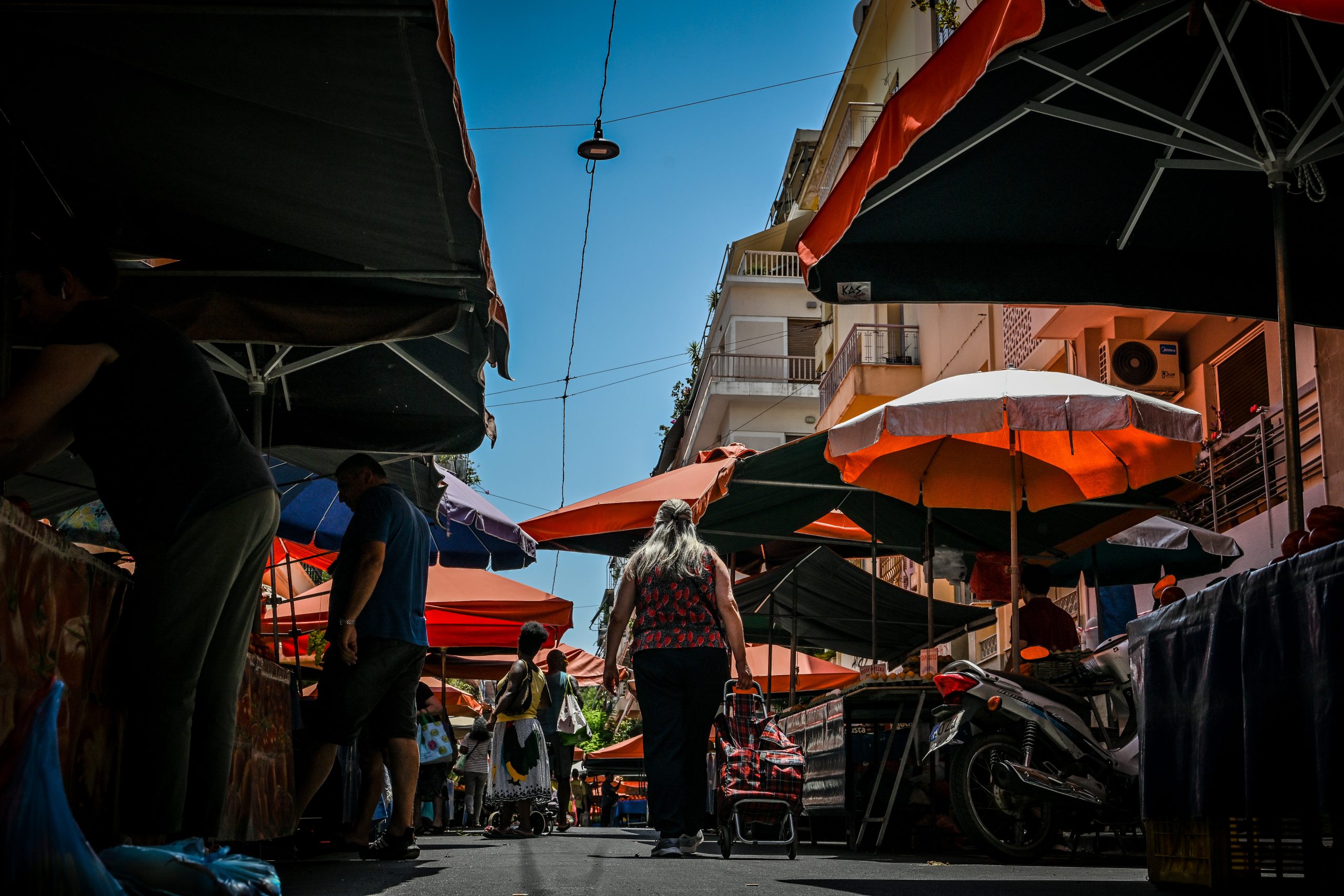
Although the overall picture of “subjective poverty” in the EU improved in 2024 (17.4%) compared to 2023 (19.1%), Greece remains first in the ranking, with 66.8% of citizens (67% in 2023) stating that they face financial difficulties, according to Eurostat.
The percentage is more than double the European average and by far the highest in the EU, proving the continued pressure on Greek households.
Bulgaria comes second (37.4%) and Slovakia third (28.7%), while the countries with the lowest rates are the Netherlands (7.3%), Germany (7.3%), and Luxembourg (8.5%).
“Subjective poverty” is a measurement tool of Eurostat, which does not examine income data (where one in five Greeks is at risk of poverty), but rather the personal sense of financial pressure — whether a household can cover basic needs, pay bills, or repay loans.
“Subjective poverty” is a Eurostat tool that measures the personal sense of financial pressure, such as covering basic needs and paying bills.
In Greece’s case, the data reveal a sharp gap between incomes and the cost of living, as well as a prolonged sense of insecurity reflected in citizens’ daily lives, despite the gradual, on-paper, economic recovery of recent years.
Across Europe, the highest percentage of “subjective poverty” is recorded among children and adolescents under 18, where one in five (20.6%) reports living under financial pressure. Among adults aged 18–64, the rate stands at 17.3%, while among citizens over 65 it drops to 14.9%.
.
Source: Eurostat


 What is fyi.news?