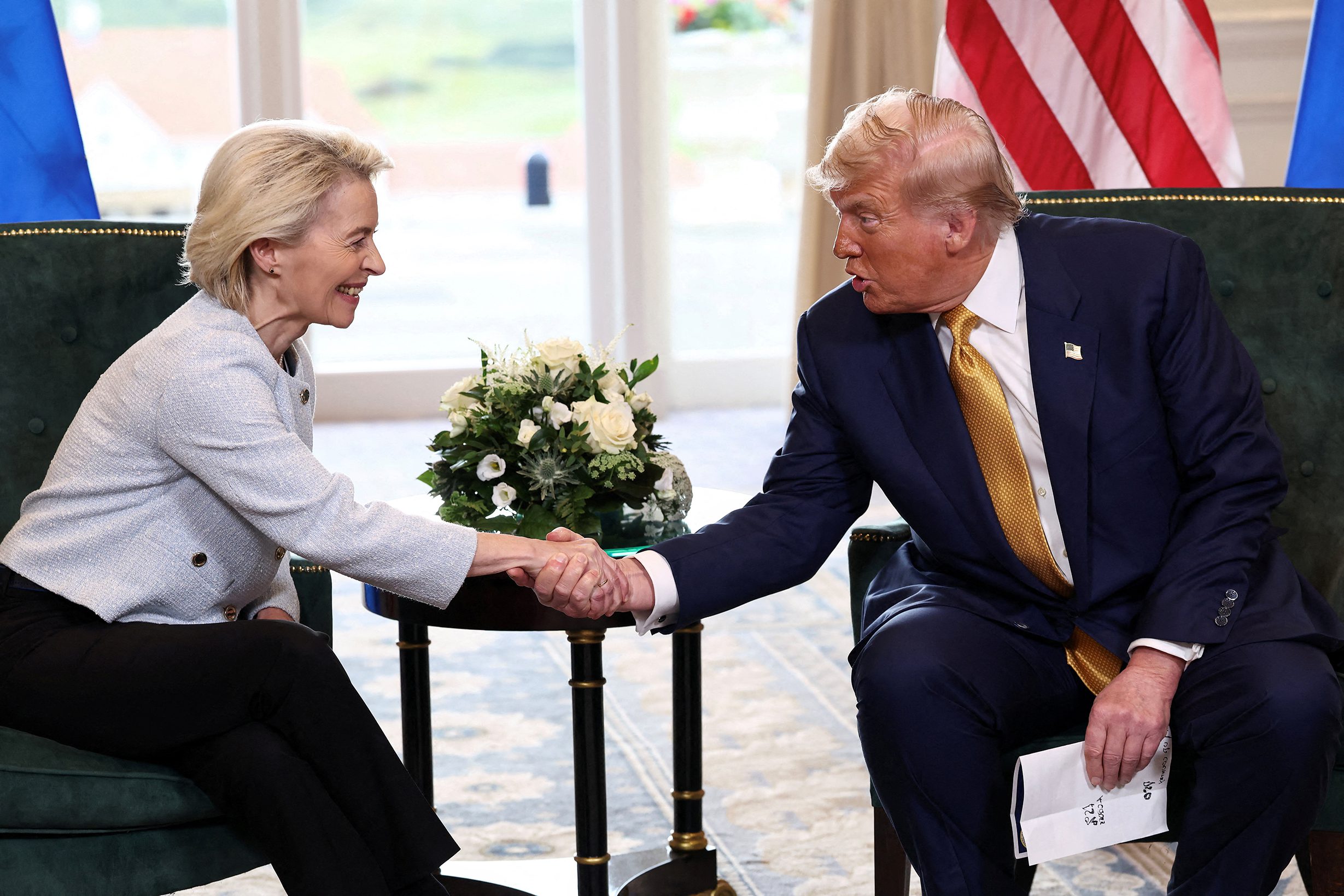
The European Union and the United States have agreed to a 15% tariff on nearly all EU products entering the US, along with a requirement for EU countries to invest $750 billion in energy and $600 billion in military equipment over the next three years.
Donald Trump will retain the option to raise tariffs in the future if European countries fail to meet the investment commitments outlined in the agreement.
Cars, which previously faced a 27.5% tariff, will now also be subject to the new 15% rate, while the existing 50% tariff on steel and aluminum will remain unchanged.
In contrast, US products entering the EU will not be subject to any tariffs.
While the final tariff rate is lower than the 30% that Trump had threatened, it is still higher than the 10% secured by the United Kingdom.
The two sides also agreed to zero tariffs on all aircraft, their components, certain chemicals, generic and agricultural products, semiconductor equipment, natural resources, and critical raw materials.
However, uncertainty remains for European wine and spirits producers, as Sunday’s announcement did not clarify the tariff status for those sectors.
Although Ursula von der Leyen described the deal as a “good agreement” that would bring “stability” and “predictability,” the original EU objective of a “zero-for-zero” arrangement was not achieved, and tariffs remain well above historic levels.


 What is fyi.news?