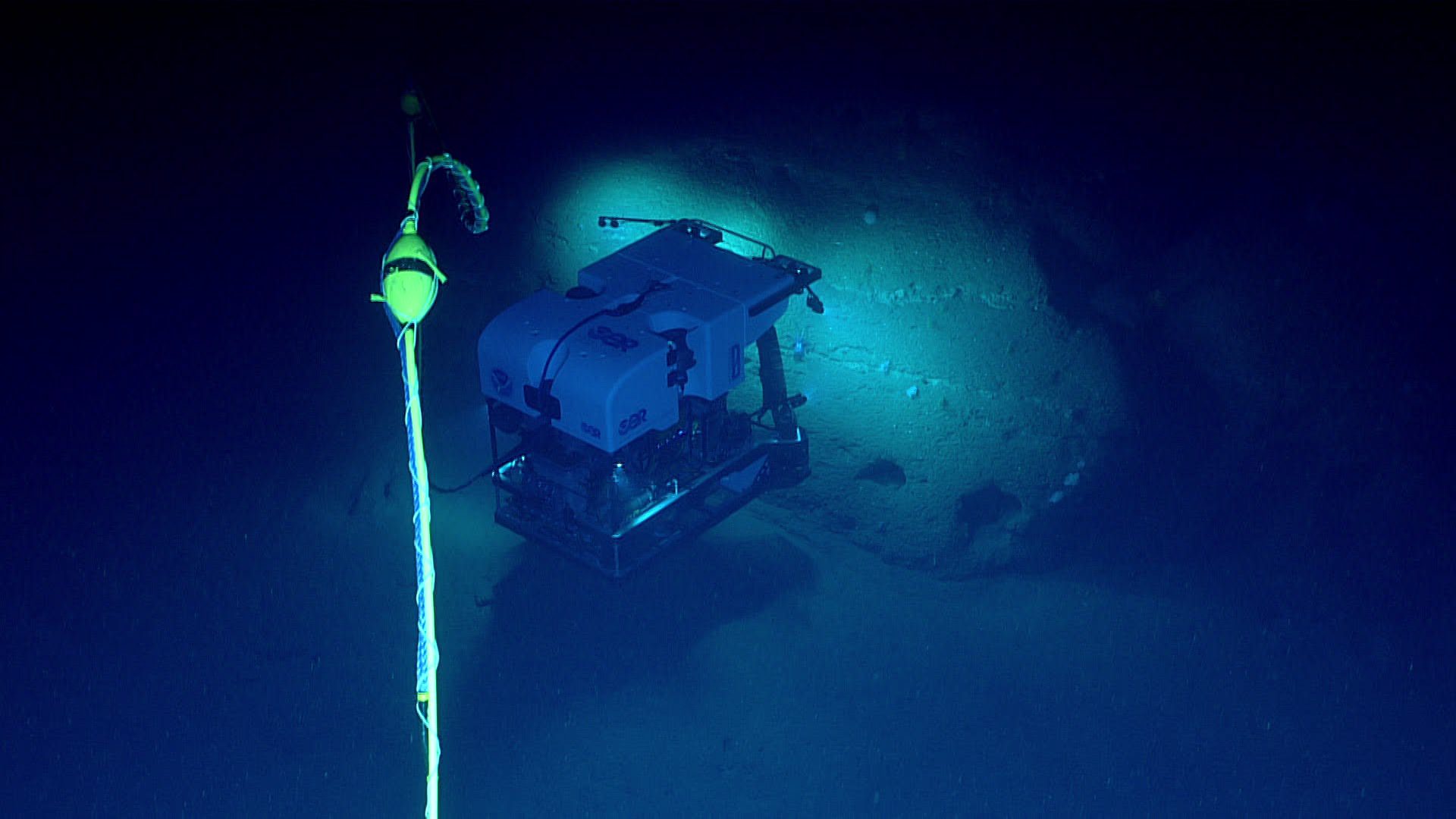
Approximately 99.999% of the ocean abyss remains unexplored, according to a new study published in the scientific journal Science Advances [1], [2]. The abyss refers to areas of the ocean where sunlight does not penetrate, typically at depths greater than 200 meters. These abyssal zones make up a significant portion of the Earth, with 93% of the oceans classified as “abyssal,” and the oceans covering 71% of the planet.
However, the conclusions drawn by scientists about abyssal ecosystems are based on research conducted over an area roughly the size of Luxembourg. Since 1958, more than 43,000 such explorations have been carried out using various methods, including robotic vehicles, manned submarines, and simple deployments of stationary equipment.
It is, in proportion, “like drawing conclusions about terrestrial ecosystems from an area smaller than Houston, Texas,” the scientists say.
Over 65% of these explorations have been conducted near the coasts of the US, New Zealand, and Japan (within 370 km), leaving vast areas, such as the Indian Ocean, almost entirely unexplored.
Abyssal zones play a vital role in climate regulation, as they absorb about 30% of the carbon dioxide released into the atmosphere by human activities, one of the greenhouse gases contributing to global warming.


 What is fyi.news?